The project notebook
Rooftop restaurant furniture: resolve access and exposure before the schedule
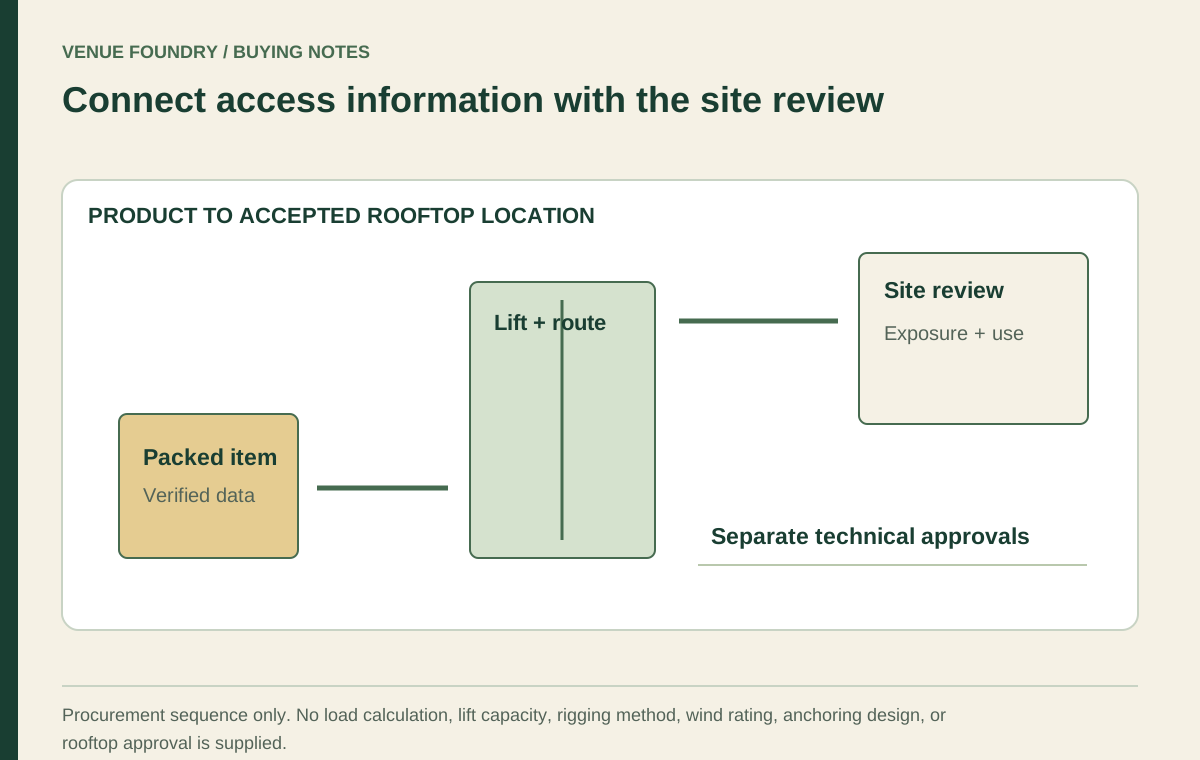
Rooftop furniture procurement connects the selected products with a constrained delivery route and an exposed operating location. Product weight, packed dimensions, elevator access, storage, and weather instructions all matter, but none can stand in for the qualified review of the rooftop itself.
Resolve the site and access brief before turning a preferred furniture image into an order schedule. This guide organizes the purchasing information. It does not provide structural calculations, wind-safety instructions, rigging advice, or approval for placing furniture on a particular roof.
Open diagram at full size (new tab) ↗
Establish the accepted site conditions first
The building's appropriate reviewers should determine the conditions that govern the rooftop use. Those may affect the furniture arrangement, loads, routes, attachments, and operating procedures. The buyer needs the relevant accepted requirements in a form that can inform product selection.
Do not use catalog item weights to decide whether the roof can support the proposed restaurant. Adding the weights together is not a structural assessment. The actual building, distribution, occupancy, and applicable requirements belong to qualified review.
The capacity article makes a related distinction between purchased chair objects and approved dining use. Keep that separation especially clear for a rooftop. A furniture schedule can be accurate while the location remains unapproved.
Survey the full delivery path
The route begins before the elevator. Identify the actual receiving point, doors, corridors, turns, lifts, and final access to the rooftop. The complete packaged item must fit the accepted route, not merely the unboxed product shown on the website.
The delivery page and freight-scope guide help identify the information needed for the transport discussion. Confirm the actual service responsibilities rather than assuming delivery includes movement to the rooftop or placement in the dining area.
Obtain packed dimensions, package weights, and any permitted assembly state from the relevant supplier. A chair's product dimensions do not establish its carton dimensions. Do not assume a table may be dismantled to pass through a door without accepted instructions.
Keep the lift entrance and its internal space as separate access facts. A package can be smaller than the nominal cabin dimensions while still presenting a problem at the opening or approach. The responsible delivery team should review the complete route with the actual packaged object and any handling equipment it requires.
Keep each kind of weight distinct
An individual product weight, shipment weight, furniture-group weight, and building load are different pieces of information. Record their stated basis. A value for one component should not be applied to a complete table or a packaged set without verification.
The October 17, 2026 FRU-110-OD record listed a 14-pound steel patio chair. The FRU-402-ECO record listed a 5-pound aluminum-frame chair with a Plastic Teak seat and Indoor, Patio use. These are dated individual product fields.
The lighter item is not automatically the better rooftop choice, and the heavier item is not automatically suitable for wind exposure. Neither weight field establishes structural acceptance, a handling method, wind resistance, or a permitted anchoring arrangement.
Review exposure across the complete assembly
Rooftops can have site-specific exposure conditions. The accepted operating brief should identify the conditions relevant to the actual location, while the product records identify materials, use designations, and documented limits. Do not treat a generic outdoor label as permission for every rooftop environment.
The patio material comparison examines complete assemblies rather than material stereotypes. A chair may combine a metal frame, synthetic seat, hardware, and surface finish. Each relevant component belongs in the product discussion.
Where salt exposure is part of the actual location, the coastal patio guide provides a separate set of material and care questions. It does not establish a corrosion-free product or replace the manufacturer's instructions for the selected item.
Treat shade equipment as its own coordinated scope
Umbrellas and other shade equipment introduce a separate support and operating review. A table opening does not establish an approved umbrella-and-base combination. The selected pole, opening, support, connection, and site requirements must be coordinated.
The umbrella planning article separates those interfaces. The wind planning guide distinguishes documented product instructions from assumptions based on weight. No universal base weight or wind-speed limit is supplied here.
Do not improvise attachment to rooftop furniture or building elements. Any proposed anchoring, restraint, or installation has to be addressed by the appropriate qualified parties and accepted product information. The furniture buyer should make that unresolved scope visible before ordering.
Plan storage and changes in operating conditions
The rooftop needs a clear operating response when furniture is not in use or conditions change. That response must be based on the accepted site procedure and product instructions. A nearby empty area is not automatically a suitable storage destination.
The stackable patio guide explains why a stacking designation requires limits, group dimensions, and a permitted movement method. The stored arrangement should be reviewed as carefully as the dining arrangement, including its location and route.
If products are moved inside seasonally, establish the accepted path and space for the complete inventory. The access review should work in both directions. The original delivery route may not remain available in the same form during normal operations.
Price the rooftop project with its unresolved scope visible
In the budget planner, retain the selected furniture subtotal and identify the separate access, placement, installation, and storage questions. Do not label a product-only total as the complete rooftop project cost.
The procurement brief should distinguish:
- Accepted site requirements and their responsible reviewers.
- Exact furniture configurations and individual product data.
- Verified package information and the complete access route.
- Exposure instructions and the operating response.
- Confirmed delivery and placement responsibilities.
Order only after the product and location briefs meet
A rooftop purchase is coherent when the selected furniture, delivery path, site conditions, and operating procedure describe the same project. The buyer's role is to connect the relevant evidence and scopes, with technical decisions left to the people and documentation that can establish them.
Use contact for missing package, product, or service information before finalizing the schedule. Keep the accepted requirements with the project record. The furniture order should follow the rooftop review, with no weight, material label, or attractive image used as a substitute for it.