The project notebook
Restaurant patio furniture that packs away needs a measured storage route
Stackable patio furniture can reduce the area occupied by stored pieces, but the benefit depends on the actual stack and the route to storage. A chair's single-piece dimensions do not describe the height, width, weight, or handling requirements of several chairs nested together. The storage plan needs that separate information.
Review the closing routine before buying the opening-day quantity. Where the furniture goes, how it gets there, and what remains accessible in storage can influence the preferred model. A compact stack that blocks another necessary task is not a complete storage plan.
Open diagram at full size (new tab) ↗
Read stackable as a feature with limits
The October 17, 2026 FRU-110-OD listing marked the steel patio chair as stackable and listed an individual weight of 14 pounds. The record did not supply a maximum stack count or a handling method. Those missing details should not be inferred from the feature label.
The FRU-402-ECO record also marked the aluminum and Plastic Teak chair as stackable, with a listed individual weight of 5 pounds. The two models therefore have some shared feature labels but different physical records. Neither supplies the other's approved stacking arrangement.
Tropitone's furniture-care guidance explicitly tells users to follow the specific recommended stack heights for its stacking aluminum furniture. That manufacturer example supports an important distinction: stacking capability and an unrestricted stack height are different claims. Use the instructions for the actual selected product.
Measure the complete stack envelope
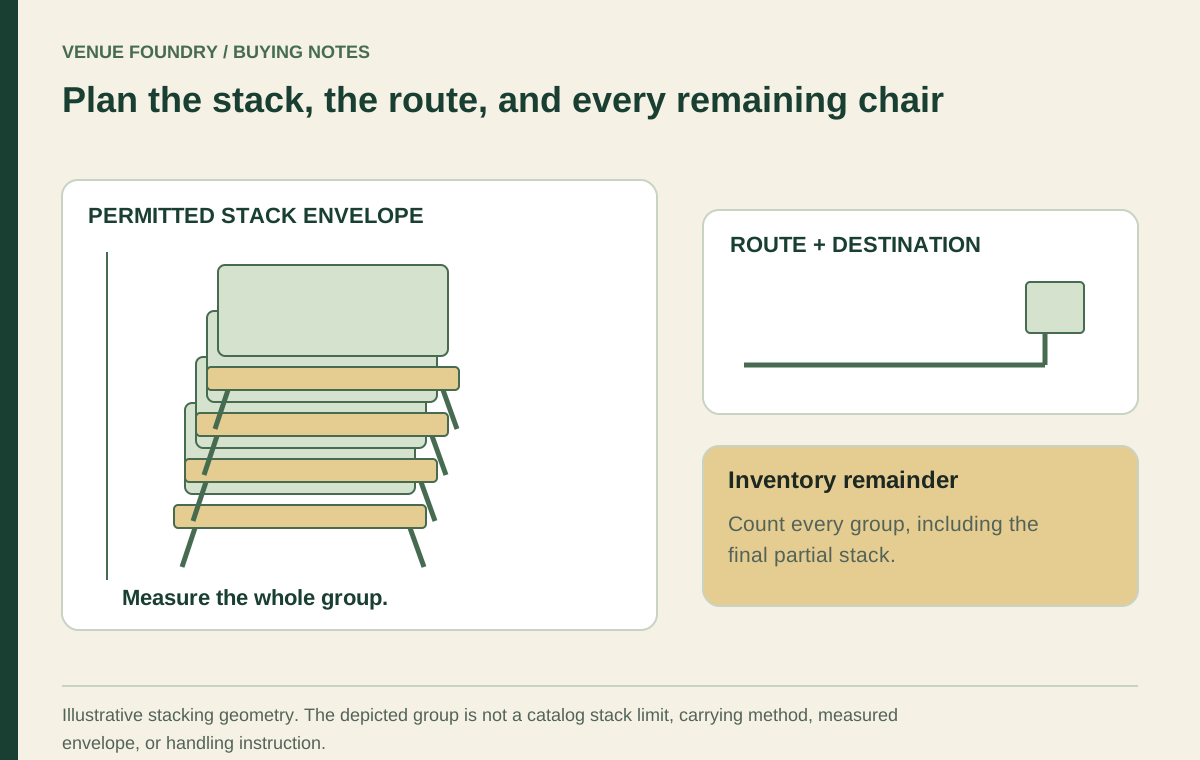
A nesting stack does not usually behave like a vertical pile of identical rectangular boxes. Each added chair can extend the height and may shift the stack's position or overall outline. The supplied stacking information should describe the actual arrangement that is permitted.
A hypothetical measurement exercise illustrates the calculation. If an approved example has a first-chair height of 30 inches and each additional chair adds 4 inches, a five-chair group would be 46 inches high: 30 plus four increments of 4. These invented values are not a stack limit or dimensions for either catalog chair.
Measure width and depth as well as height. Arms, back angles, and legs can affect the envelope. The patio chair collection includes different forms, so a storage allowance based on the narrowest single chair should not be reused for every selected model.
Match the groups to the inventory
Once the product's permitted arrangement is known, divide the inventory into actual storage groups. A remainder matters: a room with 22 chairs cannot be represented by four identical five-chair groups without accounting for the other two.
For an arithmetic example only, if a documented arrangement allowed groups of five, 22 chairs would require four full groups and one group of two. The fifth group still occupies a storage position. This does not recommend a five-chair limit for any product; it shows why rounding the inventory down produces an incomplete plan.
Keep separate models in separate counts unless the manufacturer explicitly permits a combined stack. Similar-looking chairs can meet at different points or damage one another when nested. The stackable indoor-chair discussion explains the same distinction between a visual resemblance and an accepted arrangement.
Trace the route with the intended handling method
The route may include a patio threshold, a doorway, a corridor turn, and a storage-room entrance. The limiting dimension can occur at any one of those locations. A stack that fits the storage area may still be impractical to move through the route used every evening.
Use the actual accepted handling method and any specified equipment when reviewing that path. A catalog weight is not an instruction to carry several chairs together. The plan should account for staff procedures and appropriate handling guidance without inventing a universal lifting rule.
Read the room-planning guide, then document separate opening and storage arrangements in the venue's own layout records. Mark the route and the storage positions clearly. If a mobile cart or other equipment is part of the proposal, its dimensions and compatibility belong in the same review rather than remaining an assumed future purchase.
Leave room for storage to function
Storage space includes access to the furniture, not only the footprints of tightly packed stacks. The restaurant may need to remove one group without disturbing all the others. Cleaning supplies, other furniture, and building access requirements may compete for the same area.
Arrange the groups according to the actual sequence of use. Furniture needed for a small early service should not be trapped behind every item reserved for a later event. This is an operating decision, and its effect on storage can be shown before the order quantity becomes fixed.
Include patio tables and their accepted storage form. A table that remains assembled occupies a different space from a product explicitly intended to fold. Do not assume that removing a top or loosening a base is an approved daily storage method.
Store the furniture in the condition its instructions require
Grosfillex's cold-weather guidance for its resin furniture advises dry, ventilated storage and cautions against trapping moisture in sealed plastic. That is a useful manufacturer example of storage being more than an exercise in fitting shapes into a room. The exact care method must still follow the selected product's instructions.
Consider whether cushions or accessories require separate storage. A hard furniture stack should not automatically become a storage rack for soft goods. Their permitted handling and care may differ from the frames beneath them.
The materials information and outdoor buying guide help keep those component requirements distinct. A stackable frame does not establish that every attached or added part can remain in place during storage.
Price the routine alongside the furniture
Use the budget planner for the selected product quantities and current prices. Identify any separate storage equipment, cover, or site-work scope. Compare alternatives using the same real opening and closing brief rather than assuming that stackable furniture automatically reduces operating cost by a particular amount.
The review should establish:
- The documented stack arrangement for the selected model.
- The envelope and number of complete storage groups.
- The accepted handling method and route.
- Access within the storage area.
- Separate treatment for tables, cushions, and accessories.
Buy the patio quantity with its closing routine attached
A useful stackable-furniture plan explains both the open patio and the stored inventory. The furniture count, permitted groups, route, and storage positions should reconcile with one another. That is the evidence behind a practical storage benefit, rather than the word stackable on its own.
Use contact for missing stack limits or component instructions and review the order through how to order. Keep the accepted arrangement with the project. The patio then has a workable destination for every piece when service ends, with the cost and space of that routine understood in advance.