The project notebook
Restaurant furniture freight accessorial costs: identify the service behind the amount
Restaurant furniture freight accessorial costs belong beside the delivery conditions that create the service requirement. A freight amount means little if one proposal assumes a different receiving arrangement from another. Define the destination and requested service before treating two delivery totals as comparable.
Keep the furniture subtotal separate while the transport scope is being confirmed. The budget can carry a clearly labeled allowance, but the final amount needs the actual shipment and receiving information. A blank delivery field should remain an open cost, rather than quietly becoming zero.
Open diagram at full size (new tab) ↗
Describe the destination as a receiving location
Provide the actual address and the site conditions relevant to the delivery discussion. Identify the receiving point, any known access restriction, and the person responsible for coordinating the arrival. Keep private contact details in the appropriate operational record rather than every product schedule.
Use delivery planning to organize the questions. A restaurant's public entrance may differ from its receiving entrance. The parties arranging transport need the real destination information, not an assumption based on the building's street-facing photograph.
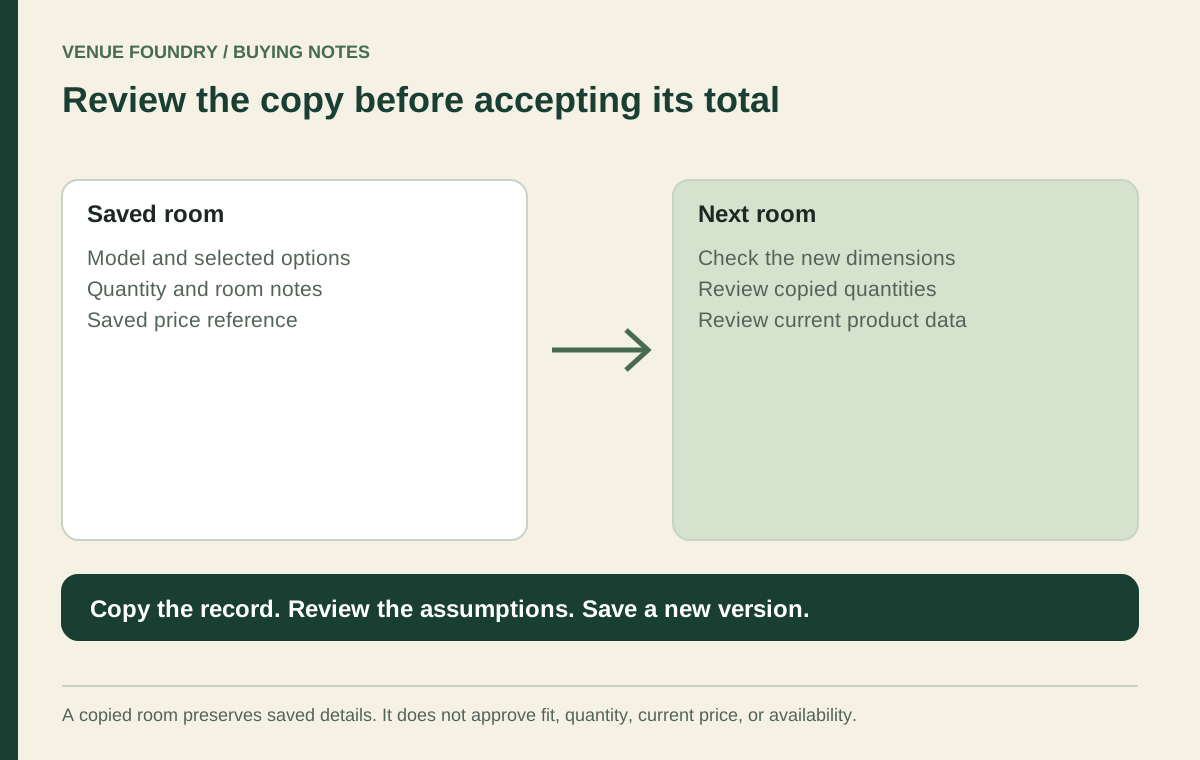
Confirm the information with the team responsible for the site. Do not describe a dock, unloading capability, or receiving window as available because it existed at another location. A copied project should trigger a new destination review.
Define which service reaches which point
Ask where the agreed service ends and who performs the remaining work. Unloading, movement into the building, unpacking, assembly, and placement can be distinct tasks. Keep the actual proposal's descriptions rather than replacing them with a broad label such as full delivery.
A carrier may identify liftgate and inside-delivery services separately. Their names should not be treated as interchangeable, and neither name alone describes every action needed to place furniture in a finished room. Obtain the exact service definition and applicable charges from the responsible provider.
The ordering timeline guide can show when those arrangements need to be settled. A planned arrival does not establish that the receiving team or the final room will be ready for the agreed work.
Match the shipment description to the selected furniture
Retain the actual configured quantities and selling units. A proposal for complete tables can describe a different shipment from a purchase of separate tops and bases. Ask for the applicable shipment information rather than calculating freight from product count alone.
Keep booth units and their confirmed delivery form identifiable. Installed product dimensions may not describe the packaged shipment. If access depends on the delivered form, obtain the relevant package and handling information before treating the route as resolved.
Do not invent shipping weights or freight classifications from a product photograph. The party preparing the transport proposal should supply or confirm the information relevant to the actual shipment. A product's listed weight is not automatically the complete shipping weight of its packaging and pallet.
Use separate lines for known costs and allowances
Show the configured furniture subtotal, confirmed transport amount, other confirmed services, and remaining allowances distinctly. Include the status and basis of each amount. This makes a later revision easier to explain because the changed assumption is visible.
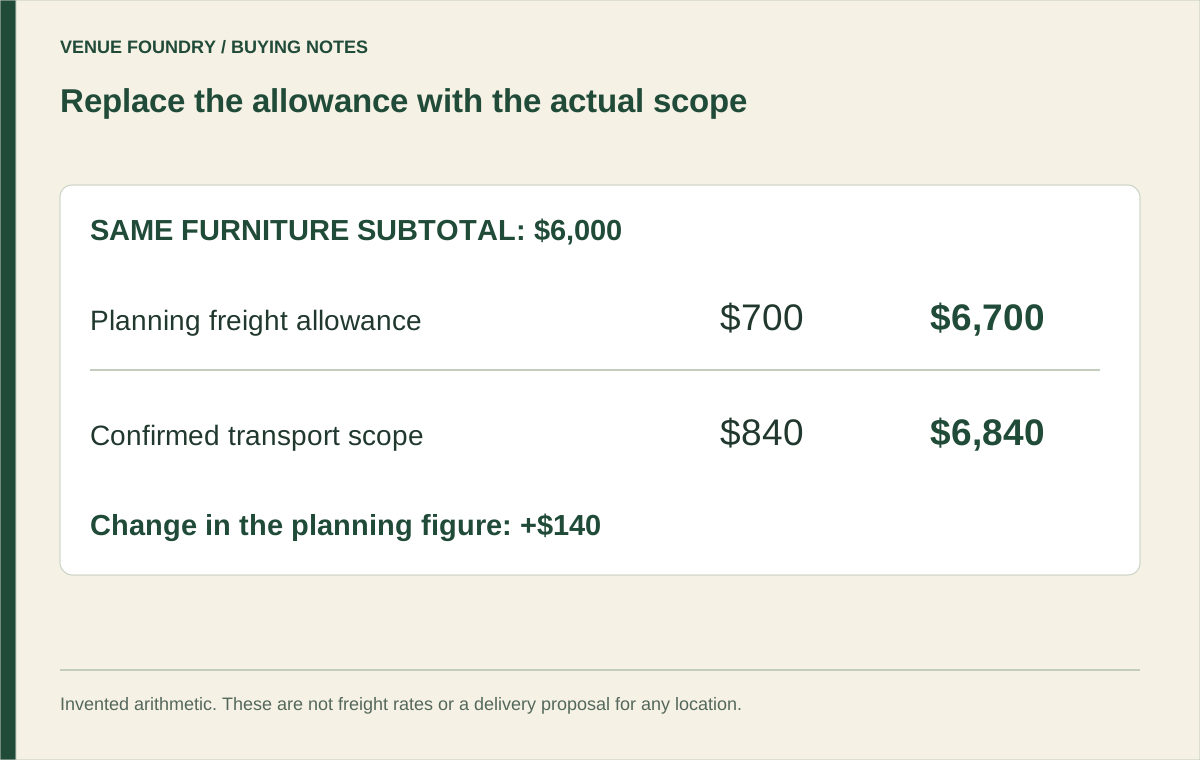
For an invented arithmetic example, a $6,000 furniture subtotal plus a $700 freight allowance produces a $6,700 planning figure before other open charges. If the confirmed transport scope later totals $840, the same figure becomes $6,840. The increase is $140, not a change to the furniture price.
These amounts are invented worksheet inputs. They are not freight rates, tax calculations, or a proposal for any destination. Use the budget planner for configured furniture and retain the actual external amounts in the supporting project budget.
Compare delivery proposals using the same assumptions
Put the destination, shipment scope, requested services, and timing assumptions beside each proposal. If one includes a service the other excludes, identify the difference before comparing totals. A lower amount may simply describe less work.
The itemized comparison guide applies the same discipline to the furniture itself. Keep the transport and product comparisons connected without combining their unresolved fields into one apparently complete number.
Ask which conditions could require a revised charge under the actual terms. Retain the response rather than creating your own list of guaranteed fees. The purpose is to understand the proposal, not to predict every possible event or impose another carrier's policies on the order.
Review split deliveries as separate scenarios
If the project may receive furniture in phases, ask for the actual transport arrangements for those phases. Compare the confirmed or clearly identified proposed scope with a single-delivery alternative where one is available. Do not assume a percentage increase or saving merely from the number of shipments.
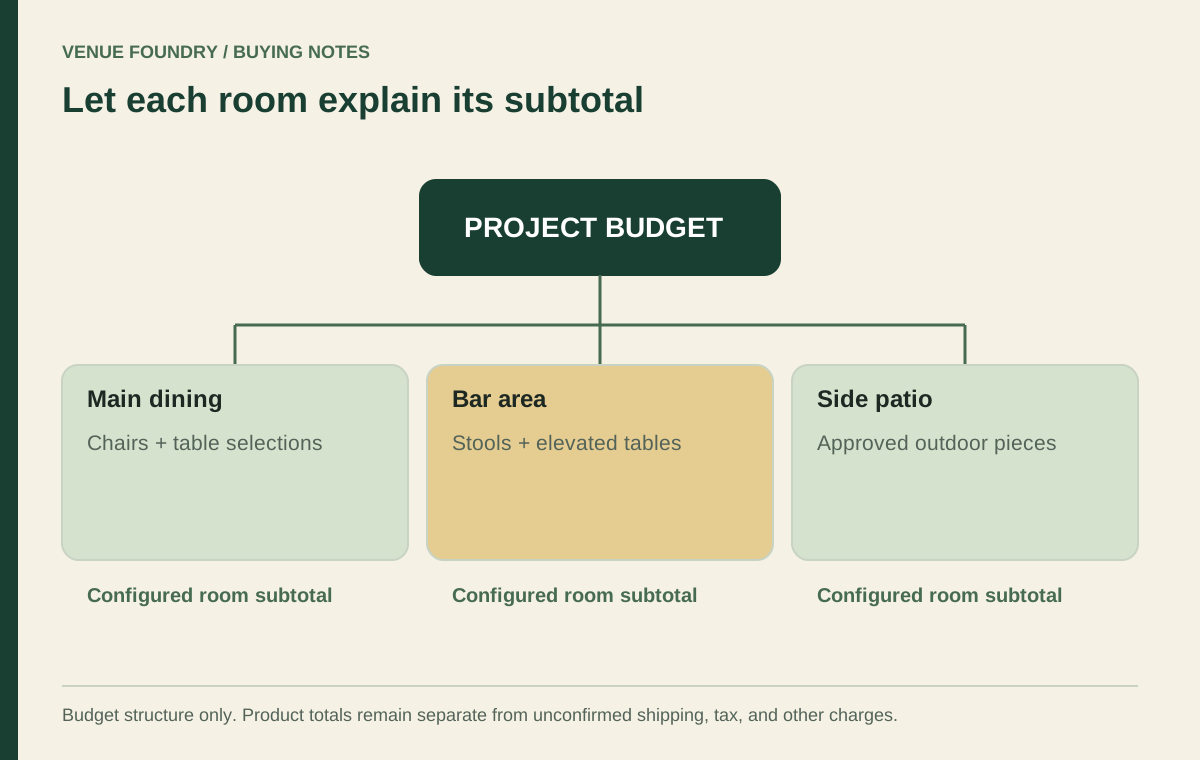
Use the project checklist guide to review the phase quantities, then retain them in your project schedule. The room-by-room budget guide helps show which rooms depend on each shipment. A later phase should remain distinct from the current furniture order.
Consider receiving and storage implications with the responsible site team. One larger delivery can create a different planning need from several smaller arrivals. The budget should use the actual agreed service and site plan rather than assuming consolidation always produces a better result.
Reconfirm the scope when the site or order changes
A different quantity, product configuration, address, or receiving condition can make an earlier transport response incomplete. Identify the change and ask which part of the proposal needs revision. Preserve the old response as history rather than silently editing its amount.
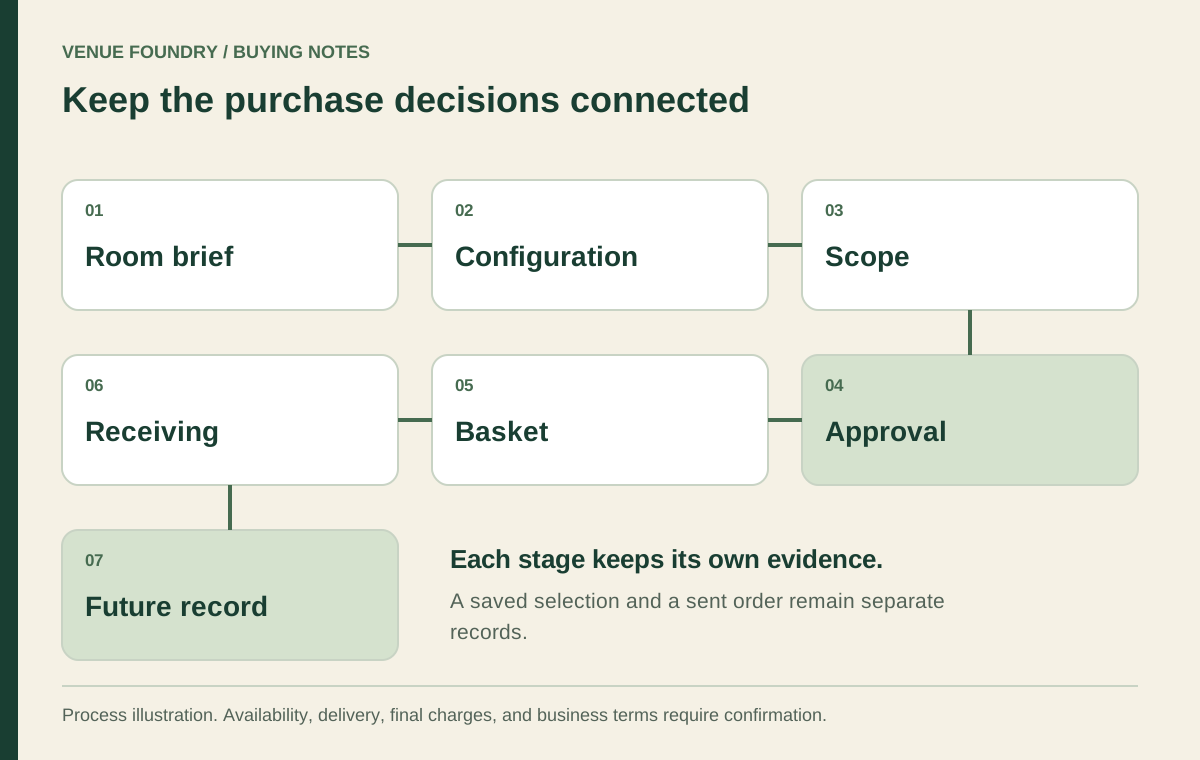
Follow how ordering works with the current selection and relevant delivery information. Review the basket for the furniture scope, while keeping unconfirmed shipping and tax distinguishable from its subtotal. The submitted configuration should match the information used for the transport review.
The delivery inspection guide can prepare the receiving team for the actual arrival. Give them the accepted service scope as well as the furniture list so they know which handoff has been arranged.
Make the freight amount explain its assumptions
A useful freight budget shows the shipment, destination, service, and confirmation status behind the number. It lets another reviewer see whether an amount is an allowance, a current proposal, or an accepted part of the order.
Keep those assumptions with the final project record. If the scope changes later, the team can request a specific update instead of arguing over two totals that never described the same delivery.