The project notebook
A restaurant furniture mockup should include the complete table position
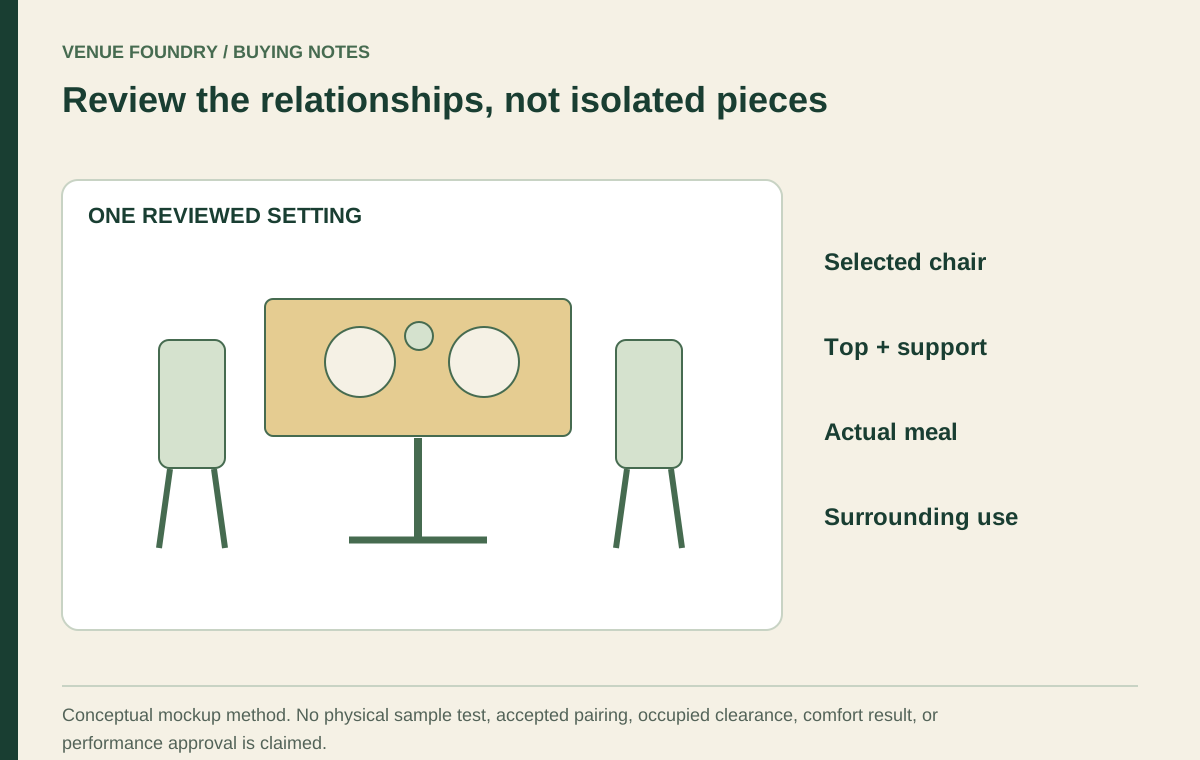
A furniture mockup is most useful when it brings together the parts that will meet during a meal. A chair beside an unrelated showroom table can reveal something about the chair, but it cannot answer whether the selected top, support, seating, and serving pieces work together in the proposed restaurant setting.
Build the review around one complete position before repeating it through the order. This article describes a method for a future sample review, not a test we have performed. Its purpose is to expose a mismatch while the design can still change, with the actual configuration identified throughout.
Open diagram at full size (new tab) ↗
Start with the question the sample must answer
Choose a specific uncertainty. Perhaps the selected chair arms may meet the table edge, the base may interfere with the intended seat positions, or a shared serving dish may crowd the individual settings. A sample review becomes vague when the only question is whether everyone likes the furniture.
The chair sample guide addresses seated experience. A complete-setting mockup adds the relationships around that chair. Keep both perspectives, because a preferred individual seat can still be an awkward partner for a particular table.
Define the intended meal and service style before arranging the pieces. A coffee and pastry, a full plated meal, and shared serving dishes occupy the surface differently. The selected furniture should be examined against the use it will actually support.
Use the exact configured components
An approximate substitute can help explore a direction, but label it as a substitute. A different base, upholstered seat, or tabletop thickness may change the very relationship under review. Do not treat a successful arrangement of borrowed pieces as acceptance of an unseen configuration.
For example, the October 17, 2026 FRU-SW-BB-SET record described a 30-inch table height, a 1 1/2-inch solid wood top, and a cast iron base. It also contained separate size and base choices. The family name alone did not identify one finished table.
Compare that with a separate laminate top, whose dated thickness was 1 1/4 inches. Choosing that surface introduces another support and assembly decision. Similar top dimensions do not make the two complete tables identical beneath the edge.
Establish the surface before placing the chairs
Arrange the actual dishes, glasses, and shared items used in the intended service. Include objects that often disappear from a neat concept image, such as a bread plate, water vessel, condiment holder, or the serving utensil resting beside a shared dish.
The tabletop sample review distinguishes the outside dimensions from the surface left for the meal. Do not leave every object in its smallest closed position. The useful question is whether ordinary use can occur without the setting depending on an unusually tidy moment.
For a rectangular table, compare end positions with side positions. They can meet different parts of the support and different arrangements of shared dishes. A symmetric top does not guarantee that every seat has the same experience beneath or above it.
Bring the base into the occupied review
A table base is visible to the feet and knees even when it is almost absent from the presentation photograph. Include the actual footprint, column, mounting arrangement, and accepted top pairing in the sample setup.
The base footprint article explains the difference between a directional support and a continuous disc. During a sample review, examine how the chosen support meets each intended position. Rotating a table or moving a chair toward a corner can change that relationship.
This is not a reason to improvise assembly or substitute hardware. The sample must follow the product's accepted configuration and instructions. A pairing that has not been accepted should remain an unresolved product question even if its appearance seems convincing.
Add the neighboring setting and movement
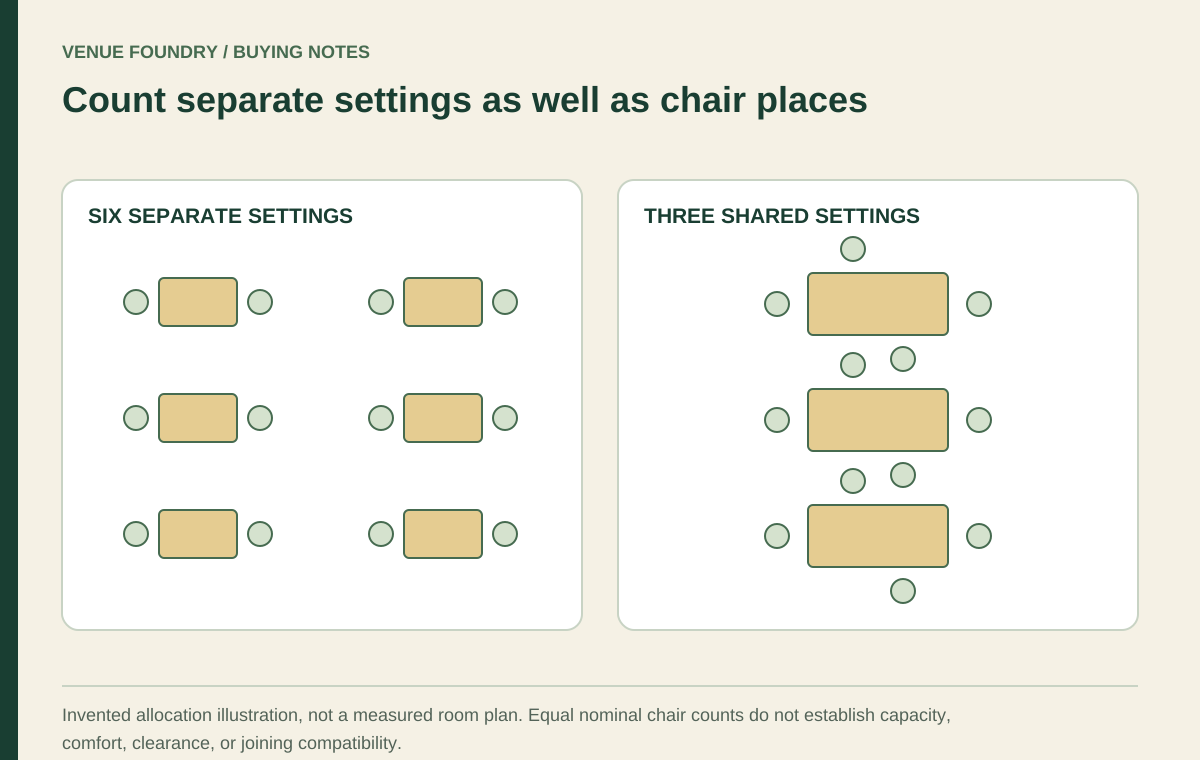
One isolated table cannot reveal all the effects of repetition. Mark the neighboring furniture and the relevant room boundaries so the sample can be considered in context. Use a measured plan and qualified site requirements to establish the arrangement rather than treating tape on the floor as an approval.
The service-route review follows a task from departure through approach and return. Apply that method around the sample with the chosen chairs in use. The space behind an occupied chair matters differently from the space behind a chair stored under the top.
Avoid turning the review into an obstacle course. The purpose is to notice ordinary conflicts and revise the proposal. It is not to prove that people can squeeze through an arrangement or to establish legal capacity through an informal demonstration.
Compare one controlled change at a time
If the setting presents a problem, identify the likely cause before changing everything. Swapping both the chair and the table size can produce a better arrangement while leaving the team unsure which change mattered. A controlled comparison makes the purchasing consequence easier to understand.
The chair arm comparison is one example. Compare the actual arm and armless models with the same accepted table where appropriate. Then review any changed table selection separately, keeping the original meal and intended seated positions visible.
Ask participants to describe a specific action or contact point rather than an unsupported universal verdict. A sample can inform this project without proving comfort for every guest, durability over years, or suitability in every dining room.
Connect the accepted sample to the order
The final sample description should identify the model, selected options, support, top, and any approved details that affected the result. A photograph is helpful, but it may not show the finish code or the exact seat configuration. Keep those identities alongside the image.
Use this short acceptance list:
- Exact furniture identities and selected options are named.
- The intended meal and seat positions are described.
- Open product or site questions remain visible.
- Accepted changes are reflected in the priced lines.
- The reviewed arrangement matches the current project plan.
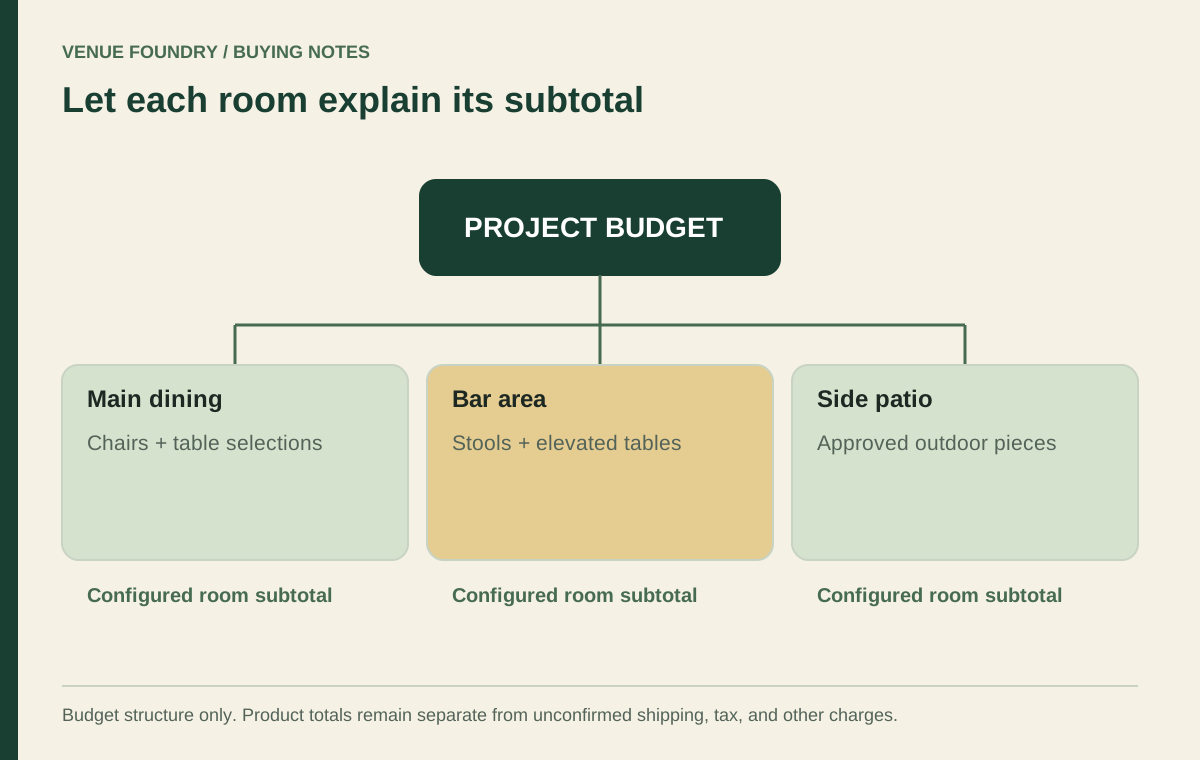
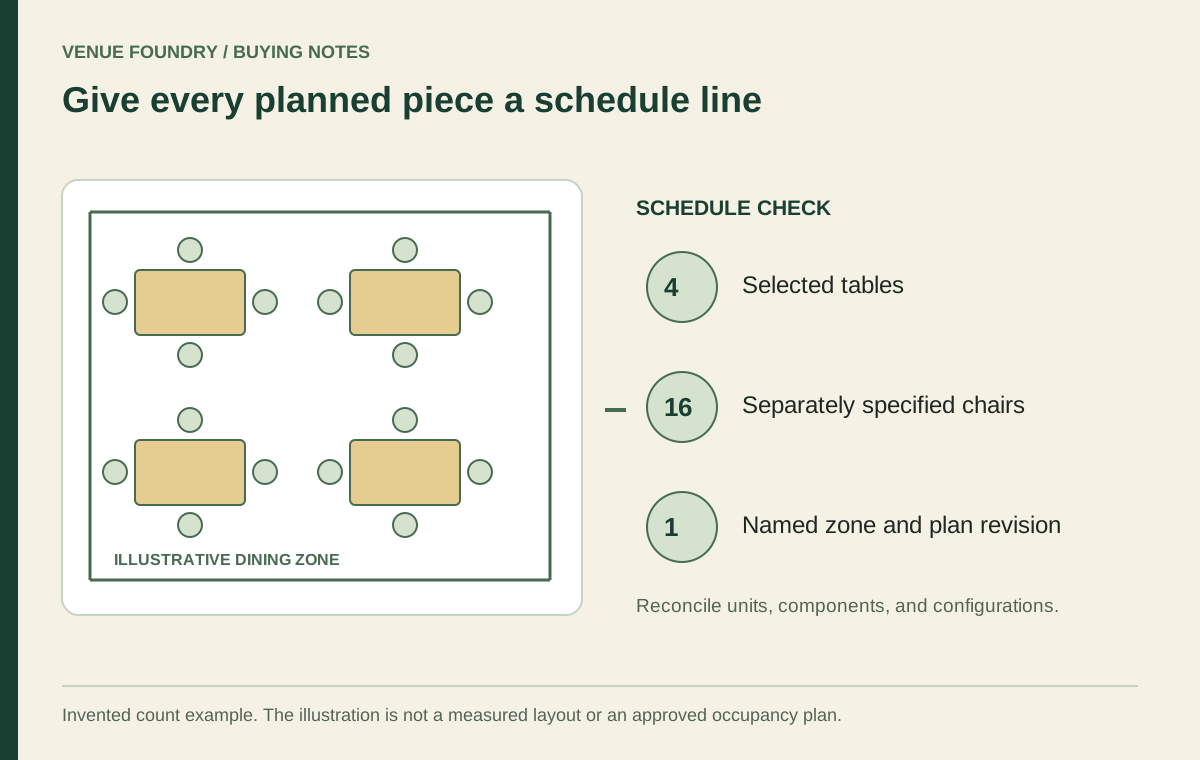
The budget planner should carry that accepted configuration into the quantities. If the selection changes later, revisit the affected sample questions instead of assuming the earlier review covers the revision.
Repeat a reviewed setting with its limits understood
A complete mockup earns its place in the buying process by answering concrete questions about the furniture relationships. It should reduce ambiguity about the chosen setting, while leaving performance claims and site approvals to the evidence that can actually establish them.
Use contact for missing component information before the review. Retain the accepted arrangement in the project documentation and consult the planning guide for room-level questions. The order can then repeat a clearly identified setting, with any remaining questions stated plainly rather than concealed inside a persuasive photograph.