The project notebook
Comfortable restaurant chairs: budget for a decision before a roomful
Ordering a roomful of chairs makes one selection repeat many times. A sample review gives the project team a chance to examine that decision before quantity makes it expensive to revisit. Its purpose should be clear from the start: answer the actual questions that could change the purchase.
Comfort is part of that discussion, but a sample session cannot prove that every guest will have the same experience. Record the chair, table, selected options, and participants' observations. The result is useful purchasing evidence for the project, not a medical assessment or a promise about customer behavior.
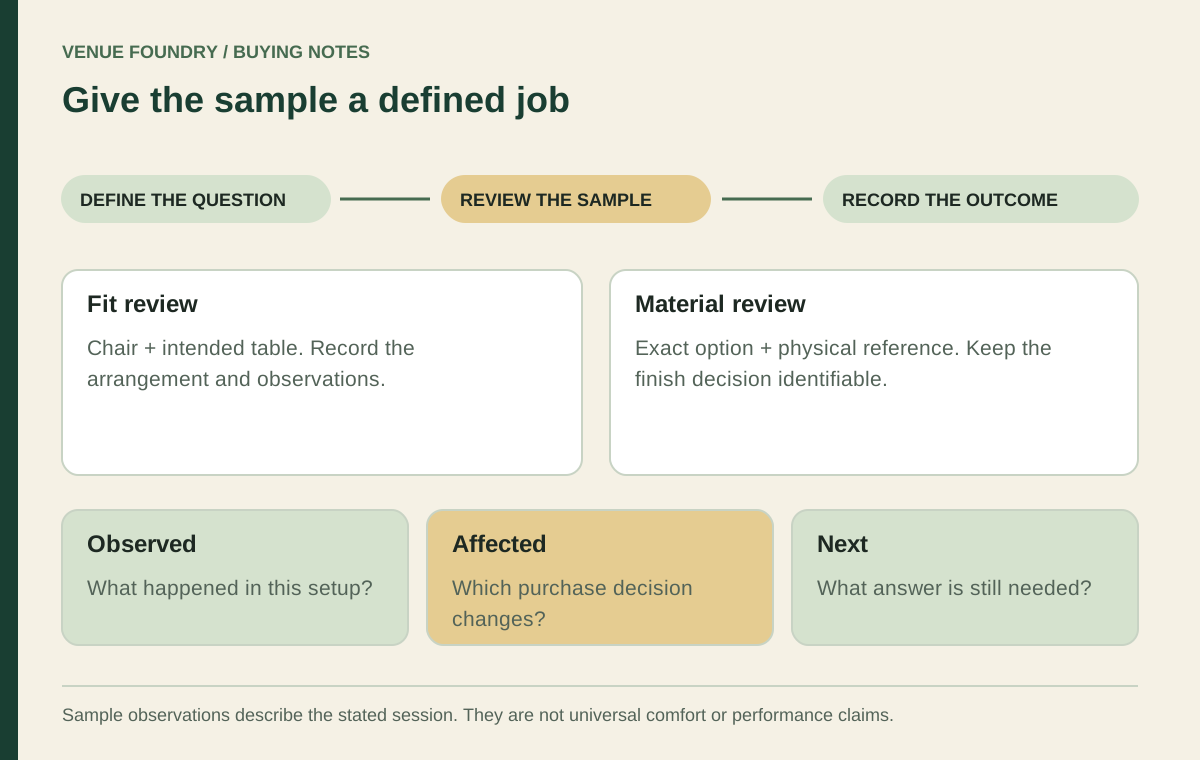
Open diagram at full size (new tab) ↗
Write the questions before arranging a sample
Decide what remains uncertain. The team may need to review seat fit at a particular table, the effect of arms, the chosen upholstery, or how staff reposition the chair. A sample with no defined job can become a pleasant discussion that leaves the original buying questions unresolved.
Build a shortlist from restaurant chairs and read the exact product specifications. Eliminate candidates that already fail a documented project requirement. There is little value in paying to review a finish on a chair whose dimensions have not been checked against the intended arrangement.
Read the planning guide before comparing the sample setting with the measured room plan. The furniture session does not establish legal occupancy or approve circulation. Those decisions belong in the appropriate project review and should not be inferred from a few chairs placed around a table.
Account for the sample as its own decision
Ask what the sample arrangement involves before recording a cost. Product, shipping, collection, and any applicable commercial terms need confirmation. Do not assume the sample is free, returnable, or credited against a later order unless that arrangement has been explicitly agreed.
Keep those amounts outside the proposed room's furniture subtotal. The budget planner can hold the shortlisted configured lines while the wider project budget records the sample arrangement separately. This prevents one sample from accidentally becoming an extra chair in the final room count.
Read the current changes and returns information and confirm the actual terms before relying on a return path. The website is still a preview with business terms awaiting final confirmation. A planning article cannot supply those terms by implication.
Recreate the intended chair and table relationship
Use the proposed table or an appropriate documented equivalent for the review. Identify its top, base, and relevant dimensions. The table directory can help distinguish complete tables from separately selected tops and bases.
Invite reviewers to evaluate the actual activities relevant to the venue, such as sitting for a meal, entering the seat, or repositioning it at the table. Keep the session within the product's intended use and any sample conditions. Do not improvise load tests or modify components.
Record the arrangement with written dimensions and product references. A photograph can support the notes, but perspective should not be used as a measurement. If the proposed table changes later, the team may need to revisit the chair relationship instead of carrying the earlier approval forward unchanged.
Ask for observations that lead to a decision
Give participants a few concrete questions. Could they enter and leave the proposed position? Did the arm and table relationship raise a concern? Which selected detail would they want reviewed before the full order? Keep comments attributed to the session rather than presenting them as universal conclusions.
Separate guest-position feedback from staff-handling feedback. The chair handling article covers the latter task in more detail. Someone who moves furniture during cleaning may notice a different issue from someone evaluating the seat during a meal.
Three fields make the notes easier to act on:
- Observation: what the reviewer actually noticed in the stated arrangement.
- Consequence: which purchasing question that observation affects.
- Next step: a different configuration, another measurement, or a supplier question.
Avoid translating a preference into a claim about reduced fatigue, longer visits, or higher sales. The sample review did not measure those outcomes.
Keep material approval distinct from seated fit
A chair can be acceptable in the proposed position while its selected finish remains undecided. Record those as separate statuses. The project should not have to repeat a fit discussion simply because the upholstery reference changes, unless that change also affects a relevant product detail.
Consult the materials guidance when interpreting exact option labels and reference images. If a physical sample is required for color approval, review it under the venue's intended lighting and retain its identification. A digital swatch is a useful selection aid, but it is not the same record.
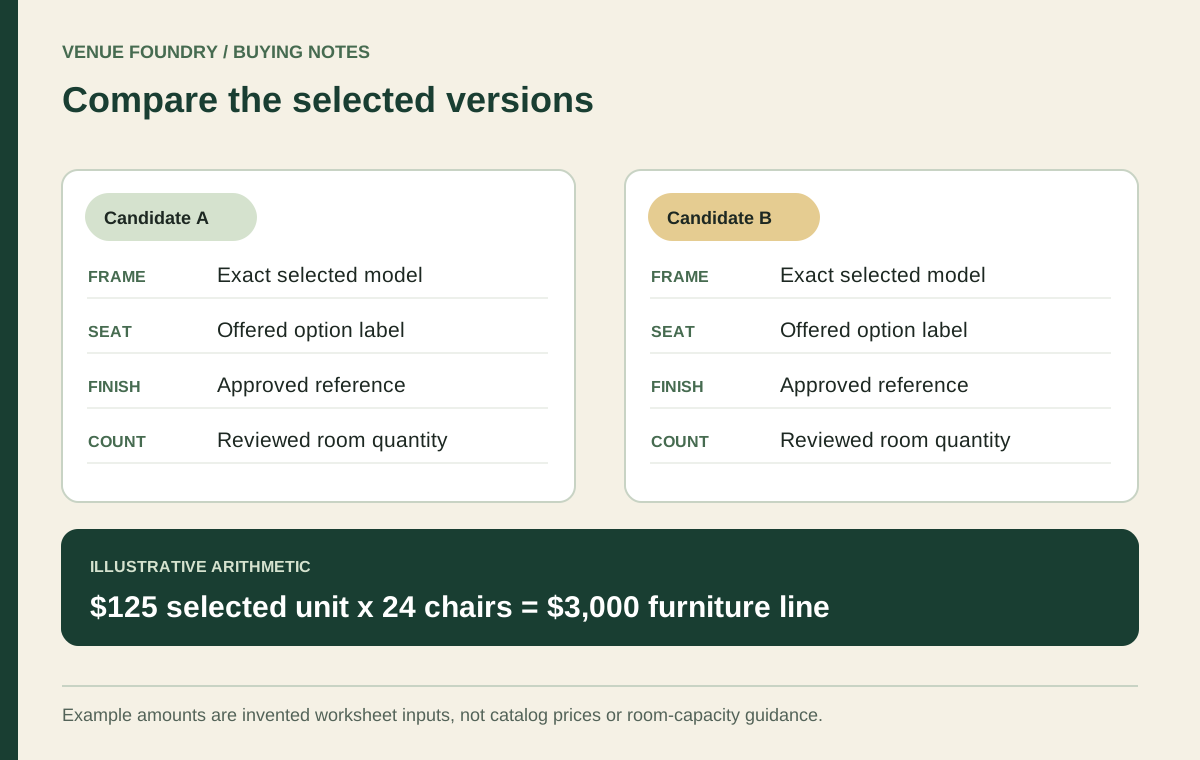
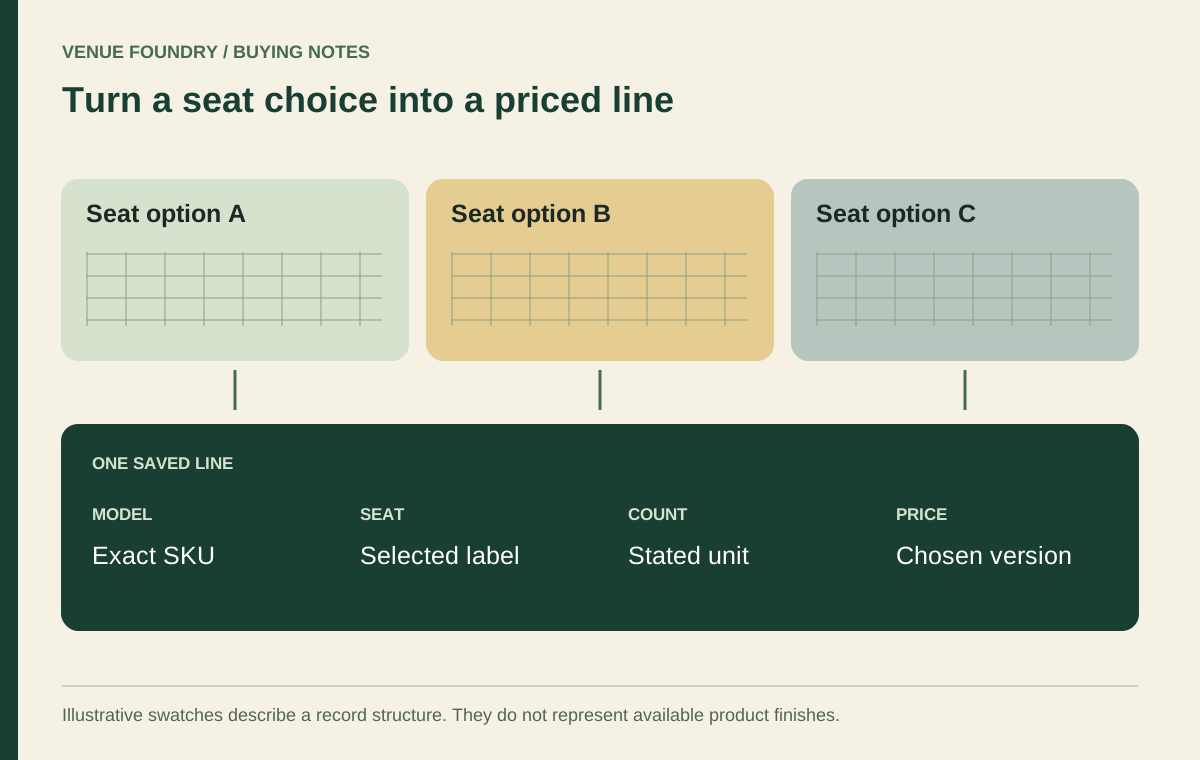
The upholstered-chair cost guide explains how to keep different seat choices on separate priced lines. That becomes useful when the sample session narrows the decision to two configurations rather than one model.
Close the sample review before multiplying quantity
Write a short outcome for each candidate: accepted for the stated arrangement, rejected for a documented reason, or pending a specific answer. Avoid a vague approved status if the table pairing or selected option is still unresolved. The reviewer should know exactly what the decision covers.
Update the saved project with the accepted configuration and the actual required quantity. Remove sample-only notes that could confuse the order, while retaining a clear reference to the decision. Review the current price before treating the room subtotal as ready for purchasing.
Use delivery planning for the full order's receiving requirements. The sample's route or packaging does not establish how the complete shipment will arrive. Confirm the larger scope separately rather than repeating a small-delivery assumption.
Give the full order a better starting point
Compare the basket with the accepted sample record before following how to order. Check the SKU, selected seat and frame options, quantity, and room assignment. A successful review loses value if a different version is sent afterward.
The sample budget has done its job when it produces a decision the team can explain. It identifies what was reviewed, what changed, and which questions remain. That record gives the room purchase a firmer basis than choosing a chair from a photograph and hoping the repeated quantity will work out.