The project notebook
Restaurant bar stools that turn or stay fixed: compare the guest's movement
The choice between a fixed seat and a swivel seat is a choice about movement at the counter. It affects how someone approaches, turns toward another person, and leaves. The mechanism is only one part of that decision; the stool's shape and the space around it determine what the movement means in practice.
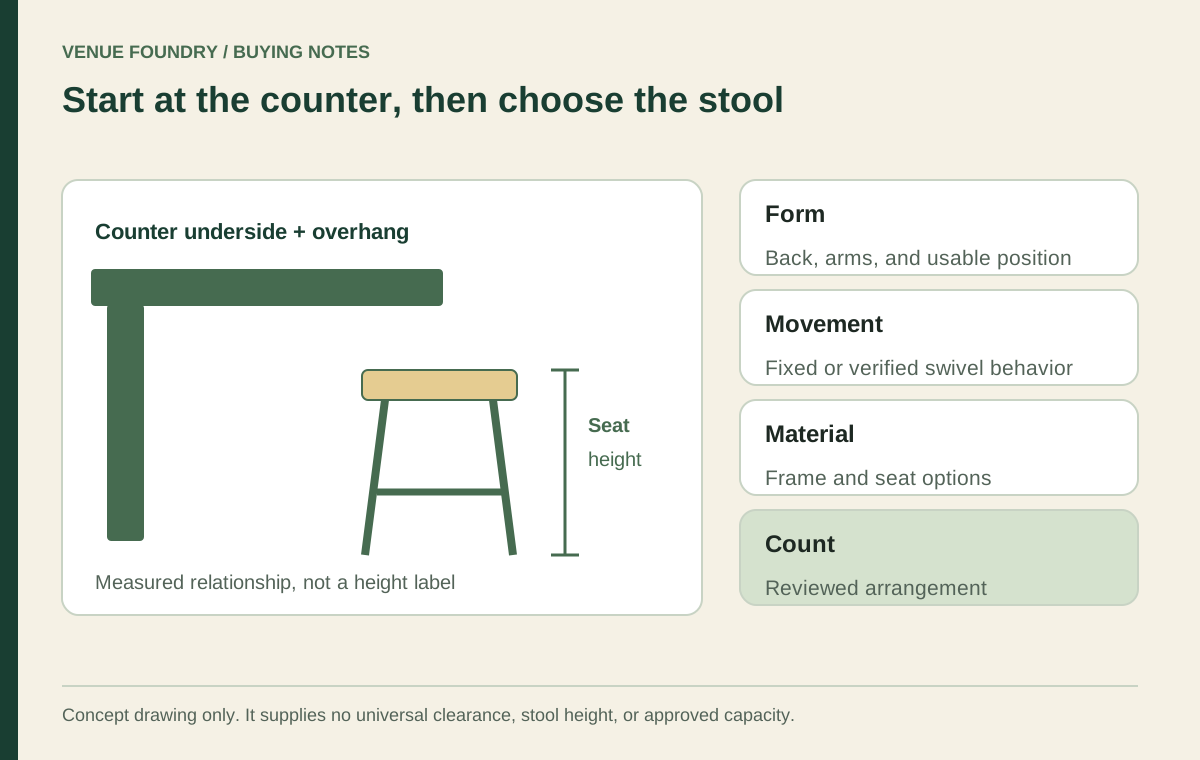
Begin with an activity sequence instead of a feature preference. The commercial stool buying guide covers the broader shortlist. Here, the aim is to compare two arrangements fairly without assuming that a rotating seat automatically needs less room or that a fixed seat prevents every movement problem.
Open diagram at full size (new tab) ↗
Separate three different meanings of fixed
A fixed seat does not rotate relative to its frame. A movable stool can still be picked up or repositioned, subject to the product and room requirements. A floor-mounted stool has an attachment at its base, but its seat may still swivel. Those distinctions prevent a misleading comparison.
The dated record for model FRU-BSB-134, for example, lists both Bolt Down and Swivel Seat as Yes. It demonstrates why fixed floor position and rotating seat are separate fields. The bolt-down planning article addresses the installation and layout commitment that comes with the base.
For an ordinary movable stool, do not infer the seat's behavior from its appearance. If the specification is silent, clarify it. The absence of a swivel label in a short product record is not the same as a manufacturer statement that the seat is fixed.
Compare entry with the same counter
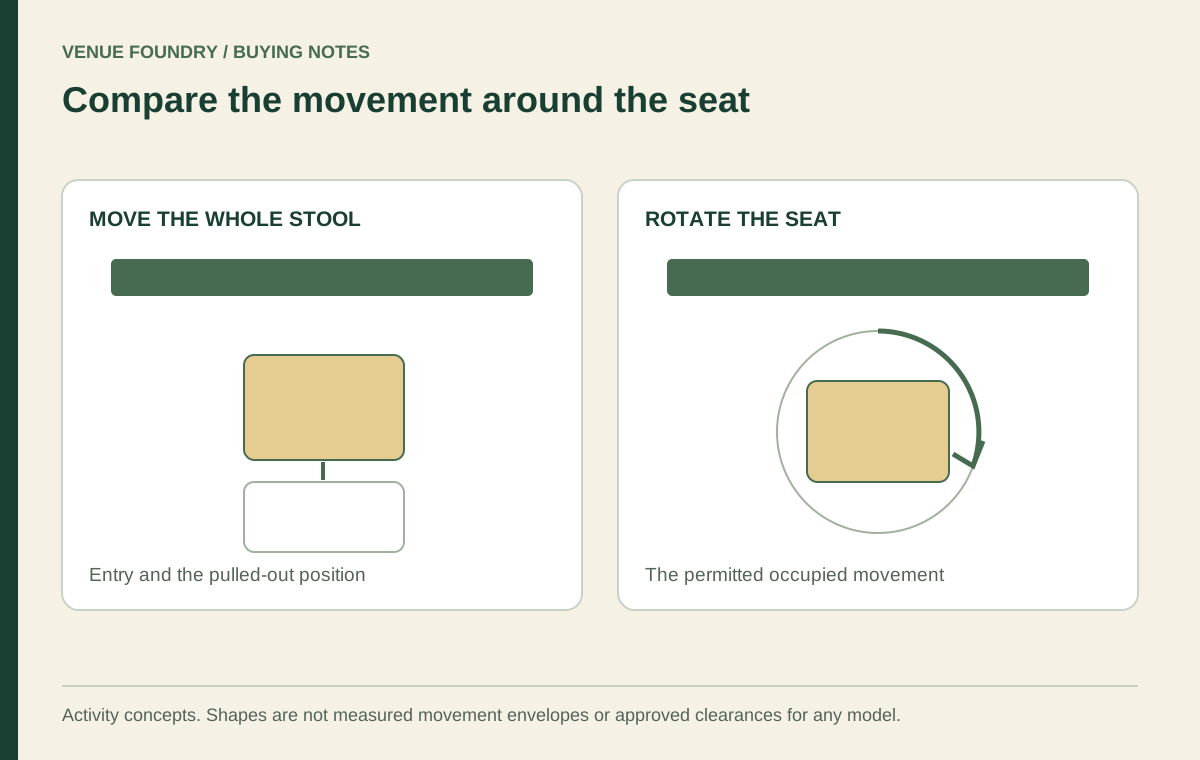
A guest entering a fixed seat may move the stool, turn their body, or approach from a particular side. A guest entering a swivel seat may rotate the seat while the base stays in place. The useful observation is the complete action with the actual counter, not the mechanism turning on an empty showroom floor.
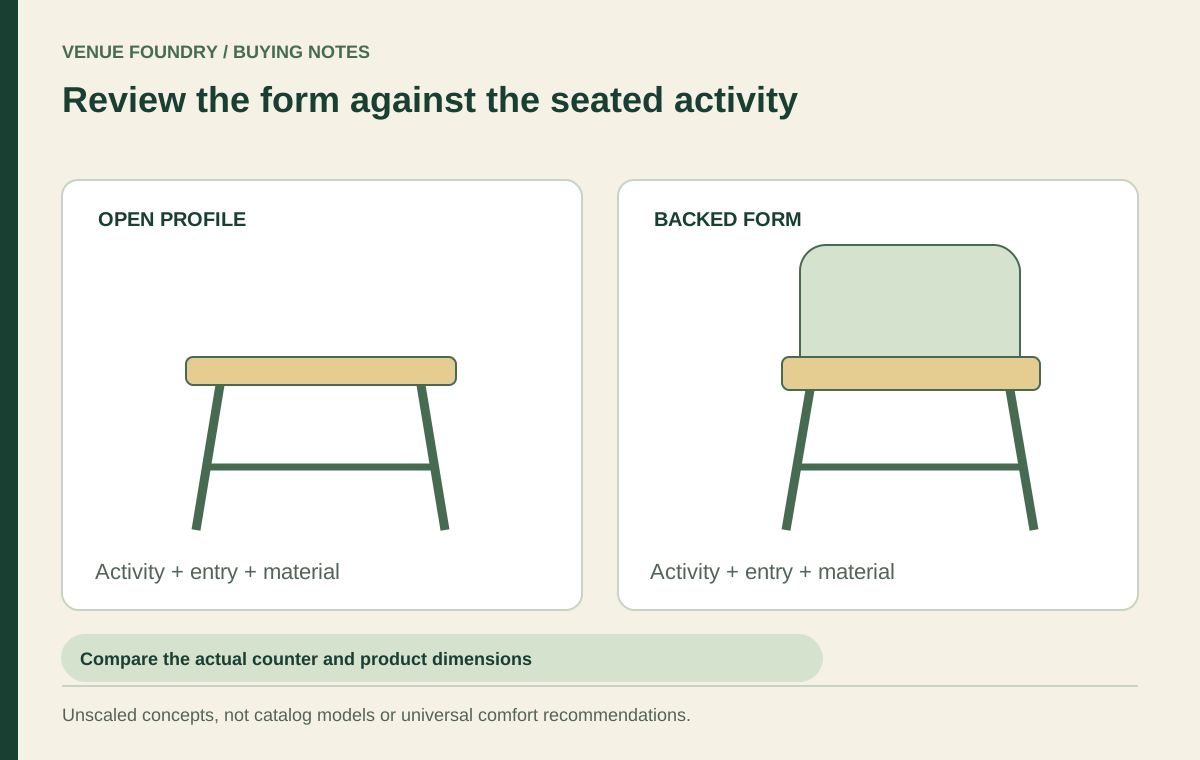
Use comparable candidates where possible. If one stool is much deeper, has arms, and carries a larger back, the review is changing more than rotation. That may be an appropriate comparison for the project, but the result should not be attributed entirely to the swivel feature.
The arm-stool discussion explains how arms can change entry and the relationship to a counter underside. A backed stool without arms introduces a different outline again. Keeping the shape visible makes the movement comparison more honest.
Draw the occupied movement, not only the base
The stool's legs or base describe where part of the furniture rests. They do not describe the full area used by the seat, back, arms, or person as movement occurs. A rotating upper assembly can extend beyond the base footprint, and a movable fixed-seat stool can change position when pulled out.
A plan should distinguish the normal seated position from entry and exit. In an available sample review, observe those stages separately and mark the relevant positions on the project drawing. Do not turn a rough sketch into a universal spacing standard or approved circulation plan.
The layout schedule guide connects those observations to named furniture lines. If the reviewed movement requires a different quantity or placement, the schedule should change with the plan. A basket containing the old count does not represent the accepted arrangement.
Rotation range and return are later questions
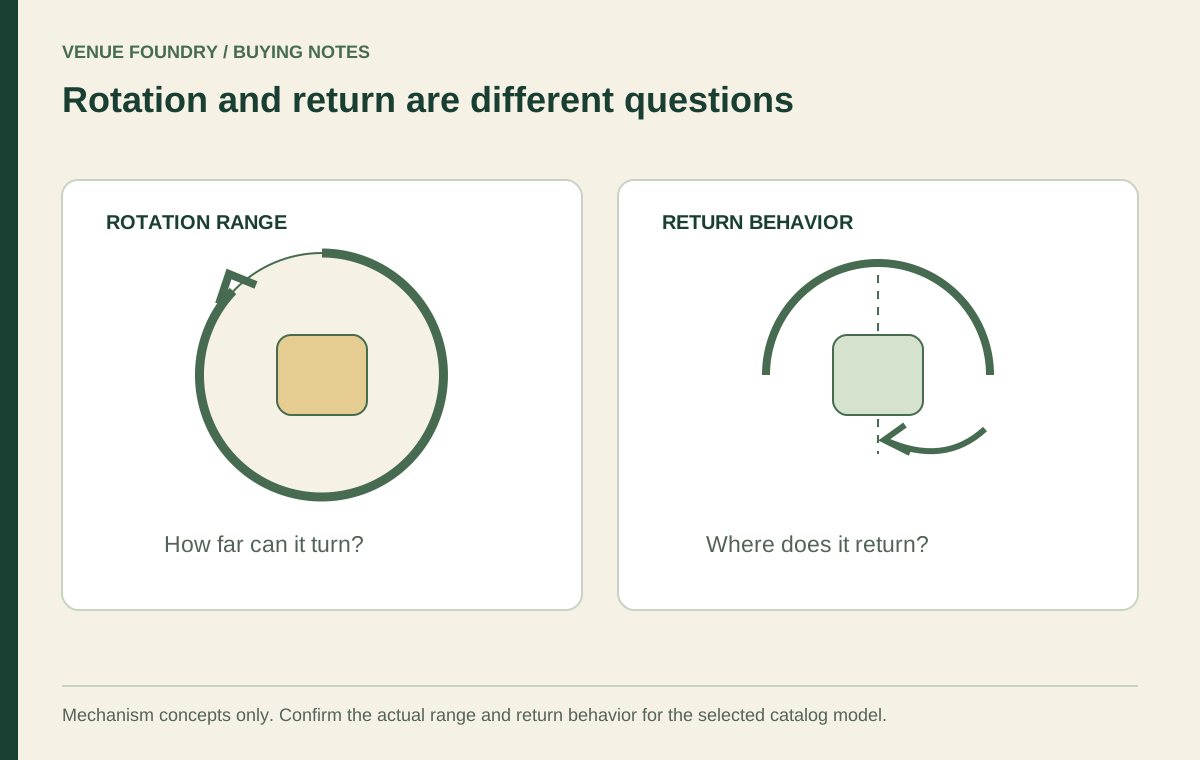
Once a swivel is a serious candidate, obtain its actual movement information. Full rotation and automatic return are different properties. A seat may rotate without returning to a consistent resting direction, or it may use a return mechanism with a particular permitted range.
The swivel mechanism guide covers those details. In the October 17, 2026 record, model FRU-801-304-BS has a swivel seat, but the record does not state its arc or return behavior. The model's padded back and overall depth of 24 inches are known facts; the mechanism details remain a separate inquiry.
Do not promise that return behavior keeps a room tidy or reduces labor by a particular amount. Those would be operating claims requiring evidence from the actual setting. A project can prefer a consistent resting orientation without assigning an invented financial return to it.
Bring service activity into the comparison
Counter seating involves more than arriving and leaving. A guest may reach for a shared dish, speak to a companion, or turn toward a screen. Staff need to serve and clear the position. The furniture arrangement should accommodate the intended activities within the reviewed room plan.
For a meal counter, place the complete setting on the surface during review. For a viewing counter, identify the screen direction. Our sports-bar stool article explores that combination of food and viewing. It should not be used to assume every rotating stool suits every sports venue.
Also consider the unoccupied arrangement. A stool left pulled out and a seat left turned present different conditions. The operator should describe the normal reset task, then evaluate the furniture within that task. Neither movement type earns an automatic maintenance advantage from its name.
Keep the purchase comparison balanced
A practical comparison sheet should contain:
- Seat behavior, separately from whether the base is movable or floor-mounted.
- Selected back, arms, seat material, and overall dimensions.
- The counter and activities used in the project review.
- Normal seating, entry, turning, and exit observations.
- Configured unit price, accepted quantity, and documented service information.
Use the budget planner for the actual selected alternatives. If the swivel model needs a different seat option to meet the brief, include that choice. Comparing an upholstered swivel with a bare-seat starting price for another model produces an incomplete purchasing picture.
Future service information also belongs in the decision. The swivel repair article explains how compatibility and an approved work scope precede repair arithmetic. Do not assume that a mechanism is inexpensive to replace or that a fixed seat eliminates every possible repair.
Select the movement that belongs in the plan
The useful choice is the arrangement whose observed movement fits the actual counter and service pattern. A swivel can be appropriate without being universally better, and a fixed seat can be appropriate without making movement irrelevant. The project needs a specific reason for its selection.
Before proceeding through ordering, reconcile the selected model, mechanism information, and count with the reviewed drawing. Retain the alternatives and their reasons in the saved project. A later buyer can then understand why the room uses that movement pattern rather than treating it as an arbitrary style choice.