The project notebook
Commercial swivel bar stools: make the movement part of the specification
A swivel stool introduces movement into a fixed counter arrangement. That movement has its own specification: how far the seat turns, whether it returns to a starting position, and how the occupied stool relates to the counter and neighboring furniture. The word swivel alone does not answer all of those questions.
Separate the mechanism review from the visual selection. A stool can have an appealing back and the right listed seat height while its return behavior remains unknown. Keeping that gap visible helps the buyer compare actual configurations instead of paying for an assumed feature that the product record never established.
Open diagram at full size (new tab) ↗
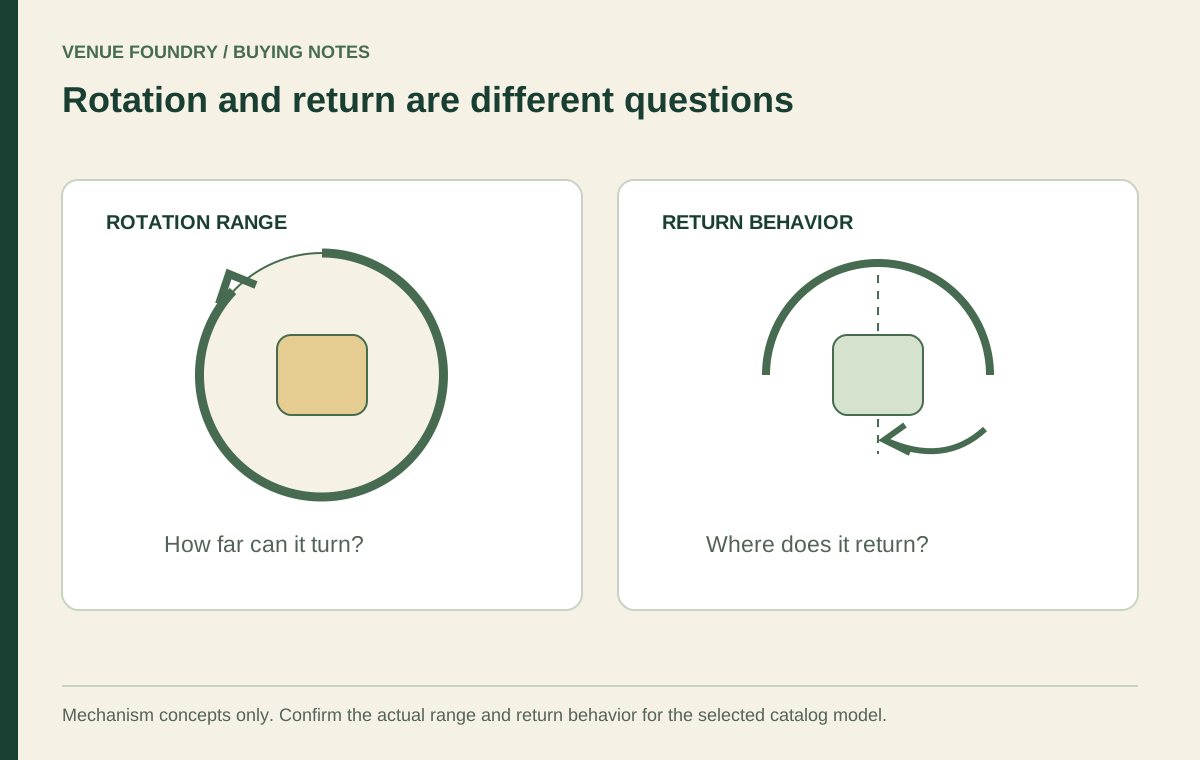
Distinguish rotation from return behavior
Rotation range describes how far the seat can turn. Memory-return describes a mechanism that brings the unoccupied seat back toward a defined position under its stated operating conditions. These are separate properties, so a return mechanism should not automatically be treated as a full-circle swivel.
A 360-degree description identifies a full rotation range. It does not, by itself, establish memory return. Conversely, a return mechanism may have a more limited arc. Read the exact model information and ask for the permitted movement and return behavior in separate fields.
Do not transfer another manufacturer's mechanism description to a catalog stool. The distinction is useful background for the information request, but the selected product still needs its own confirmation. No specific catalog model should gain a return feature merely because it is listed under bar stools with a swivel field.
Read the limits of a real product record
The October 17, 2026 snapshot for FRU-10427-BS-SW states Swivel Seat: Yes. It also identifies a metal frame and offers wood or padded-vinyl seat choices. The saved specification fields do not state a rotation arc or memory-return behavior.
That record supports a shortlist candidate, while leaving a precise mechanism question. Ask what movement applies to the selected model and whether the answer changes with an offered configuration. Retain the response with the product identification instead of replacing the missing fields with a general industry assumption.
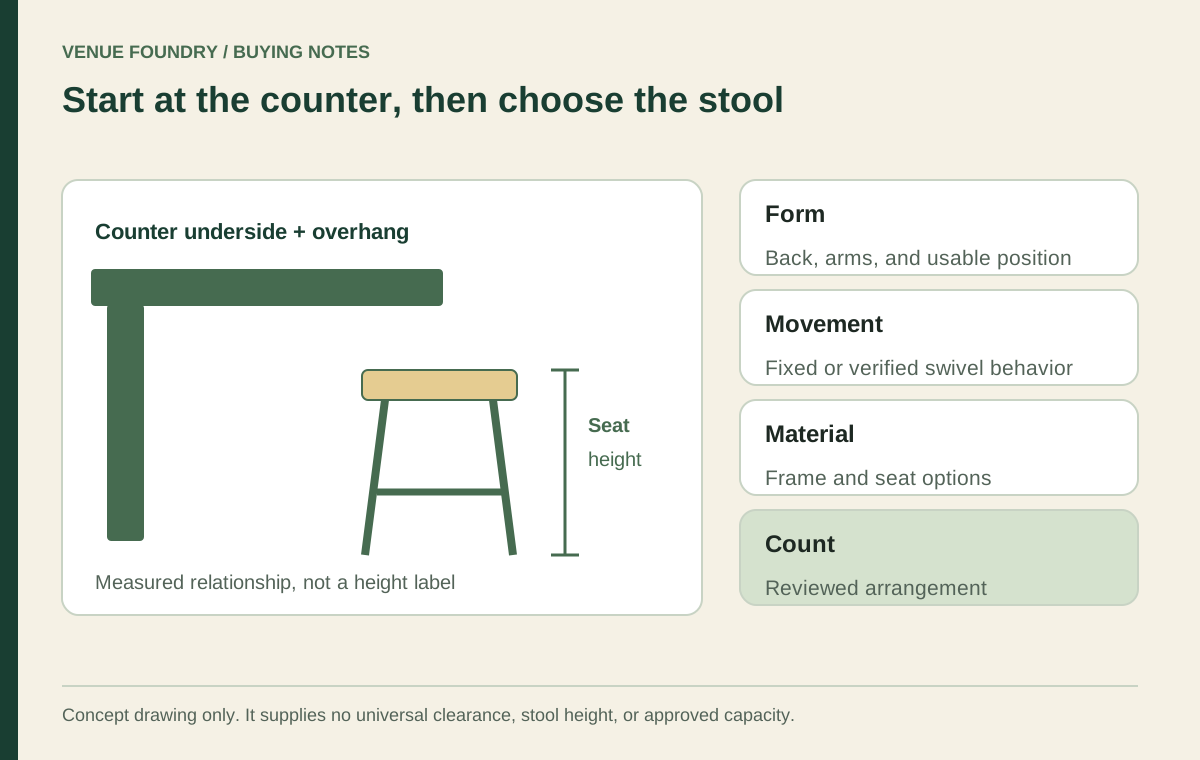
The counter-first stool guide covers the surrounding fit review. Seat height, overall height, and the counter underside remain relevant whether the seat turns or stays fixed. A movement feature does not cancel those dimensional requirements.
Review the occupied movement, not only the empty outline
Place the proposed stool in an appropriately reviewed counter setup or sample arrangement. Consider how a guest enters, turns, and leaves the position. The back or arms can move through an area that an empty plan symbol does not describe.
Keep neighboring furniture and the counter edge in the review. A stool that can turn freely in an open sample area may have a different relationship to the actual bar. Use the layout-to-schedule method to keep the selected product connected to the measured arrangement.
Record observations without treating the session as a universal clearance rule. The project team must review the actual site requirements. Do not publish an invented spacing number or imply that a successful turn in one mockup approves every similar counter.
Consider what the return position would do for the room
A documented return feature can be relevant when the designer wants the unoccupied seats to face a consistent direction. The useful question is whether the exact mechanism and installed orientation serve that intention. Confirm how the product is meant to be used rather than assuming the return position can be adjusted arbitrarily.
A non-returning swivel can prompt a different operating discussion about how the room is reset. That does not make it inherently worse. Compare the actual task and the venue's preference instead of claiming that one mechanism automatically reduces labor or improves guest behavior.
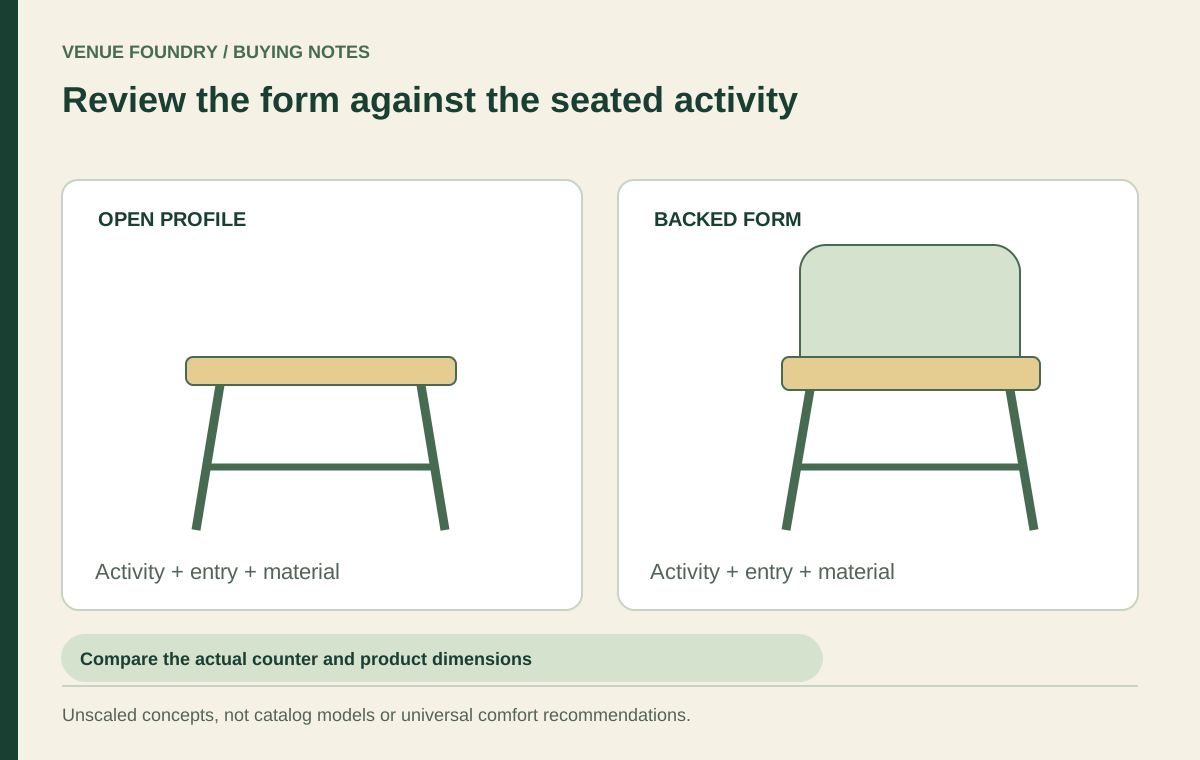
The back-profile article helps connect movement with the visible form. A tall or enclosed back can make orientation more noticeable in the room, while a backless stool presents a different outline. Review the selected pieces rather than relying on a style label.
Keep seat and frame choices in the price comparison
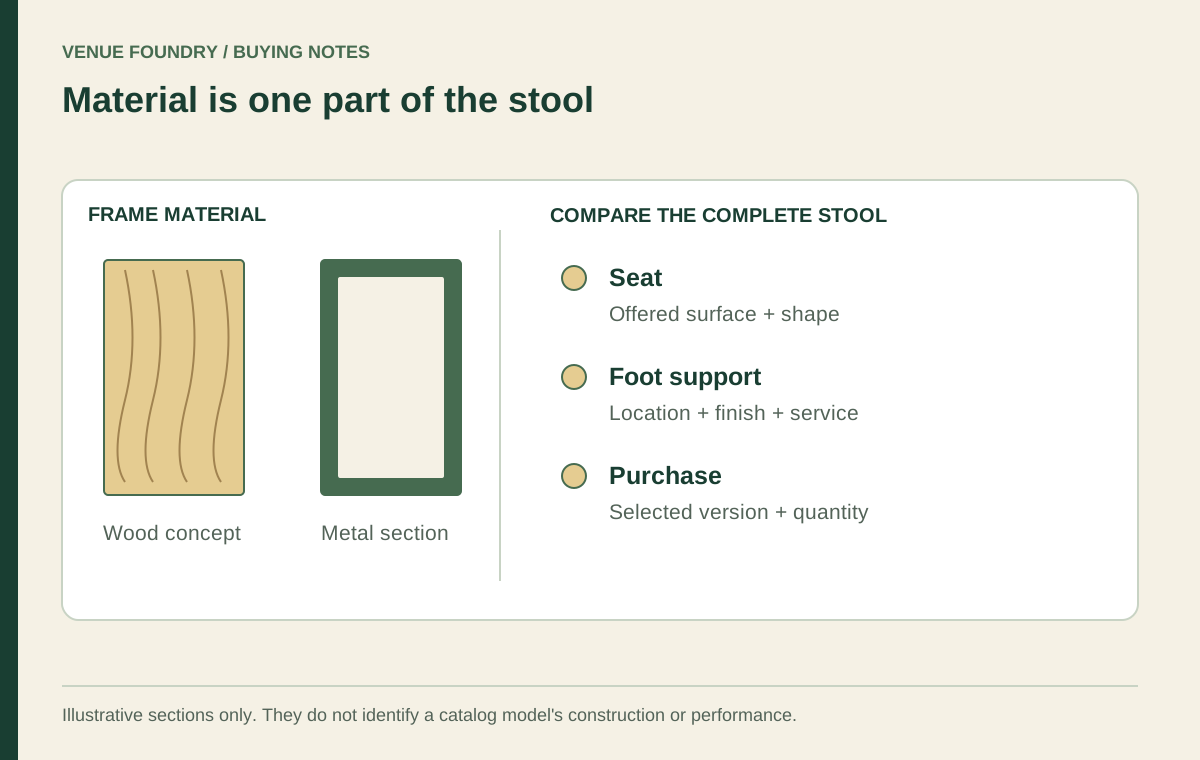
Configure the offered materials before recording the amount. On the dated FRU-10427-BS-SW record, the selected seat branch also exposes its own finish choices. The mechanism question and the seat-material decision should both remain visible in the purchasing brief.
Review materials guidance when interpreting exact option labels and deciding which physical references the project needs. A familiar frame color can connect the stool to restaurant chairs, but the paired chair does not establish the stool's mechanism or construction.
Save the selected version in the budget planner. Compare candidate prices only after the required movement has been confirmed. A cheaper stool that leaves a stated project requirement unanswered is not yet a complete alternative, regardless of how similar its photograph looks.
Ask about service before assuming interchangeability
If future mechanism replacement matters to the decision, request the approved part reference and service process for the exact model. A similar plate or hole pattern in a photograph does not establish that another mechanism can be substituted.
Keep a condition concern separate from a preference for a different swivel behavior. The chair replacement comparison illustrates the broader principle of separating compatible parts, approved work, and the retained furniture's condition. It does not authorize a stool mechanism modification.
The information request can stay concise:
- What rotation range and return behavior apply to this model?
- What instructions govern its installation and use?
- What approved service information or compatible part reference is available?
Retain the dated answers with the project so a later buyer can identify the actual selected mechanism rather than reopening the question from a generic product title.
Order the movement that was actually reviewed
Compare the accepted record with the basket before following how to order. Check that the model and selected seat options have not changed during the price review. A substitution should trigger another look at any mechanism requirement it affects.
The final specification should describe the movement in plain terms and identify the evidence behind it. Rotation, return behavior, occupied use, and service information remain separate but connected decisions. That makes the swivel feature a documented part of the furniture purchase instead of an assumption hidden behind one short catalog label.