The project notebook
Bolt-down bar stools: decide what should stay fixed before approving the cost
Bolt-down bar stools make the seating position part of the installation. That can suit a counter whose arrangement will remain stable, but it changes how the room can adapt. The purchase includes a decision about where each stool belongs, not just which seat looks right.
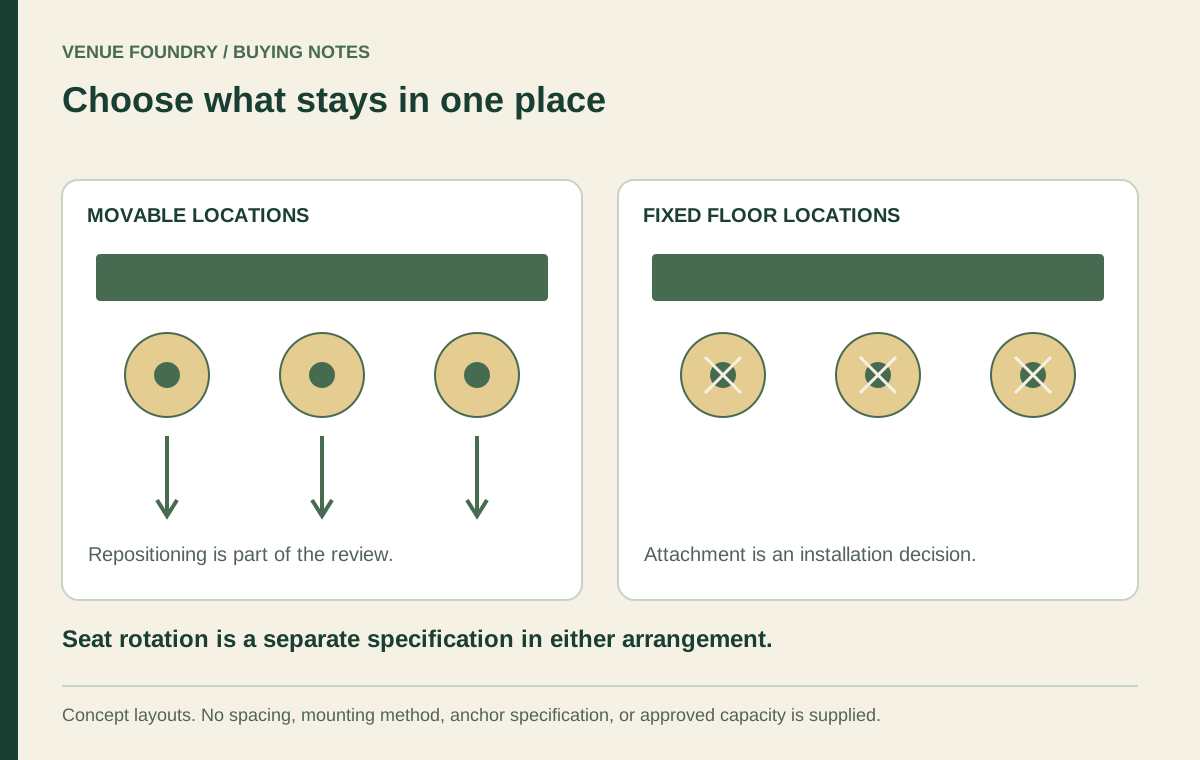
The distinction is clearest when a venue compares two versions of the same service area. One uses movable stools that staff can reposition. The other uses fixed floor locations with whatever seat movement the selected model permits. Browse bolt-down stools with both arrangements in mind before the project commits to an installed count.
Open diagram at full size (new tab) ↗
A fixed base does not mean a fixed seat
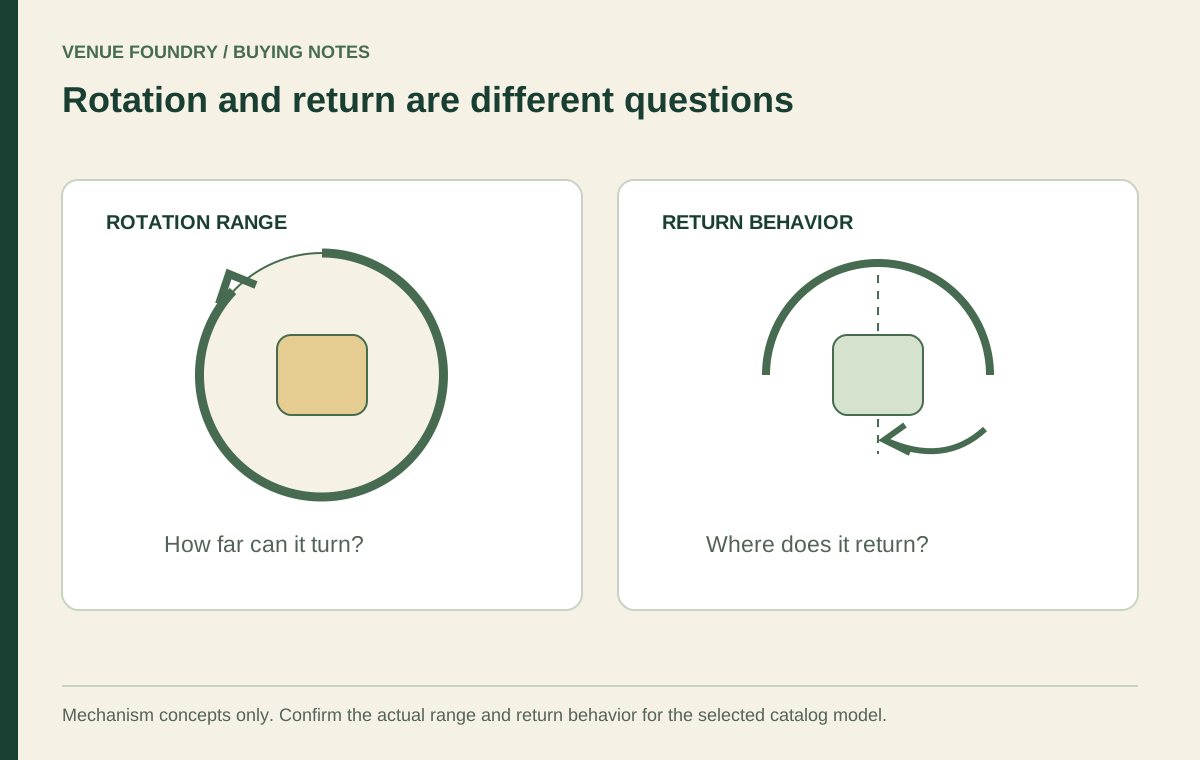
The base position and the seat mechanism are separate properties. A stool can attach to the floor and still allow its seat to turn. That may change how guests enter and leave, but it does not let them pull the entire stool closer to a counter or move it out of a service route.
The October 17, 2026 record for model FRU-BSB-134 lists both Bolt Down and Swivel Seat as Yes. It identifies an indoor metal stool with overall dimensions of 17 inches wide by 20 1/4 inches deep by 42 inches high. The recorded starting price is $160, before a particular seat configuration is selected.
That record does not provide a site-specific mounting design or a rotation range. Do not fill either gap from the product image. The swivel mechanism guide separates rotation from return behavior, while the counter selection guide addresses the relationship between the stool and its eating surface.
What a fixed arrangement gives up
With movable seating, an operator can remove a stool, change a grouping, or clear a section for another use, subject to the room plan. A floor-mounted location remains a physical commitment even when nobody occupies the seat. Future changes can involve removal work and the treatment of the former attachment location.
That matters at counters used differently throughout the week. A lunch service might use full meal settings, while another service needs more standing room. Fixed positions cannot be treated as loose furniture simply because the stools have swivel seats. A venue service brief should describe those changes before installation becomes part of the purchase.
Stable location is most persuasive when the counter itself, the service pattern, and the surrounding plan are also stable. It is less persuasive when the owner expects to alter the counter length or frequently rearrange the zone. These are operating tradeoffs, not claims that either layout produces more sales or needs less labor.
Resolve the position with the counter in place
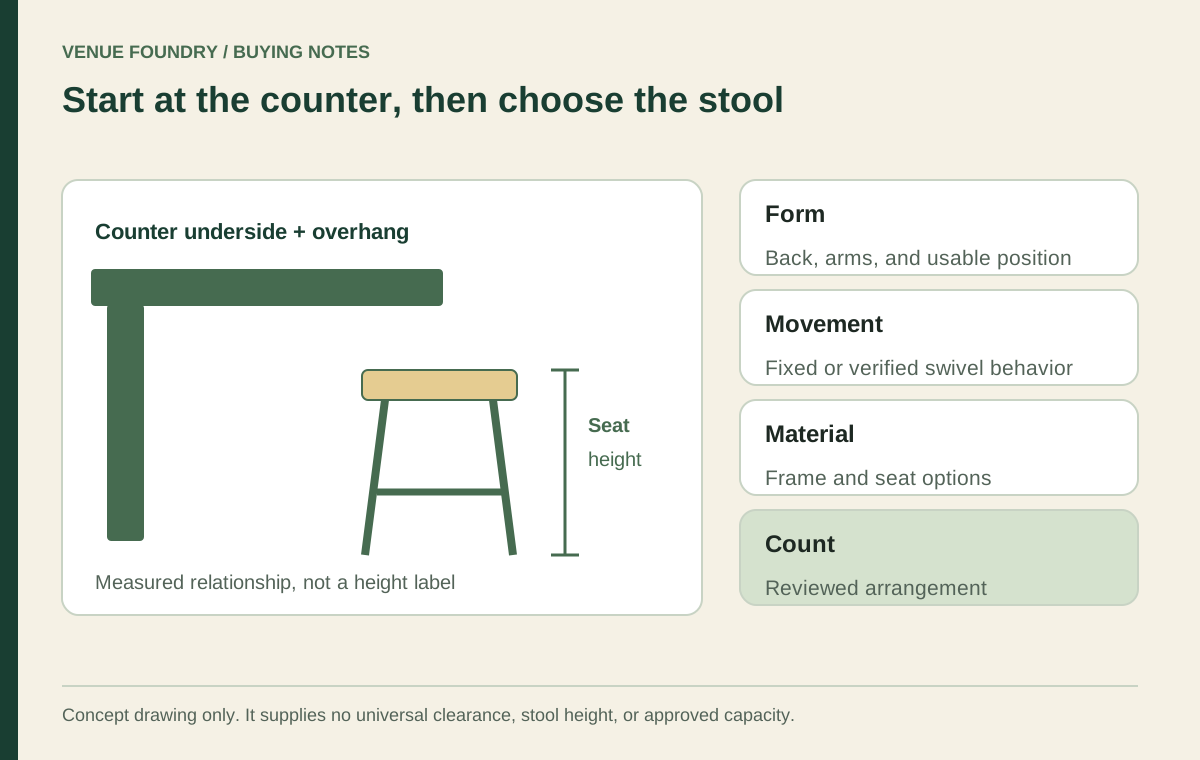
Use the actual counter geometry, including its underside and supports. A decorative front, deep apron, service access panel, or fixed footrail can change the available position. A line on a floor plan does not show every obstruction a guest encounters while approaching the seat.
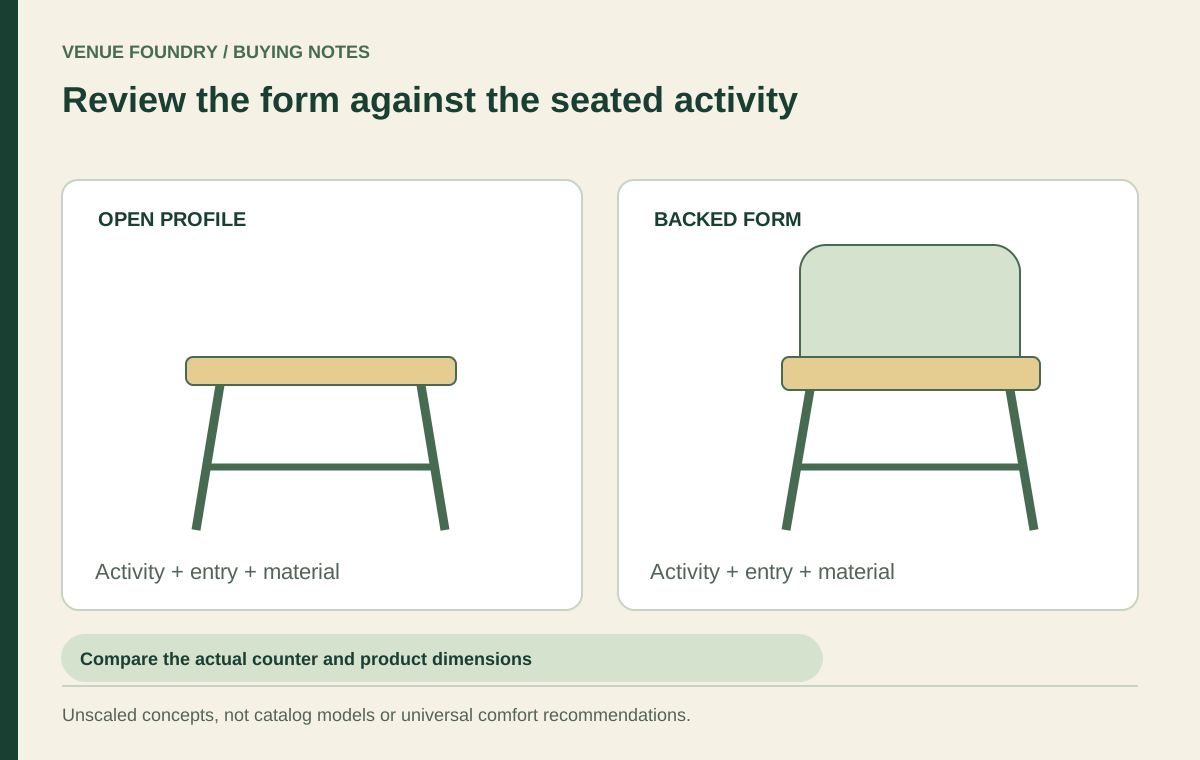
The stool location needs to be assessed with the intended seat form. A backless model and a backed model may have different occupied movement, even if their bases sit on the same center point. Model FRU-BSB-886 has a recorded footprint of 15 by 15 inches and an overall height of 30 inches. Those dimensions do not establish its suitability for a particular counter or provide an approved spacing rule.
Before a location is accepted, the project review should cover the following:
- The selected stool, seat configuration, and documented mechanism behavior.
- The actual counter edge, underside, supports, and adjacent fixed objects.
- Entry, sitting, turning where permitted, and leaving the seat.
- Meal service, clearing, and access to any counter equipment.
- The reviewed routes and accommodation requirements for the complete room.
Treat installation as its own work package
The floor finish is not the same thing as the material that receives the attachment. Tile, wood, or another visible finish does not by itself identify the substrate, concealed conditions, or a suitable mounting method. The selected manufacturer's instructions and a qualified review of the site belong together.
Manufacturers can offer different mounting arrangements for different conditions. That is a reason to obtain the exact instructions, not a reason to borrow an anchor detail from a different stool. This article does not specify anchor type, hole size, fastener count, or installation torque. Those decisions require the actual product and site information.
Separate the furniture order from responsibility for surveying, preparing the site, installation, and acceptance. The purchase record guide helps distinguish product scope from work performed by others. A furniture price cannot be assumed to include a contractor's visit or alterations to an existing floor.
Budget for the arrangement that was reviewed
Put fixed and movable alternatives on separate project lines. Each needs its own selected furniture quantity and price. The fixed option also needs a documented installation allowance until the work scope is priced. Do not enter zero for an unpriced task and call the total complete.
Follow the room budget guide when listing these allowances beside the furniture subtotal in your own project budget. If future removal is a realistic part of the brief, describe that future work rather than inventing a resale value or a guaranteed restoration cost. Such unknowns are meaningful differences between the alternatives.
Keep the installation drawing revision with the selected configuration. A change from one back form to another can reopen the movement review even when the same number of stools remains on the order. Mark the counter's service end and customer approach on that drawing so a rotated print cannot be mistaken for the accepted orientation. The layout schedule guide explains why a plan and a product schedule should reference the same revision.
Commit to locations after the whole review
A bolt-down stool belongs in the project when its fixed location serves the intended use and the installation questions have been answered by the appropriate people. The decision should remain readable: chosen model, seat options, accepted position, installation responsibility, and commercial scope.
Use the contact page to resolve missing product information before a fixed arrangement is ordered. Keep unconfirmed locations out of the final purchasing count. The valuable result is a considered installation with a clear purpose, rather than a row of permanent positions chosen from a product photograph.