The project notebook
Commercial bar stools with different backs need different use questions
A stool's back changes both the seated position and the view across a room. A backless form leaves the rear outline open, while a low or taller back introduces a different visible surface behind the guest. The right comparison starts with the counter's intended use and the exact product dimensions.
Avoid assigning a universal winner to a visit length. A brief drinks stop, a meal, and a longer conversation can prompt different review questions, but guests do not all respond to the same seat in the same way. Describe the activity, examine the actual arrangement, and keep the purchasing decision tied to the observations available.
Open diagram at full size (new tab) ↗
Define the activity at the counter
Write down what will be placed in front of the guest. Drinks alone, a full plate setting, tasting flights, and shared dishes create different tabletop arrangements. The stool decision should follow that service brief rather than a photograph of an empty bar.
Browse commercial bar stools and identify a short list of forms worth comparing. Record whether the proposed product is backed or backless, then read its actual seat and overall dimensions. Do not substitute the overall height for a missing seat-height field.
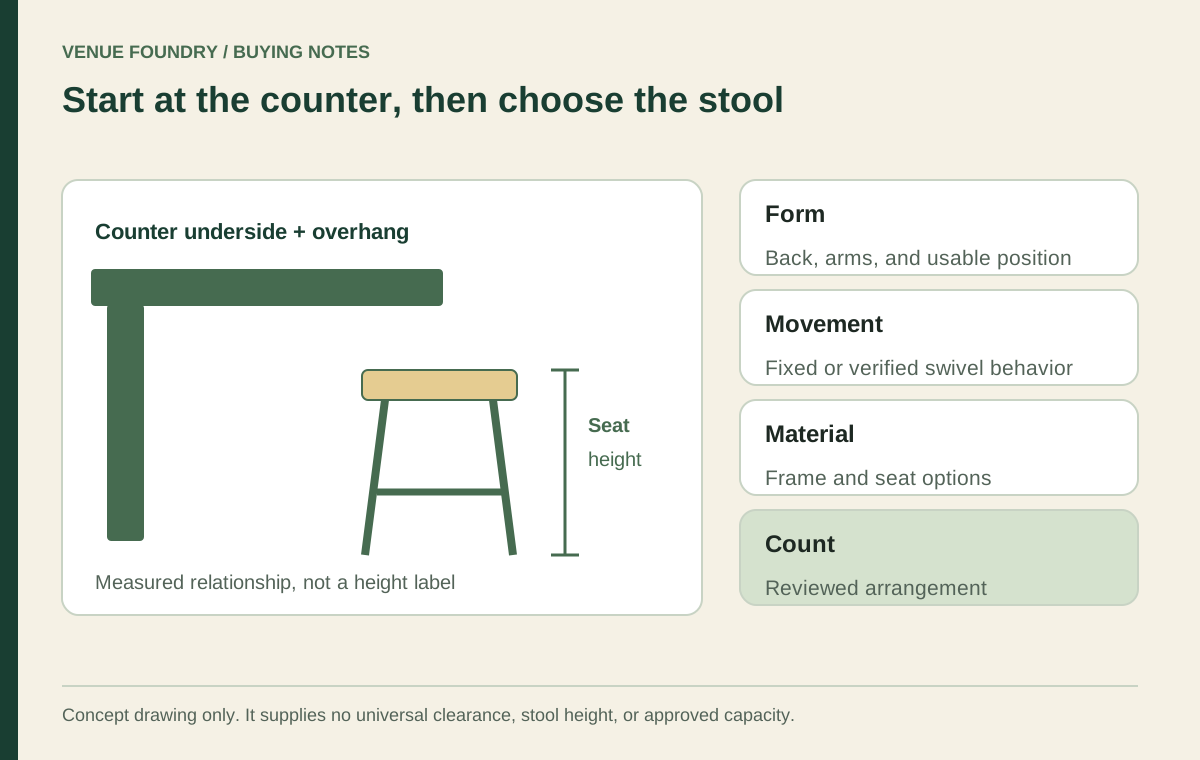
The counter-first guide explains the other half of the pairing. Counter underside features and overhang remain relevant whatever back style is selected. The physical setting needs its own measurements before the team can accept the seating relationship.
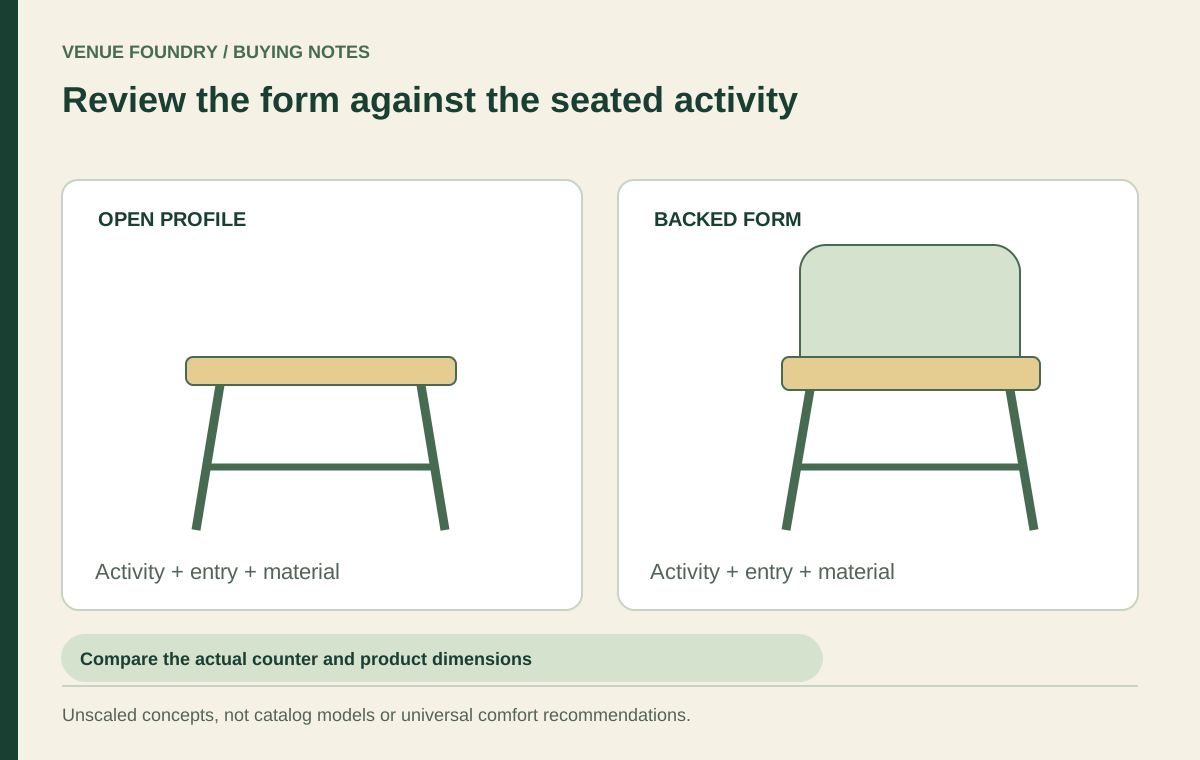
Compare an open profile with a backed form
The October 17, 2026 record for the backless FRU-477-BS-BKLE stool lists an overall width of 16 1/4 inches and depth of 19 inches. It identifies a metal frame and wood seat with offered finish choices. Those fields provide a concrete candidate for the open-profile side of the review.
The FRU-801-304-BS stool lists a padded back, a vinyl seat, and an overall width of 21 3/4 inches in the same dated snapshot. Its listed seat height is 30 1/2 inches. This is a different form and footprint, not simply the first stool with a back added.
Compare the two as complete products. Their dimensions, selected materials, movement, and current prices need separate records. A photograph cannot establish that either candidate belongs under the project's actual counter or that one supports the same quantity as the other.
In that pair, the backed candidate is 5 1/2 inches wider and 5 inches deeper than the backless candidate. Those are differences between the listed outside dimensions, not a required spacing allowance per guest. They give the designer a concrete reason to redraw the selected outline before comparing quantities. A back added to a different model would not necessarily create the same dimensional change.
Review the seated position without making a medical claim
An appropriate sample session can collect feedback about the proposed stool and counter setup. Ask participants to describe the activity they performed and the position they used. Keep those observations tied to the actual product configuration and setting.
The sample review method gives the session a defined job. It can identify a concern about entry, reach, or the relationship to the back. It does not establish a health benefit, a universal comfort result, or a prediction that guests will stay longer.
Where the brief needs a choice of seating positions, retain that requirement in the plan. A backed stool can be one option among several rather than an attempt to make a single elevated seat suit every guest. Restaurant chairs at standard dining positions may serve a separate part of the venue's brief.
Look across the room from more than one position
Review the unoccupied stools from the entrance, nearby tables, and the staff side of the counter. A taller back can become a repeated visual element, while a lower or open profile presents less furniture above the seat. The actual effect depends on the model and the surrounding layout.
Then review the occupied arrangement. The guest and the furniture together create a different view from the empty room. Keep any requirement about screens, service visibility, or visual separation specific to the project rather than assuming a style label settles it.
The venue-type article connects those questions with different service patterns. A sports-viewing position and a small-plate counter may use the same catalog but require different arrangements and review priorities.
Consider how the back moves with the seat
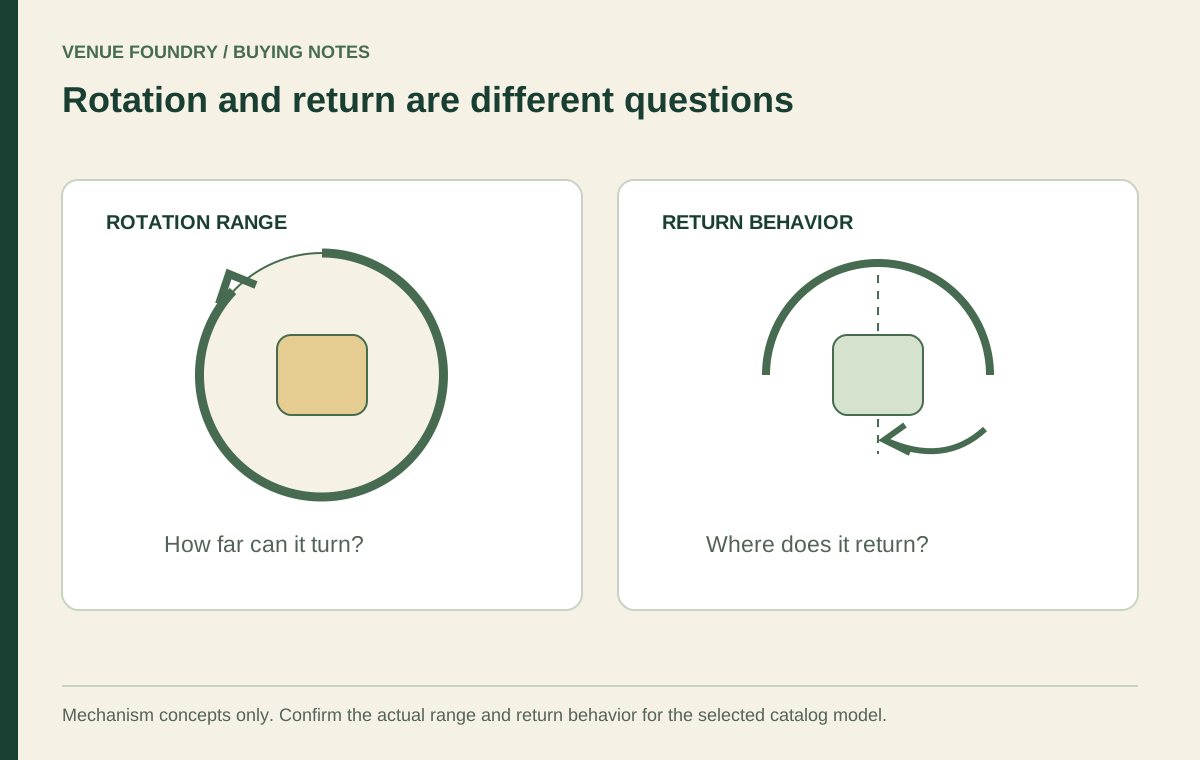
Check whether the selected stool is fixed or swivels. If it turns, ask about the rotation range and any return behavior. The back can move toward the counter or adjacent furniture, so the occupied movement should be reviewed along with the stationary outline.
Use the swivel specification guide to keep mechanism properties distinct. A swivel field does not prove a full-circle rotation or memory return. Missing information should remain a direct product question rather than an assumed feature.
Record how the room will be reset between services. Do not claim that a backless or returning stool automatically saves time. A proposed operating benefit needs an actual observation or a clearly labeled assumption before it enters a financial comparison.
Keep material and care decisions separate from the back height
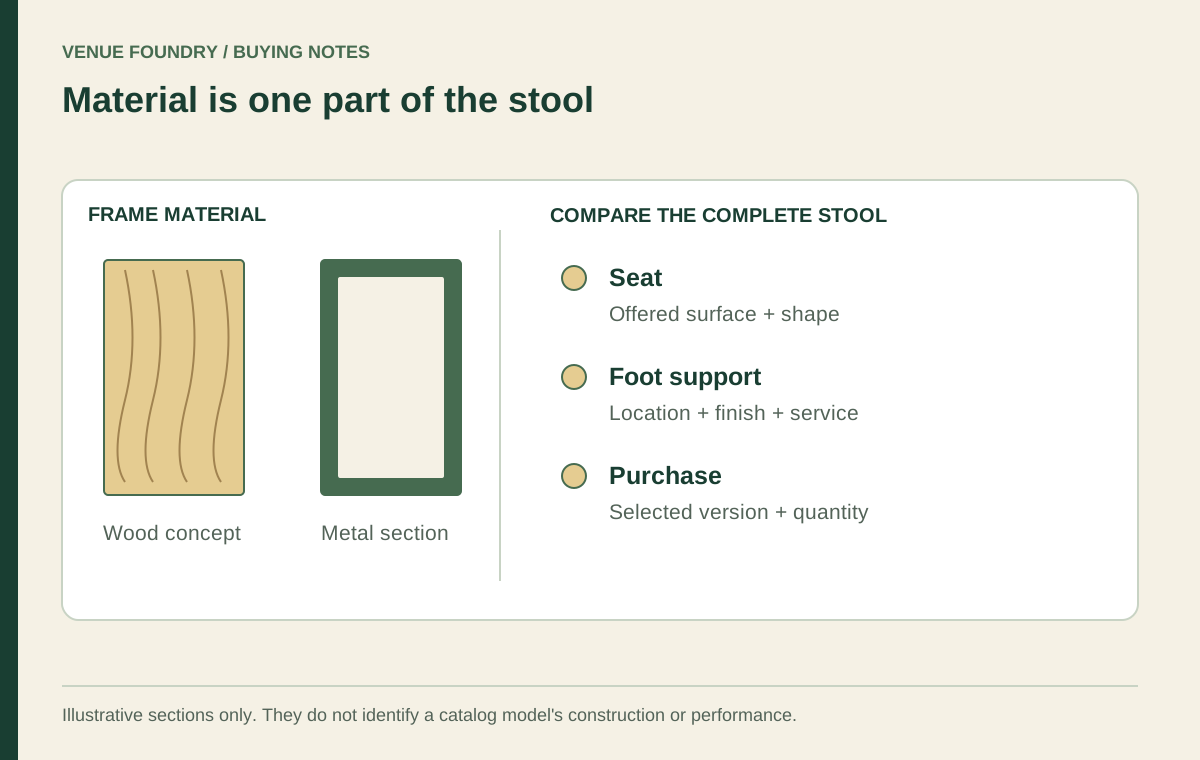
Read the frame, seat, and back materials individually. An upholstered back may need a different reference from the selected seat, while a wood or metal back has its own listed finish. The appearance should be approved as a complete configuration.
The materials guide explains how to review a selected surface beyond its color name. Ask for product-specific instructions rather than assuming every padded back or exposed wood surface accepts the same routine. Serviceability also needs an actual compatible-part record if it matters to the purchase.
Compare candidates through three linked records:
- The intended counter activity and reviewed seated arrangement.
- The exact dimensions, back form, movement, and selected materials.
- The current configured amount and quantity for that arrangement.
The budget planner can hold separate alternatives while these decisions are reviewed. Name the alternatives clearly so they are not mistaken for a combined order.
Let the chosen form carry a clear purpose
Use room planning to reconcile the accepted stool quantity with the actual arrangement. Then compare the selected lines in the basket with the saved version. A last-minute change in back style may alter more than the appearance and deserves a review of the affected fields.
The final choice should explain what the stool is being asked to do. Backless, low-backed, and taller forms can each enter a useful shortlist, but the accepted product needs a measured setting, a clear service brief, and an identified configuration. That makes the back profile a considered part of the room instead of a shortcut based on an assumed visit length.