The project notebook
Restaurant furniture spare parts planning: identify compatibility before reserve quantity
Restaurant furniture spare parts planning starts with the actual component and the product it belongs to. A drawer of similar-looking glides or fasteners is not a useful reserve if nobody can establish compatibility. Identify the part, its approved application, and the reason for holding it before assigning a purchasing quantity.
Build the plan from the installed inventory and documented service information. Some questions may be answered by the manufacturer or supplier, while others require an assessment of the actual furniture. Keep those responsibilities clear instead of treating every small component as an interchangeable maintenance item.
Open diagram at full size (new tab) ↗
Connect the reserve with the installed model
Record the furniture model, selected version, and any relevant identification label. Retain the part reference supplied by the responsible source where one is available. A product family name can be useful context while still being too broad to identify a compatible component.
The chair comparison guide helps preserve complete restaurant chair configurations. If several purchasing rounds introduced different versions, distinguish them in the inventory before assuming one spare fits every chair in the room.
Keep the actual application beside the part. A glide reference should explain which furniture it serves, while a replacement seat reference may also need the selected upholstery or mounting information. Do not infer those relationships from a photograph alone.
Ask which components are available and serviceable
Obtain current information for the exact product. Ask whether the relevant component is supplied separately and which applicable instructions govern replacement. A part being physically removable does not establish that an untrained person should replace it or that a substitute is acceptable.
Herman Miller's service page, for example, distinguishes certain parts sold through its store from other components handled through an authorized dealer. That illustrates a model-specific service route, not the availability of parts for this catalog. Use the responsible source for the actual furniture under review.
The materials guide can organize surface and care questions, but it does not replace technical compatibility information. Keep an unresolved part identity open rather than choosing the closest-looking item to fill the storage bin.
Use the venue's records to decide what deserves a reserve
Review actual service requests and the installed quantities. Identify which compatible parts have been used, why they were used, and which models they served. A record of consumption can inform a discussion without proving a universal failure rate or future need.
Do not set one spare percentage for every component simply because it makes the spreadsheet easy. Availability, the consequence of an unavailable item, and the approved service process can differ. The responsible team should choose a reserve based on the actual operating requirement and supplier information.
The replacement-planning guide helps distinguish a spare-part decision from a broader furniture replacement. A component reserve should support an identified service route, not postpone an unresolved assessment of the complete item.
Count the stock already held before ordering more
Identify usable, correctly referenced stock in the existing reserve. Separate unknown or unverified components from the count used for planning. A container full of parts can look sufficient while containing several incompatible versions.
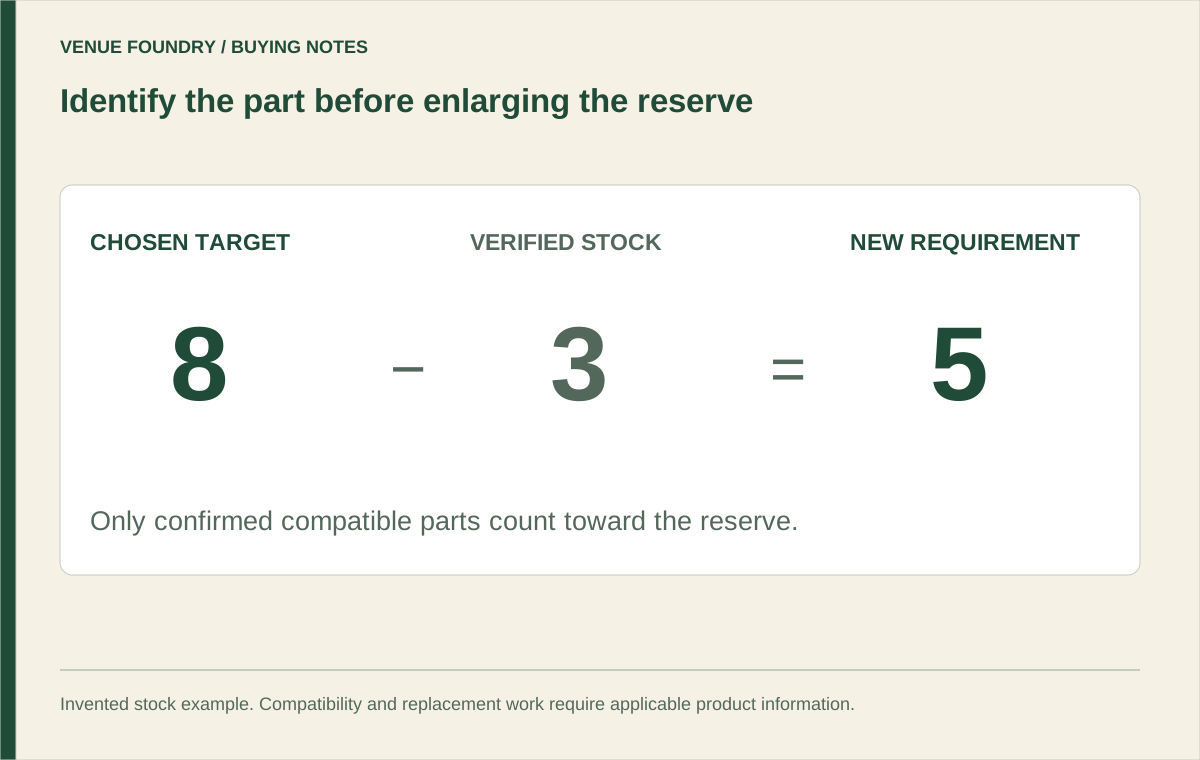
For an invented example, the responsible team has chosen a reserve target of eight confirmed compatible parts. Three verified parts are already held, so the new purchase requirement is five. The arithmetic is eight minus three; the target itself is an illustrative decision, not a recommended stock level.
Keep the part's selling unit clear. If a supplier sells a defined pack, convert the required quantity using the actual pack contents and retain the resulting excess as stock. Do not assume an individually pictured part is always sold individually.
Give the reserve a usable identification system
Keep part references and compatible product identities visible in the approved storage record. Retain applicable instructions and the date or source of the compatibility confirmation. The next person should be able to identify the intended use without comparing shapes by eye.
Follow the relevant storage instructions for the actual component and material. This article does not prescribe conditions for adhesives, finishes, upholstery, or other products. Keep such requirements with their own applicable documentation rather than applying one general storage rule to every spare.
Follow the project checklist guide when documenting the related furniture configuration in your own project records. The physical stock record belongs in the venue's supporting inventory system. A saved furniture list does not provide live spare-parts tracking.
Price the complete replenishment decision
Obtain the current part price and any applicable service or shipping amount. Keep the actual scope visible. A low unit amount can still be only one part of the cost needed to complete the approved work.
Use the itemized comparison brief to separate known costs from open questions. The budget planner can preserve the broader furniture scenario, while the supporting maintenance budget records confirmed parts and service costs.
Avoid claiming that a stocked spare will save a particular amount of downtime or extend furniture life by a fixed period without evidence. The useful benefit of the plan is that compatible stock and a known service route are identified when the relevant need occurs.
Review the reserve when the furniture changes
When a model or selected version is replaced, check which held parts remain applicable. Keep obsolete or uncertain stock distinguishable rather than relabeling it to match the new furniture. Similar dimensions or appearance do not establish a compatible substitution.
The multiple-location standard guide can connect parts planning with a shared product reference. Each location still needs an accurate count of its installed versions and held stock. A network-wide total should not hide that a part is unavailable at the site that needs it.
Use the current catalog for new furniture requirements and follow how ordering works for a confirmed purchase. Use delivery planning for the actual shipment arrangement, while keeping any separately supplied part inquiry tied to its responsible source.
Make the reserve identifiable before making it larger
A useful spare-parts plan connects an approved component with the furniture it serves, a chosen stock level, and a current service route. It leaves uncertain compatibility visible rather than treating every stored item as ready for use.
Keep the record current as parts are used and furniture changes. A small, identifiable reserve supports better decisions than a larger collection whose purpose and compatibility have been forgotten.