The project notebook
A wood restaurant chair construction review starts with the actual model
Construction language is useful when it identifies how a particular chair is made. It becomes less useful when a broad phrase is treated as proof of every performance claim a buyer hopes to make. Start with the exact model, then ask which joint, brace, assembly detail, or document supports the requirement being reviewed.
A wood frame is a material description. It does not, by itself, identify the connections between its members, the quality checks performed during manufacture, or an approved repair process. Keeping those questions separate helps the purchaser compare real evidence instead of assigning a higher value to whichever description sounds most impressive.
Open diagram at full size (new tab) ↗
Map the connections that the buyer needs to understand
Look at the places where the legs meet the seat structure, where the back joins the frame, and where any connecting members appear. Name the area in a photograph or drawing when requesting more information. A precise question is easier to answer than asking whether the chair is well built.
Browse wood chairs, then open the actual product record. Do not infer a hidden joint from the overall style. A visible fastener may identify one connection without describing the entire assembly, while an upholstered area may hide details the listing does not show.
Keep the inquiry within the product's documented use. Do not disassemble a sample or alter a component to investigate a joint unless that work has been specifically authorized through the appropriate process. A purchasing review should not create a condition problem while trying to understand construction.
Distinguish a joint description from a performance result
Wood connections can use shaped mating parts, dowels, adhesives, mechanical fasteners, or combinations of those approaches. The name of a connection identifies an idea about construction. Its performance also depends on the actual execution and the conditions represented by the relevant evidence.
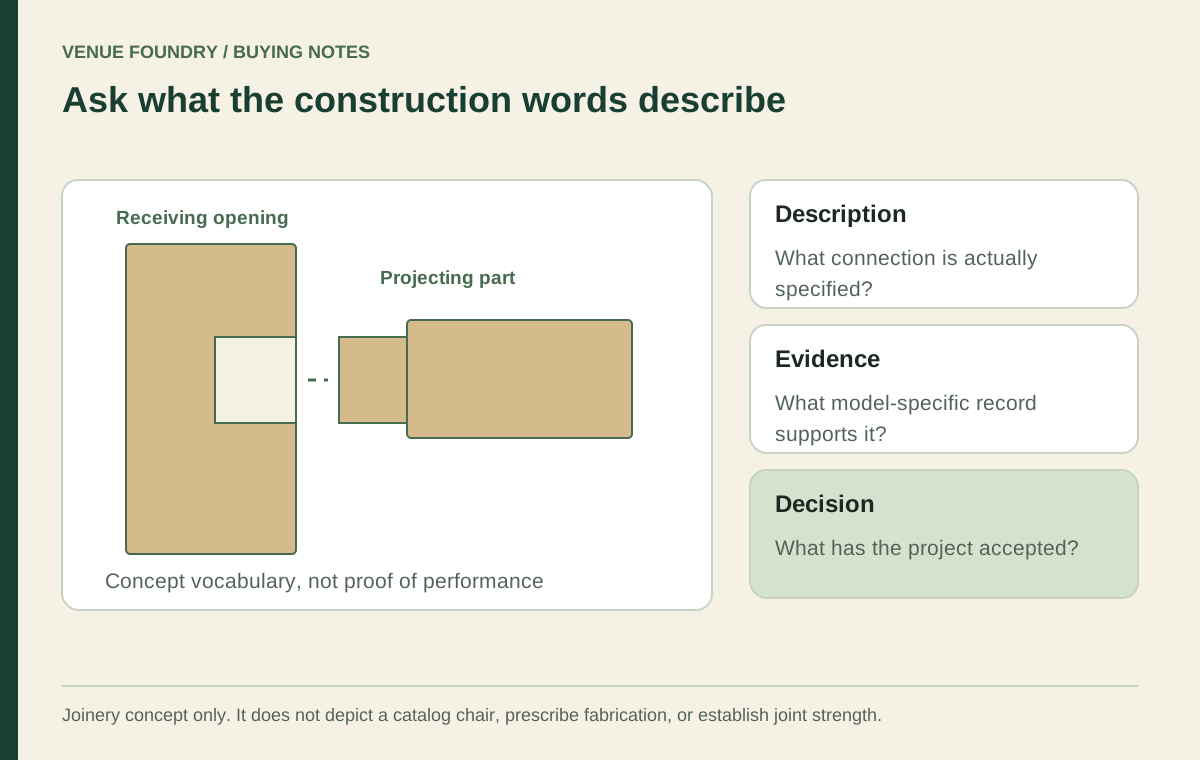
For example, a mortise-and-tenon description concerns a projecting part fitted into a receiving opening. That description alone does not supply dimensions, adhesive details, manufacturing quality, or a test result. Avoid turning a recognized joinery term into an unsupported ranking of every chair using it.
Mechanical connections in wood also involve different loading directions. A fastener can resist being pulled out, a sideways force, or a combination. Wood's properties differ along and across the grain, and moisture changes can affect its dimensions. That is why a visible screw count is not a reliable strength ranking. The connection has to be considered as part of the actual product design, with appropriate evidence, rather than judged by the number of metal heads a buyer can see.
The weight-capacity evidence guide explains the same distinction between a listed statement and supporting documentation. Ask for information applying to the selected model. Keep the product description, test evidence, and project acceptance as separate records.
Read what the catalog actually establishes
The October 17, 2026 snapshot for chair FRU-1000-AR identifies a wood frame, a padded back, arms, and offered fabric or vinyl seating choices. Its saved specification fields do not identify the hidden joint geometry. Those fields support a material and configuration review, not a construction teardown.
That limit is useful information. If the project requires a particular connection detail, ask for a drawing, written explanation, or other suitable model-specific record. Do not fill the missing field with a construction claim copied from a visually related chair.
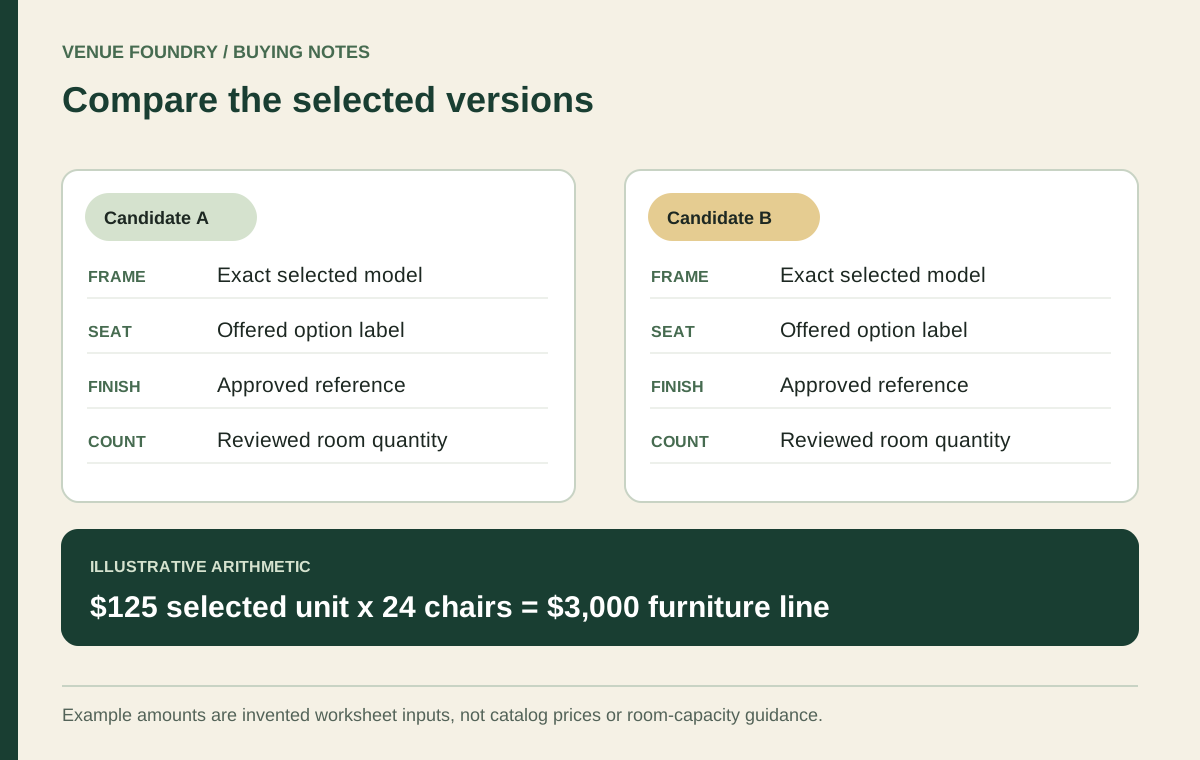
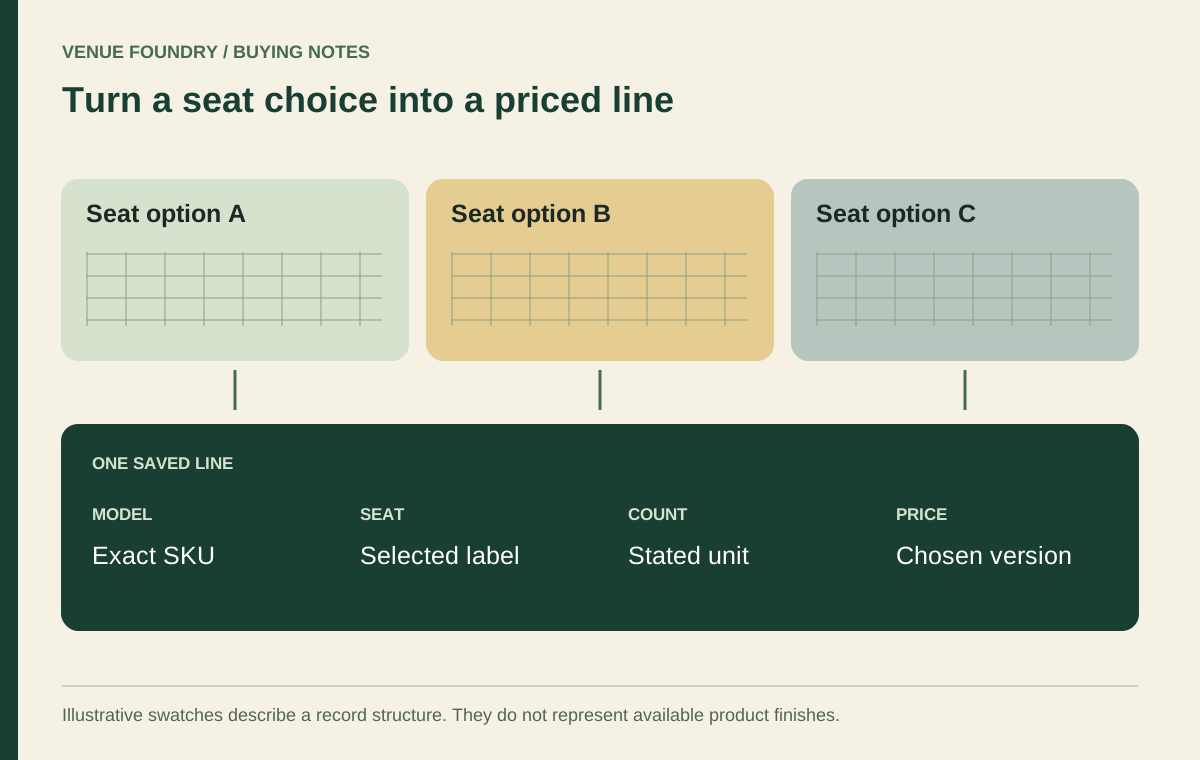
Use the broader restaurant chair comparison to keep the selected seat and finish aligned while evidence is collected. Otherwise, the team can end up comparing construction information for one version with pricing for another.
Ask how the chair arrives and what assembly is required
Identify whether the selected product requires assembly and which instructions apply. Keep supplied hardware, tools if included, and the responsible party distinguishable in the purchase scope. A photograph of an assembled chair does not establish its arrival condition.
If the project is considering an assembly option, record the exact control or confirmed arrangement. Do not assume it applies to every model in the same category. The selected product and its commercial scope should answer the question before the full quantity is approved.
Use delivery planning for the receiving route and responsibilities. Assembly and placement can involve separate arrangements, so keep any unconfirmed charge outside the furniture subtotal. A precise unit price should not silently become a completed installation amount.
Keep finish and care information beside construction
A wood-frame selection also needs the exact finish record and relevant care instructions. Construction evidence does not replace those documents. The buyer should know which selected version is being reviewed and what instructions apply to its surface.
The finish approval guide addresses the relationship between chair, table, floor, and lighting. Use that visual review alongside the construction inquiry without treating one as proof of the other. An accepted palette does not certify a joint, and a documented joint does not settle the room's color relationship.
Read materials guidance when organizing the care questions. Ask for the product-specific information needed by the venue's routine. Avoid claiming that every wood chair accepts the same cleaning products or that a finish name establishes an identical coating system.
Review service questions before predicting ownership cost
Ask what approved service information and compatible replacement components are available for the model. The answer may be relevant to a purchasing decision, but it should be recorded as a dated response. A part that looks removable is not automatically offered separately.
The replacement-seat comparison separates compatible parts from the condition of the retained chair. Keep the same separation when considering joints or bracing. A surface refresh should not stand in for an appropriate assessment of another reported concern.
Three records help the buyer compare candidates:
- The exact construction statement and the model it describes.
- The supporting information received and any unanswered requirement.
- The selected configuration, current price, and documented service scope.
Use the budget planner to retain the purchasing line while the evidence is reviewed. Keep an unanswered question visible instead of treating the more expensive candidate as automatically better documented.
Let the evidence set the language of the decision
An appropriate sample review can add observations about the stated chair and table setup. It is not a substitute for a laboratory test or an authorization to perform improvised structural checks. Describe what was actually reviewed and keep the limits clear.
The final choice should name the product, its selected version, and the information that supported approval. That record gives construction language a useful role in the purchase. It explains what is known about the wood chair without asking a familiar joint name or an appealing photograph to prove more than the evidence can support.