The project notebook
Restaurant table tops for retained bases: begin with the connection
Keeping existing table bases can reduce the amount of furniture a renovation replaces, but a new top must be suitable for the retained support. A similar outline or the same color does not establish that relationship. The connection, selected size, weight, condition, and seated use all remain part of the decision.
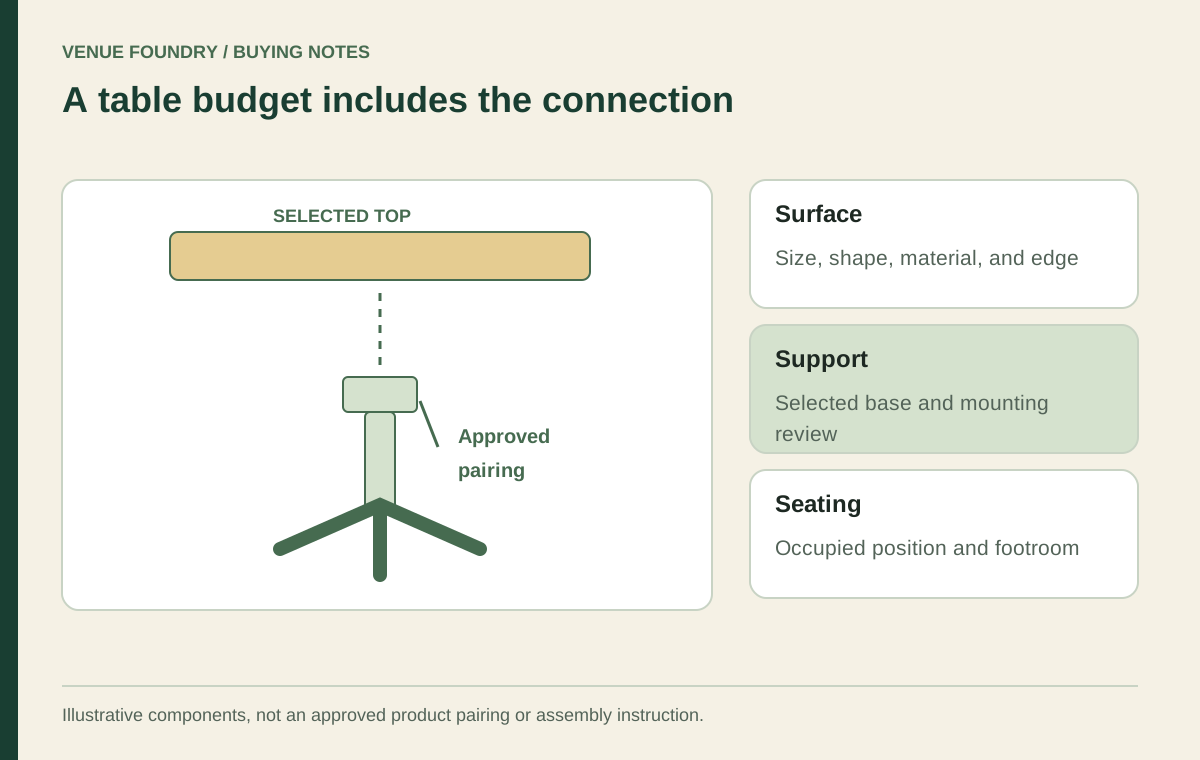
Start with the bases already in the room rather than with a decorative top shortlist. The table-system guide treats the top and support as a complete system. A renovation changes one part of that system, so the original pairing cannot simply be assumed to carry over.
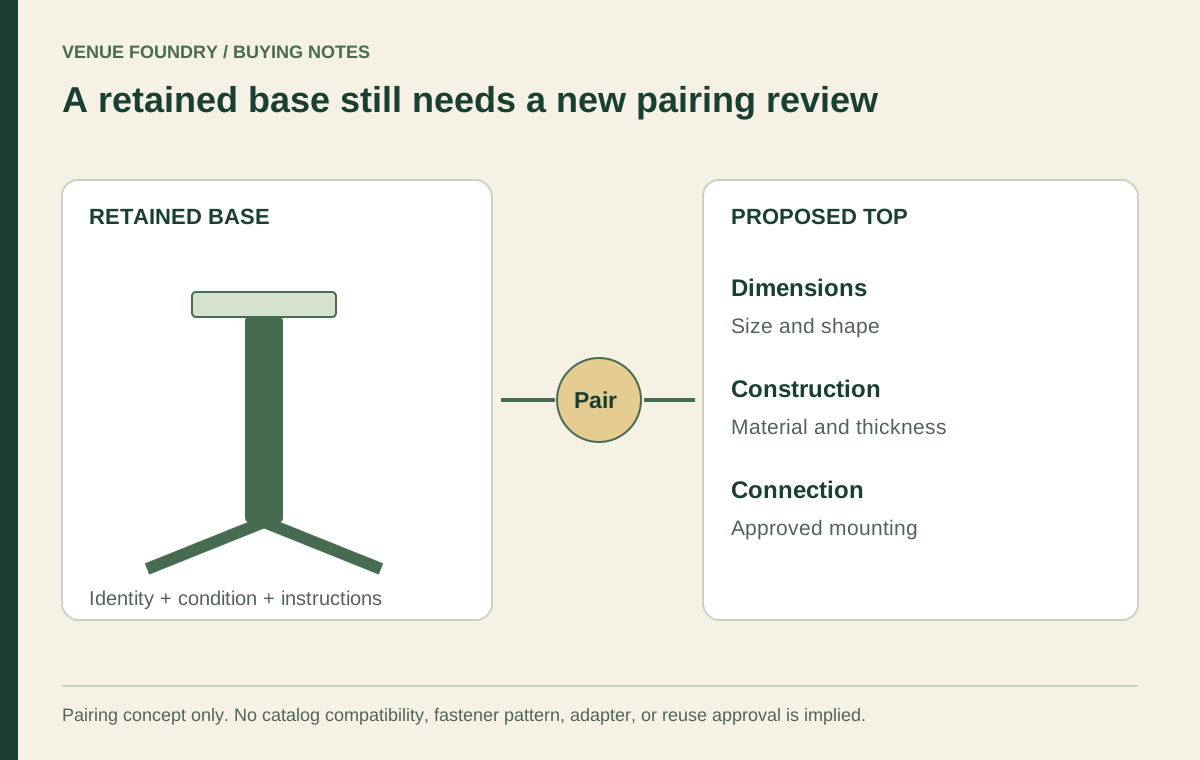
Open diagram at full size (new tab) ↗
Identify the retained support precisely
Find the base model, size, height, top plate or mounting information, and any available manufacturer instructions. If there are several visually similar versions in the room, separate them. A base with a larger footprint or different height may have different permitted top pairings.
The October 17, 2026 record for base FRU-ALM01-SIF-30 illustrates this distinction. It lists an aluminum X-prong base at 28 inches high and offers a 22-by-22-inch option or a Two Prong Double Base. The generic product identifier does not replace the selected size in a compatibility inquiry.
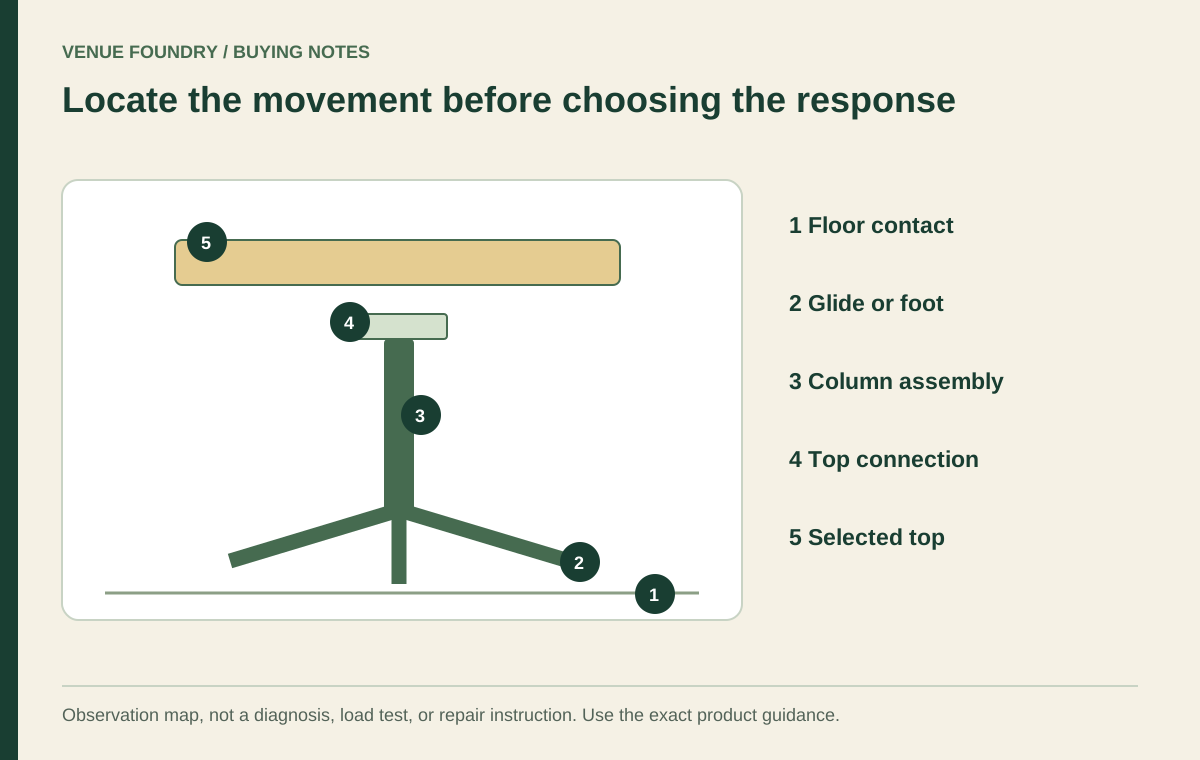
Keep the condition assessment separate from identity. A correctly identified base may still have a damaged component or another issue that affects whether it can be retained. The table movement review explains why floor contact and assembly questions should be resolved before buying a new surface to sit above them.
Compare the new top with the old one
The relevant changes include dimensions, shape, weight, thickness, construction, and mounting requirements. Moving from a small square to a long rectangle is clearly a change, but a similar-sized top in a different material can also alter the pairing. Do not reduce the comparison to width alone.
A complete top description should state the selected version. FRU-ERAT-ELM, for example, offers several dimensions in the dated catalog, including 24 by 24 and 30 by 72 inches. Those are different selected tops under one product record, with different questions for any retained base.
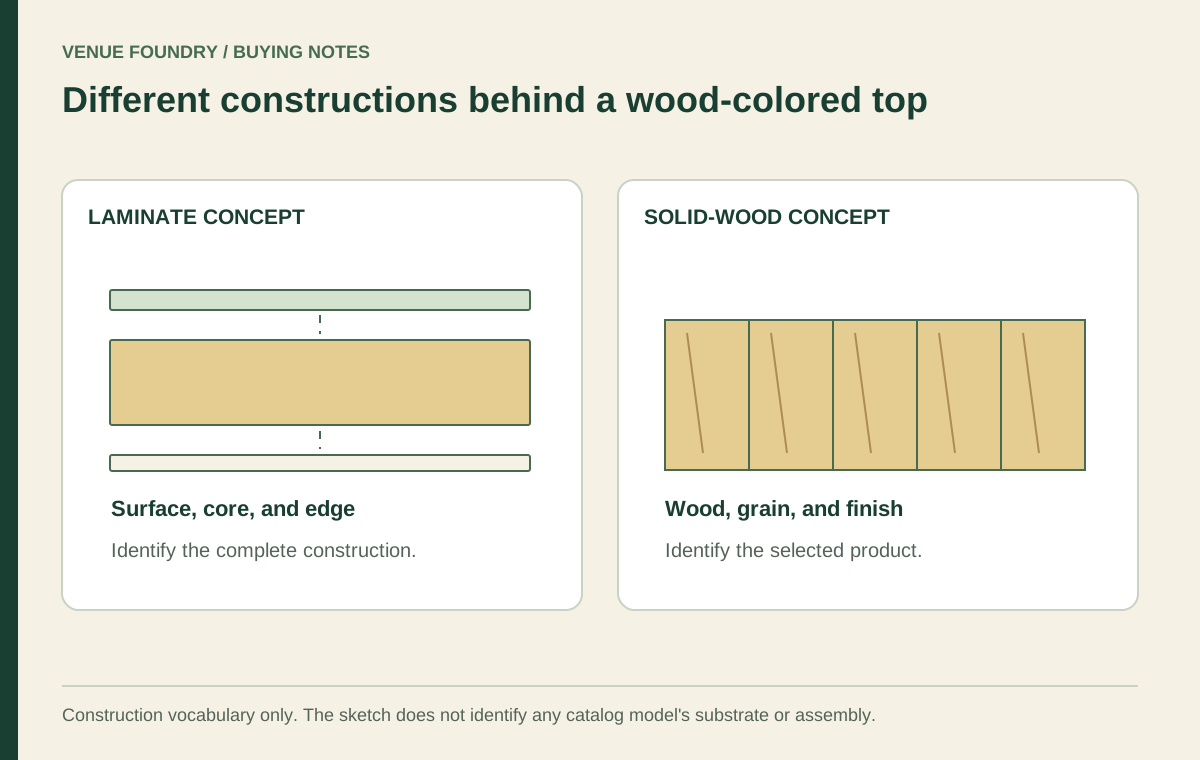
The laminate and wood comparison helps identify construction differences. A decorative woodgrain surface is not necessarily solid wood, and a new surface may use different mounting guidance even when its appearance coordinates with the old one.
The mounting relationship needs explicit approval
The top and base must meet through an appropriate connection. Existing holes in the old top do not establish the correct pattern or fasteners for the new one. A supplier's approval should apply to the exact selected components and size, not to a broad statement that restaurant tops are interchangeable.
Do not improvise additional holes, longer screws, or a mounting adapter to force a fit. The product's construction and thickness can affect what is permitted. A proper response may identify an approved connection, require another support arrangement, or conclude that the intended combination is unsuitable.
Use contact to request the available pairing and assembly information. Provide the retained base details and proposed top selection together. Asking whether a top works with my current tables leaves the information needed for a useful answer unstated.
Recheck the furniture around the new surface
Top thickness can change the underside relationship even when the overall dining surface remains close to the previous height. Edge shape, apron details where present, and support location can affect chairs and seated positions. The renovation should preserve or improve the actual arrangement, not only its appearance.
The chair-with-arms discussion is relevant when armrests approach the table. A thicker edge or changed underside can matter to that relationship. Likewise, a larger top can change nearby routes even though the base remains in its former position.
Update your furniture schedule with the new selected dimensions, following the layout schedule guide. If only some tops change, identify those tables separately. A room containing mixed old and new pieces needs a schedule that distinguishes them, especially when future replacements are ordered.
Understand the appearance of a partial renovation
New tops can change how retained bases and chairs look. A base finish that appeared quiet beneath a dark surface may become more noticeable beneath a lighter one. Review the actual material references together rather than choosing each item in isolation.
The finish approval guide provides a useful approach to that comparison. Decide whether the project wants a close visual relationship or a deliberate contrast. A new finish should not be promised as an exact match to an aged surface merely because the option names resemble each other.
Care information changes with the top as well. Give the operating team the relevant instructions for the new finished surface, including any differences from the previous routine. Retaining a base does not mean the complete table retains its former care requirements.
Compare retained-base and complete-table costs
The retained-base route can include the selected tops, approved mounting components, labor, transport, and any assessed base work. A complete-table alternative includes the selected system and its applicable associated costs. Comparing only the price of a loose top with a complete table makes retention look artificially inexpensive.
As a hypothetical example, eight new tops at $140 each plus $25 of approved work per table total $1,320. Eight complete tables at an assumed $190 each total $1,520 for furniture alone. The apparent $200 difference remains incomplete if delivery, removal, taxes, or additional work differ. These invented inputs are not service estimates or catalog prices.
The budget planner can retain both alternatives. Include only bases that have been accepted for reuse in the retained count. An unassessed unit should not be treated as a free, usable asset merely because it already belongs to the venue.
Replace the surface with the system in mind
Retaining bases can be a sound renovation choice when their identity, condition, and approved relationship to the selected tops are clear. The useful saving is the one supported by the complete work scope. It is not the difference between two incomplete headline prices.
Before ordering, reconcile the top selections, retained-base schedule, and connection information. Keep that pairing record with the project. A future buyer will then know which combination was accepted instead of inheriting a room of apparently interchangeable parts with no documented relationship.