The project notebook
Pizzeria tables: start the size review with the serving pieces
A pizzeria table must accommodate the serving arrangement, not only the diameter of the pizza. Individual plates, glasses, a stand or tray, serving utensils, and items arriving later all compete for the same surface. The table-size decision should begin with those actual objects and the way the meal is served.
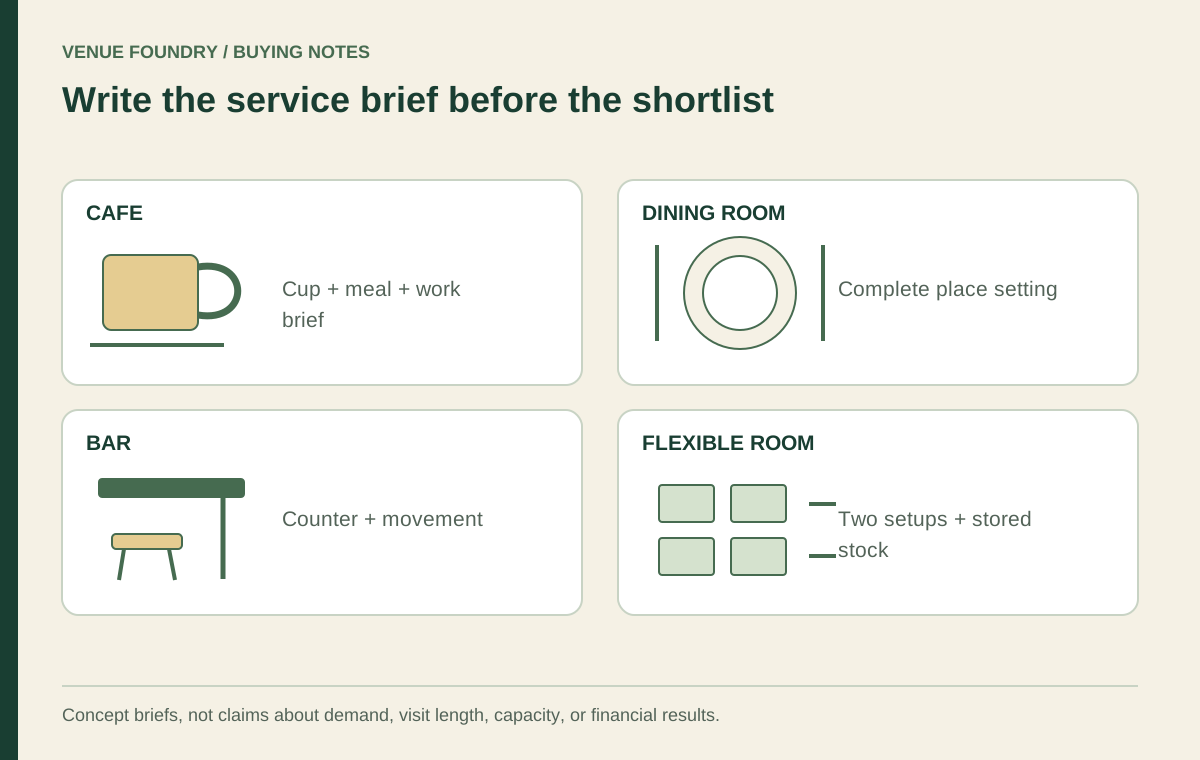
Compare candidate settings with the restaurant's own equipment in a future sample review. The examples below explain the geometry and purchasing questions without claiming that a particular table has been physically tested or approved for a stated number of guests.
Open diagram at full size (new tab) ↗
Start with the serving method
A pizza served directly on a tray occupies the table differently from one placed on a raised stand. The stand may free some surface below its tray, but its feet still occupy space and the elevated tray can affect reach and views across the table. The complete object matters.
The tabletop sample guide provides a method for laying out actual menu items. Include the serving tool in its normal resting position and any plate used for portions. A sample that leaves these pieces off the table can understate the surface requirement.
Use the supplier's instructions for the serving equipment. Furniture selection should not create an improvised support or a hot-item protection method. The table's material and the equipment's use requirements need their own verified information.
Distinguish diameter from usable surface
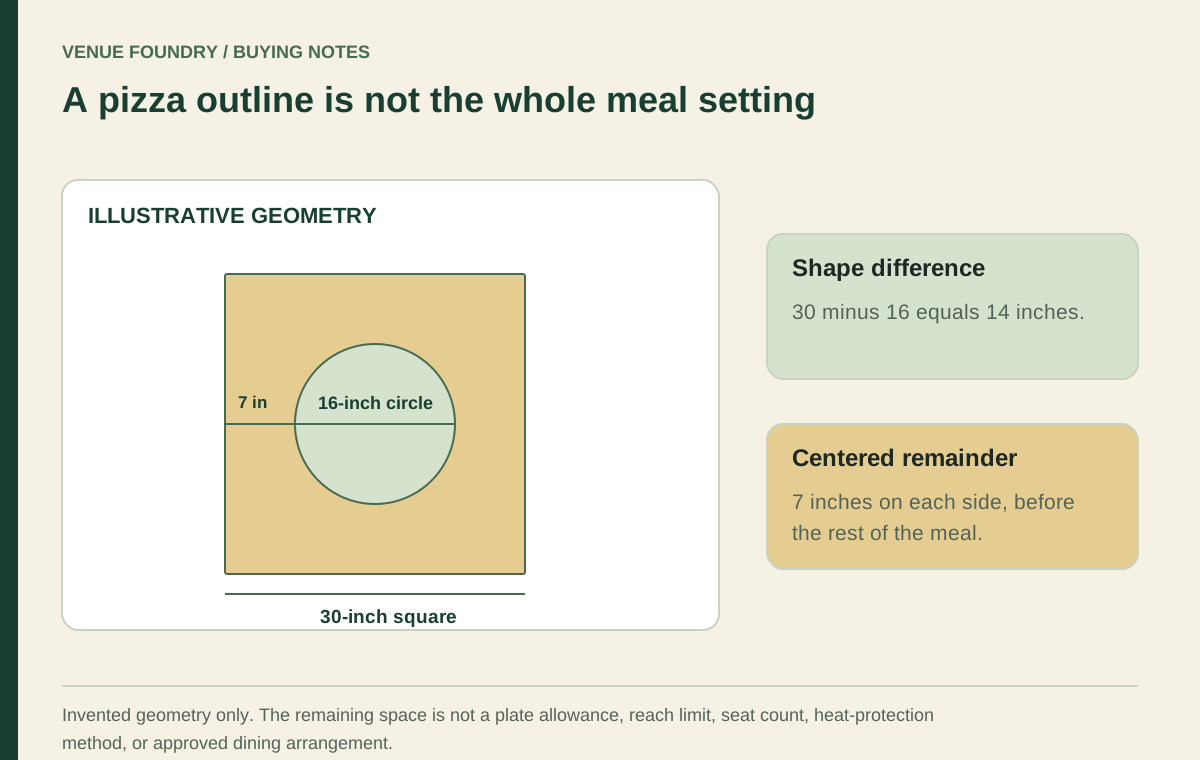
A circular serving tray with a given diameter has a bounding square of the same width, but that square is not the whole dining setting. Plates and glasses extend around it, and the guests need to use those objects. A tray that physically fits inside a tabletop outline does not establish a suitable meal arrangement.
For a labeled geometry example, a 16-inch circle inside a 30-inch square leaves a numerical difference of 14 inches across each direction, or 7 inches on each side if centered. Those numbers describe only the two shapes. They are not plate allowances, reach limits, guest clearances, or seating recommendations.
The table shape comparison helps explain why different surface outlines distribute space differently. Use the actual serving pieces to determine whether the remaining surface is useful for the intended meal.
Compare more than the smallest top option
The October 17, 2026 FRU-SELF-EDGE record included 24-by-24-inch, 30-by-30-inch, 36-by-36-inch, and other sizes within an indoor laminate top family. Those are selectable product dimensions, not a list of approved pizzeria seating capacities.
Compare the versions that plausibly answer the meal brief, then examine their complete furniture consequences. A larger top changes its relationship to the base, the occupied chairs, and neighboring settings. It is not simply more surface at the same place in the plan.
The extra-table review shows why a larger inventory count can conflict with useful settings. A room with fewer appropriately reviewed tables may serve the menu more coherently than one filled with tops chosen only for compactness.
Include the table support in the meal arrangement
The base affects the positions available beneath the surface. A central support, directional prongs, or multiple supports can meet the guests differently. Include the exact accepted pairing in the sample review instead of borrowing an unrelated base to hold the candidate top.
At a rectangular table, inspect the end positions separately from the long sides. The serving tray may sit in a different relationship to each guest, and the support may create another difference below. A visually balanced top does not make every position equivalent.
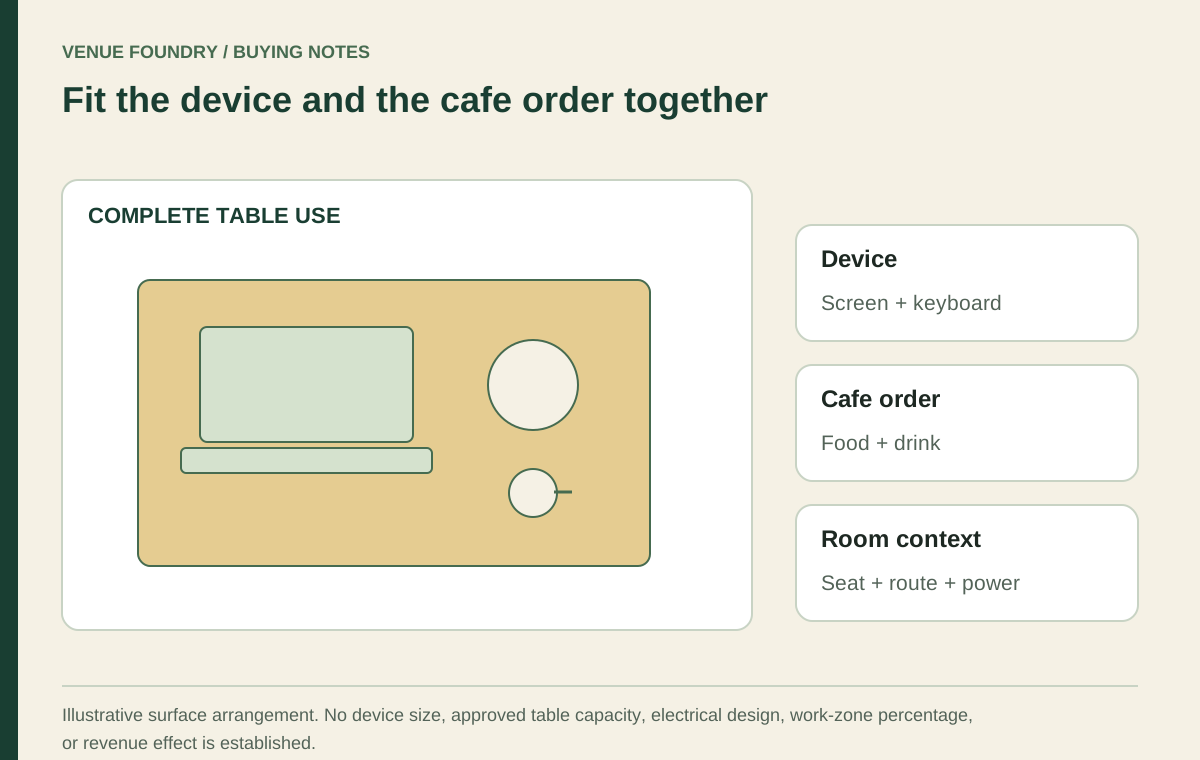
The complete-setting mockup article brings chairs, top, support, and meal together. That review is more informative than selecting the top in isolation and discovering its table relationship after the quantity has been ordered.
Plan for shared dishes arriving at different times
A meal may begin with drinks and appetizers before the main shared dish arrives. The furniture review should consider that transition. Moving every earlier object off the table may be part of the restaurant's service method, but it should be a deliberate operating decision rather than a hidden requirement of an undersized top.
Include ordinary combinations from the actual menu. Avoid inventing one overloaded setting and presenting it as typical of all pizzerias. A documented sample can compare the restaurant's chosen service scenarios, each with its own objects and assumptions.
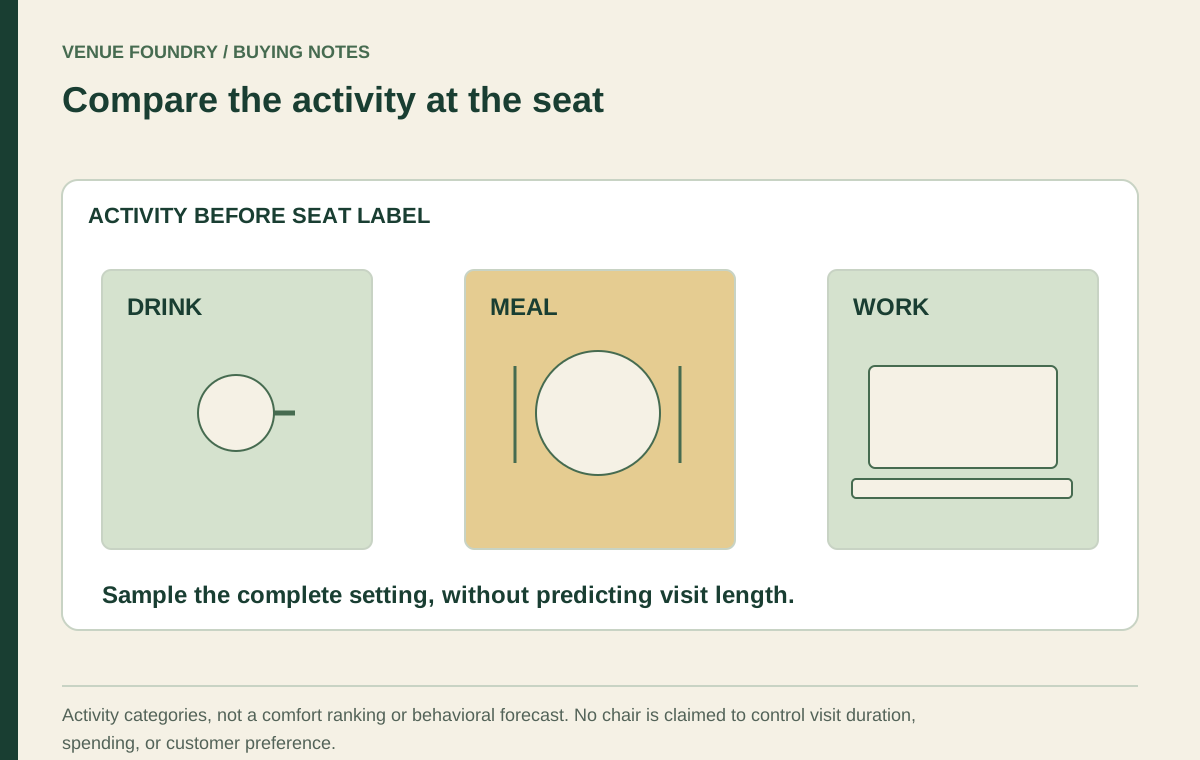
The same discipline applies to individual meals. A guest ordering a personal pizza may still need a drink, utensils, and another plate. The furniture should support the actual order rather than use pizza size alone as a proxy for the whole meal.
Compare one group table with accepted smaller-table arrangements
For larger parties, a single restaurant table and an accepted joined arrangement create different purchase scopes. A joined version includes seams, multiple supports, and a reset method. It should not be assumed compatible because the top heights look alike.
The large-party table guide separates those questions. Review how the serving pieces cross or avoid the joins and how guests occupy positions near them. A long surface assembled from several tables may not behave like one continuous top.
Use the party-mix article to consider how the same inventory serves smaller arrivals. The answer depends on the restaurant's own service patterns. No universal table mix or revenue advantage follows from the ability to rearrange pieces.
Price the approved setting with its selected finish
In the budget planner, include the actual top, accepted support, chairs, and quantities for each setting. Keep serving equipment and other project costs distinct unless they are explicitly part of the purchase scope. A tabletop starting price is not the cost of a complete pizzeria table arrangement.
Before selecting the quantity, check that the sample includes the actual serving method, individual objects, later-arriving dishes, support relationships, and surrounding occupied positions. Obtain the care instructions for the exact tabletop material instead of assuming that a dining surface tolerates any hot tray or cleaner.
Choose the table around the meal people will share
A useful pizzeria table comparison follows the meal from the serving equipment to the individual settings and then to the complete furniture arrangement. Dimensions provide the starting geometry, while the actual objects and accepted layout determine whether that geometry serves the restaurant's brief.
Use contact for missing surface or pairing details before finalizing the order. Retain the reviewed meal arrangement with the project so later size or material changes can be assessed against the same service. The purchase should support the whole meal, not merely fit the pizza inside the tabletop outline.