The project notebook
Stackable restaurant chairs: put storage into the purchase calculation
A stacking chair purchase includes a storage decision. The chair count, approved stacking information, available space, and route between the room and storage all belong in the same review. Comparing unit prices before checking those details can leave the venue with a furniture total that depends on an unverified operating plan.
Begin with the room change the venue actually needs to make. Identify which chairs will be removed, where they will go, and how they are intended to be handled. The budget should describe that specific arrangement instead of assuming that the word stackable makes every storage problem disappear.
Open diagram at full size (new tab) ↗
Confirm stacking for the exact model
Open the product in restaurant chairs and look for explicit stacking information. Record the SKU, selected configuration, and any stated limit. If the information is absent or unclear, request confirmation before making a storage calculation.
Do not infer stacking capability from the frame shape or a photograph of another chair. A visually similar model may have different instructions. Keep any approved accessory or handling requirement attached to the exact product record rather than treating it as a general feature of the category.
The chair handling guide explains why product weight and an operating task need separate review. A stackable chair is not automatically suitable for every movement method, and a listed stacking limit is not a direction to lift the full stack manually.
Measure the storage arrangement you intend to use
Identify the actual storage area and the route from the dining room. Record doors, turns, and other fixed constraints relevant to the planned movement. Use the venue's reviewed operating plan rather than estimating the route from an empty-room photograph.
Ask for the dimensions of the approved stack where those are needed. A single chair's width and depth do not necessarily describe the full stored group. If a trolley or other approved accessory is involved, its dimensions and instructions belong in the review too.
Retain storage details in the venue's own operating records and consult the room-planning guide for the furniture discussion. Leave any required route or workplace review with the appropriate project team. This article does not establish a safe load, a handling procedure, or an acceptable storage height for a particular site.
Name the intended storage location in the project notes. If several chair configurations share the area, record how the venue plans to identify them when rebuilding the room. A mixed stack should not become an ambiguous furniture schedule.
Translate the chair count into a documented storage question
Start with the number of chairs that the reviewed room change will remove. Then use the confirmed product information to determine what storage arrangements need to be considered. Keep the assumptions visible so another reviewer can reproduce the reasoning.
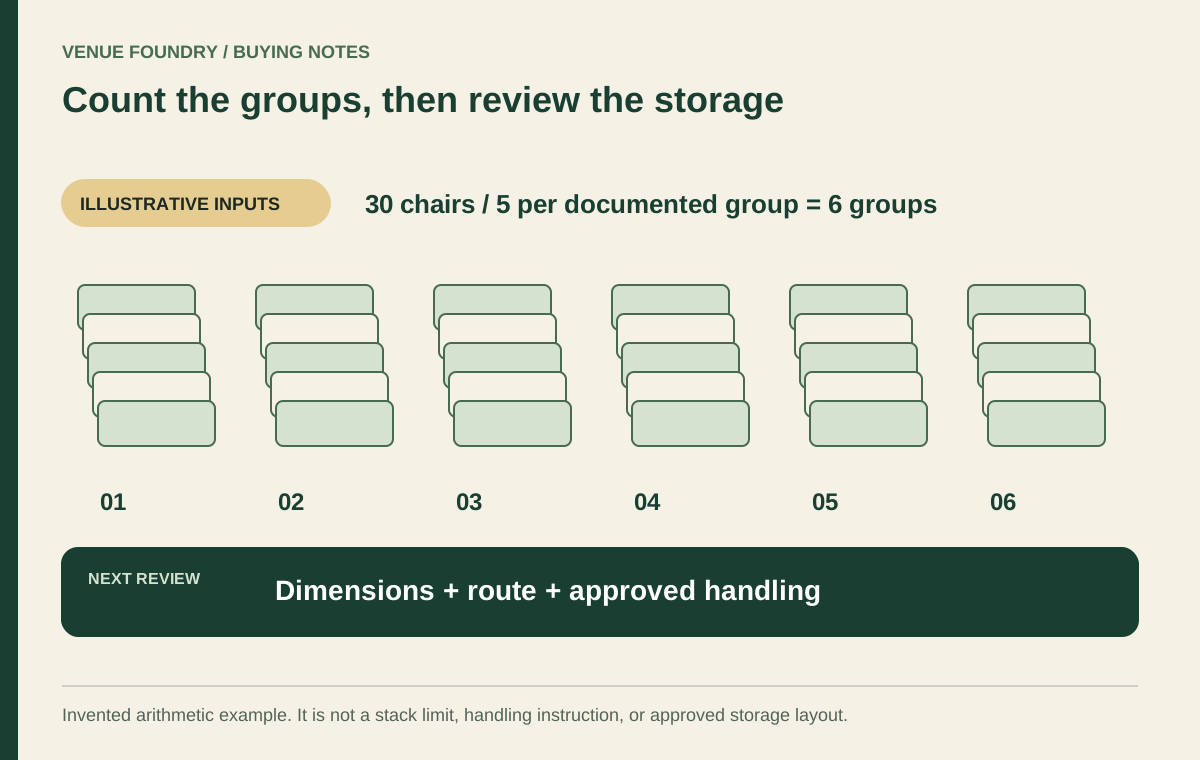
For an arithmetic illustration only, suppose a project needs to store 30 chairs and the exact product documentation permits stacks of five under the proposed conditions. That would create six groups to accommodate. These numbers are invented worksheet inputs, not a stacking instruction for any catalog product.
The next question is whether those six documented groups, their handling equipment if required, and the necessary access fit the approved storage plan. Counting groups is not the same as approving their placement. Leave any missing dimensions or site questions unresolved until the relevant information is available.
Price the furniture and the storage scope separately
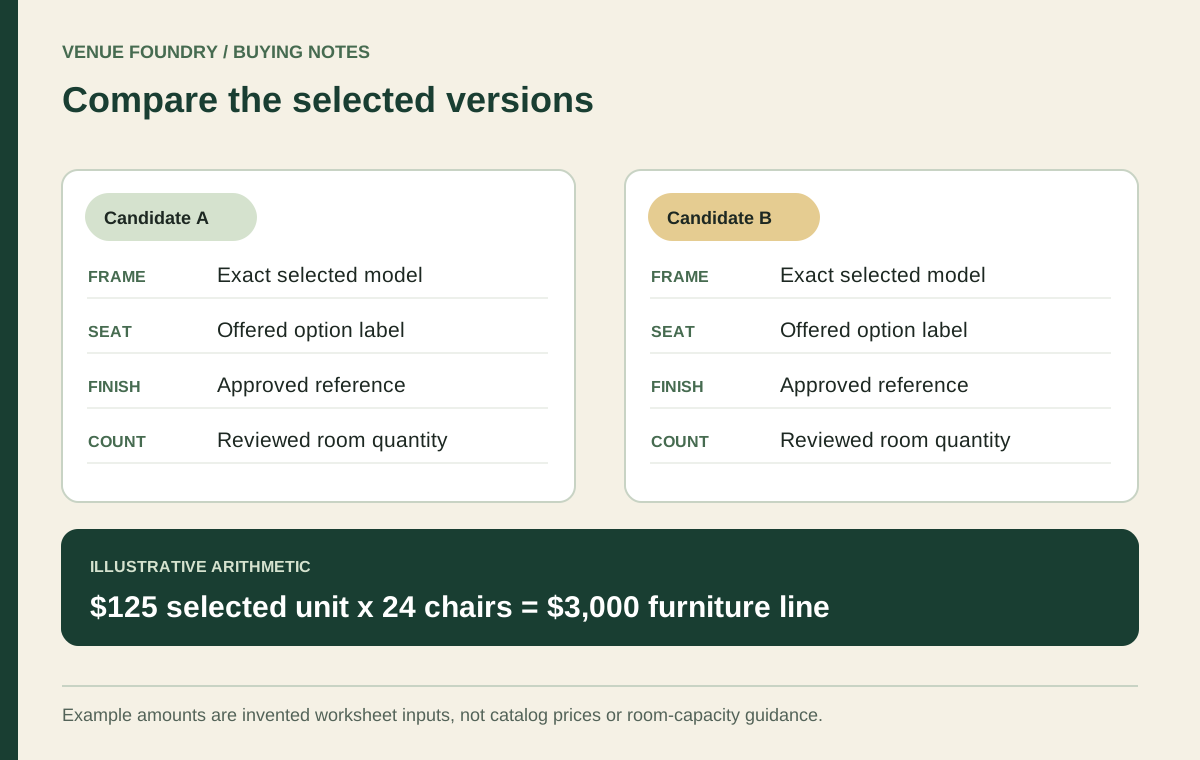
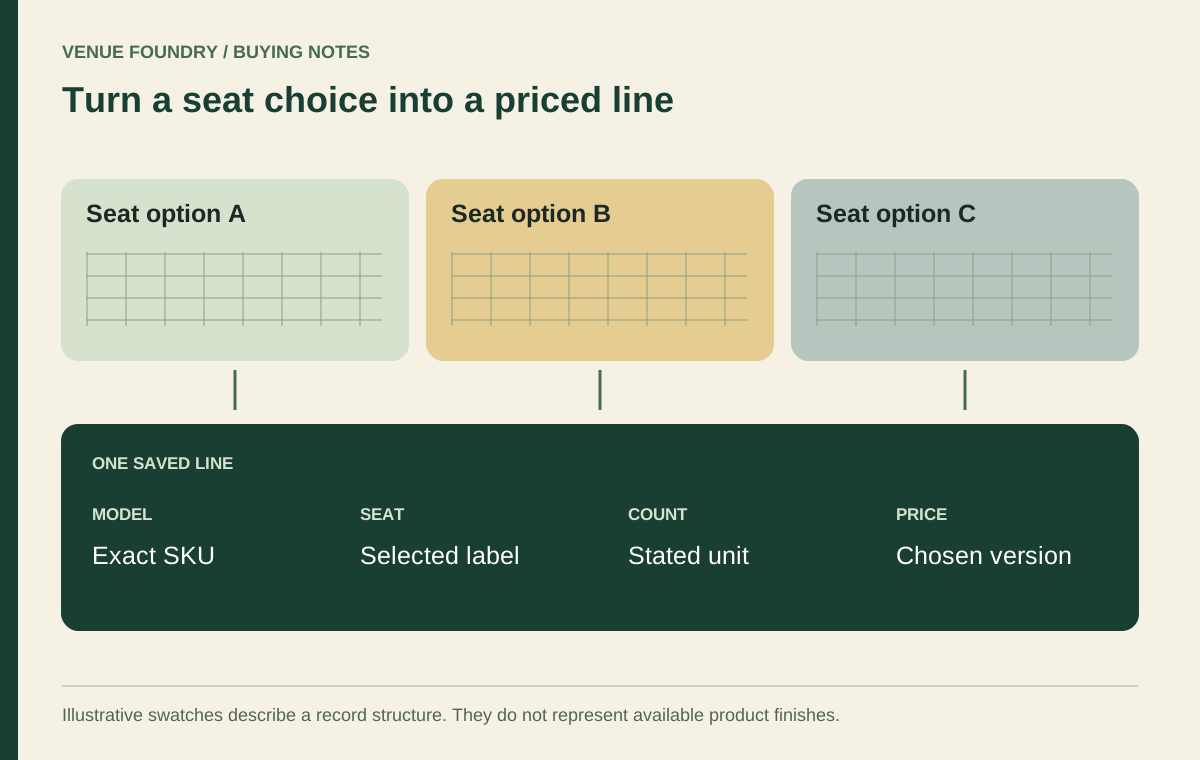
Save the selected chair configuration and quantity in the budget planner. Use the current configured amount after choosing the offered seat and frame options. The chair price comparison helps align alternative candidates before their subtotals are compared.
Record any confirmed storage accessory or associated work in its own cost heading. Do not assume a trolley, cover, or storage fitting is included because it appears in a reference image. The product listing and confirmed commercial scope should identify what the stated amount buys.
A useful budget has three readable parts: the selected furniture, confirmed supporting items, and unanswered storage costs. An unknown amount should remain an open question. Adding a plausible allowance is acceptable only when it is clearly labeled as the venue's planning assumption.
Review the room reset with the operating team
Arrange an appropriate sample review of the intended task, following the product instructions and the venue's procedures. Identify the starting arrangement, destination, and method. The review should examine a real need without improvising unsafe loads or unsupported handling techniques.
Record staff observations as observations. If someone reports that a grip or route is awkward, identify the exact circumstance and the question it creates. Avoid converting that comment into a universal claim about effort or a financial saving.
The chair sample guide explains how to define the session and record its result. Compare the proposed stacking arrangement with a non-stacking alternative only when both have a complete operating brief. Otherwise, the price comparison may describe two different tasks without admitting it.
Keep floor contact and surface care in the handoff
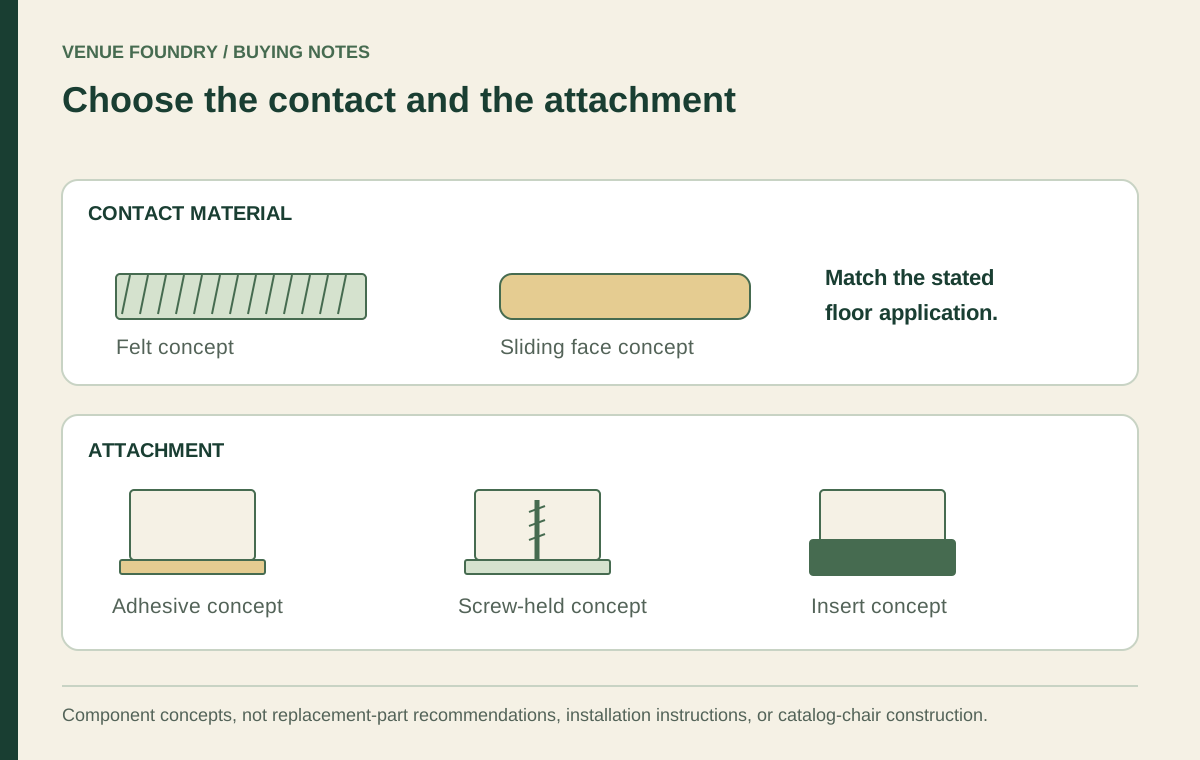
Review the supplied glide information for the dining-room floor and any relevant storage surface. The glide article explains which compatible component details to retain in your furniture record. Do not assume that storage approval also settles floor compatibility in the dining area.
Retain the selected material's care instructions with the furniture record. Use materials guidance to distinguish option labels and reference images from care documentation. A finish chosen for appearance still needs its own instructions when the furniture is moved, stored, and returned to service.
Before approval, verify these three points:
- The stacking information belongs to the exact selected chair.
- The storage dimensions and route have been reviewed for the intended arrangement.
- The budget identifies any supporting equipment and unresolved costs separately.
Order the chairs with the storage plan attached
Use delivery planning to confirm the receiving requirements for the full shipment. Packaging and arrival condition may differ from the way chairs will later be stored. Check the current configured lines in the basket, then follow the ordering steps.
The final schedule should explain both the room quantity and the documented storage decision. That connection makes the purchase easier to review and the next room reset easier to prepare. Stackable becomes a verified product attribute within a specific plan, rather than a shortcut around the questions that determine whether the plan works.