The project notebook
Restaurant furniture ordering timeline: connect the decisions before opening
A restaurant furniture ordering timeline should connect confirmed decisions with the opening plan, rather than begin with a guessed delivery date. The room survey, product selections, sample review, and commercial response all affect what can be ordered and when. Treating those decisions as dependencies makes the schedule easier to manage.
Start with the intended opening and work backward through the actual project requirements. Keep target dates separate from supplier commitments. A furniture line marked selected is not necessarily approved, ordered, shipped, or ready for placement, and each of those states answers a different scheduling question.
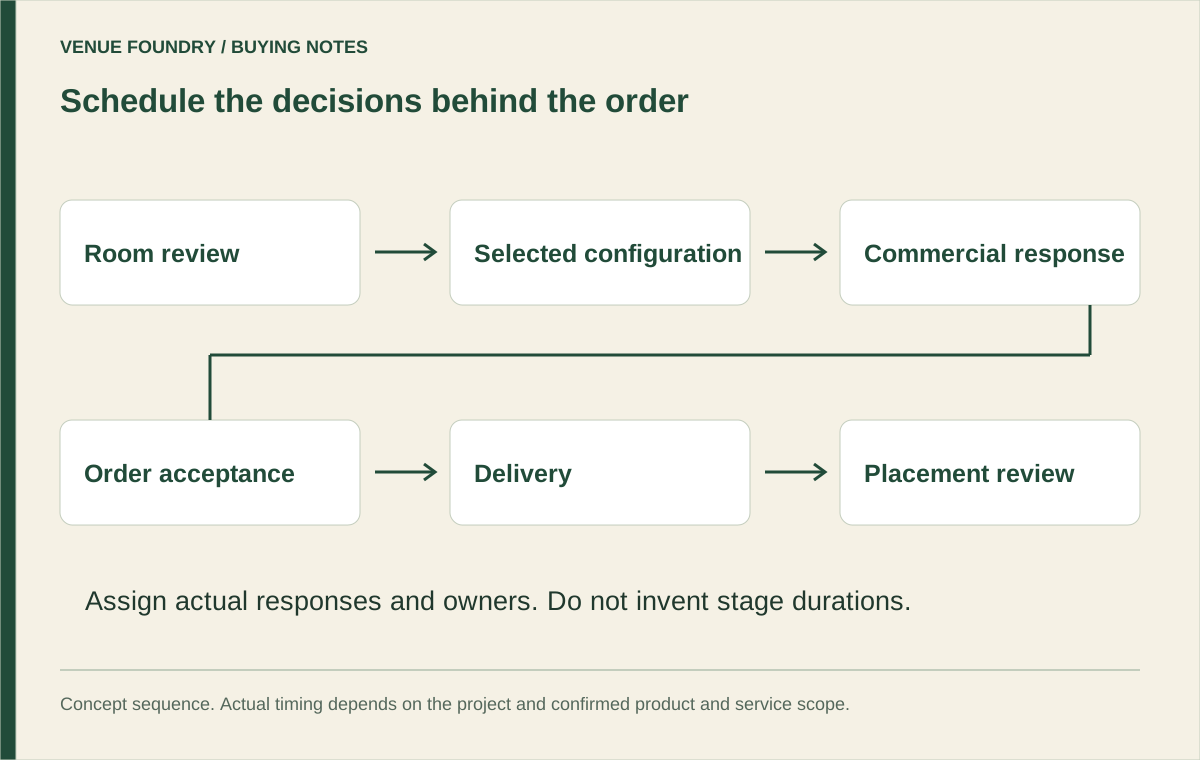
Open diagram at full size (new tab) ↗
Establish the room information the order depends on
Identify which measurements and layout decisions are needed before the furniture can be selected confidently. A chair requires a different fit review from a booth arrangement or a table assembled from separate components. Do not give every product the same approval checklist simply because it appears in one room.
Use the room-planning guide to separate the physical arrangement from the purchasing schedule. Record the responsible role for an unresolved dimension or room decision. A calendar entry saying finalize furniture will not resolve a question that still belongs to the design or site team.
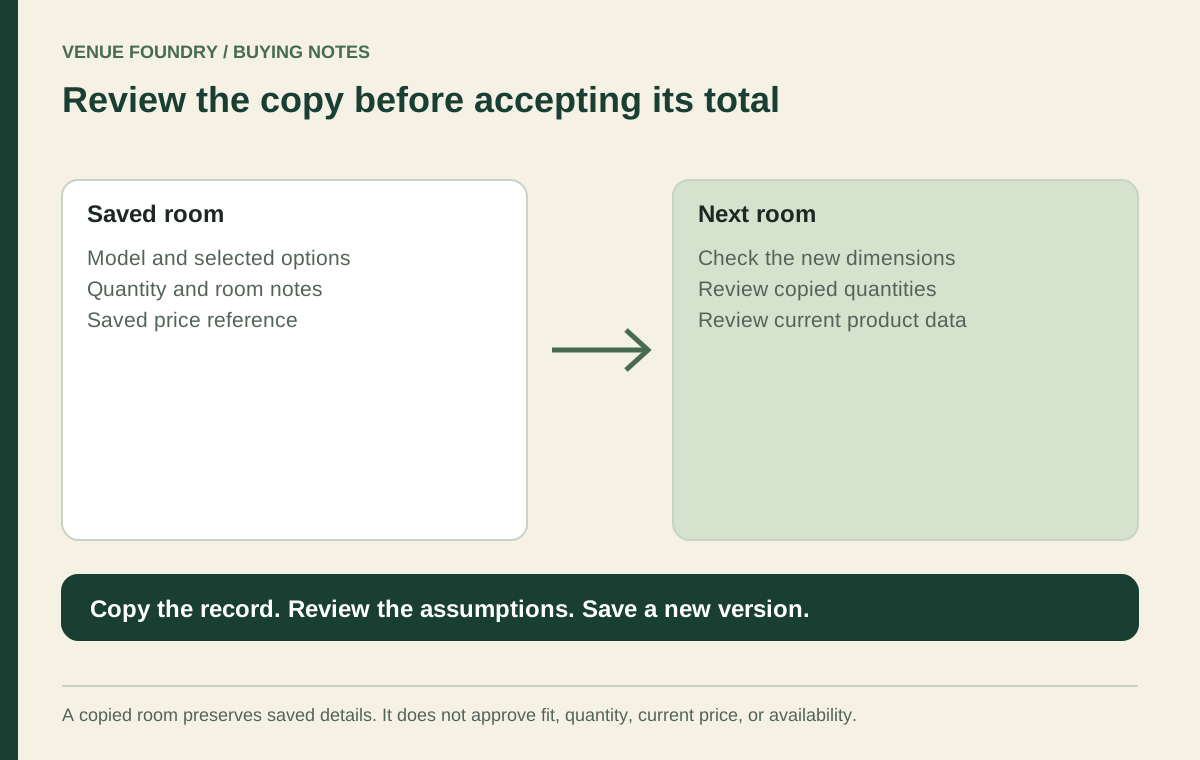
Keep provisional quantities clearly marked while the layout is being reviewed. The budget can use a labeled planning scenario, but the final order quantity should come from the current agreed scope. An early estimate should not become permanent merely because it was copied into the first spreadsheet.
Schedule the configuration and sample decisions
Choose the actual product options before treating a candidate as price-ready. The chair comparison guide connects the selected seat and frame to the amount being reviewed. A base-model price can be useful for browsing while still being incomplete for an order decision.
Where a physical sample is needed, identify the question it should answer and arrange the applicable review. Keep sample availability and timing as actual inquiries, not assumed services. A finish review may answer appearance while leaving dimensions or product suitability unresolved.
The materials guide helps keep those decisions separate. Record the approved reference and the selected option name together. If the sample decision changes the product choice, return to the affected budget and timing questions rather than treating the change as purely decorative.
Ask for the timeline attached to the selected scope
Obtain current availability and timing information for the exact configuration and quantity. A general product page or earlier conversation may not describe the current purchase. Keep the response with its date and scope so another reviewer can see what it applies to.
Distinguish preparation, shipment, transit, and any later placement or installation work where those stages are relevant to the actual offer. Do not compress them into one delivery label if the supplier's response treats them separately. Ask which dependencies must be satisfied before the stated timing begins.
Read the delivery-planning guide, then add the destination and receiving conditions to your project schedule. A target arrival date is only useful if the site can receive the shipment under the agreed arrangement. A displayed product or price does not establish a universal lead time or guaranteed opening-date delivery.
Build a dependency schedule without inventing durations
Imagine an illustrative sequence with room review, final configuration, commercial confirmation, order acceptance, delivery, and placement. The sequence shows relationships, not fixed durations. The actual time for each stage comes from the project team and the applicable supplier or service response.
Some activities can proceed together. A receiving-route review may happen while finish samples are being considered, provided neither depends on information still missing from the other. Record that relationship explicitly instead of assuming every task must wait for the entire preceding stage.
The project checklist can help identify what remains open. Give each dependency a responsible role and a current status. A short list of unresolved decisions is more useful than a detailed calendar built on dates nobody has confirmed.
Connect schedule changes with their budget effects
When a product or timing requirement changes, review the associated cost rather than editing the date alone. A different configuration, shipment arrangement, or accepted service scope can alter the project total. Obtain the actual revised amount before treating the budget as unchanged.
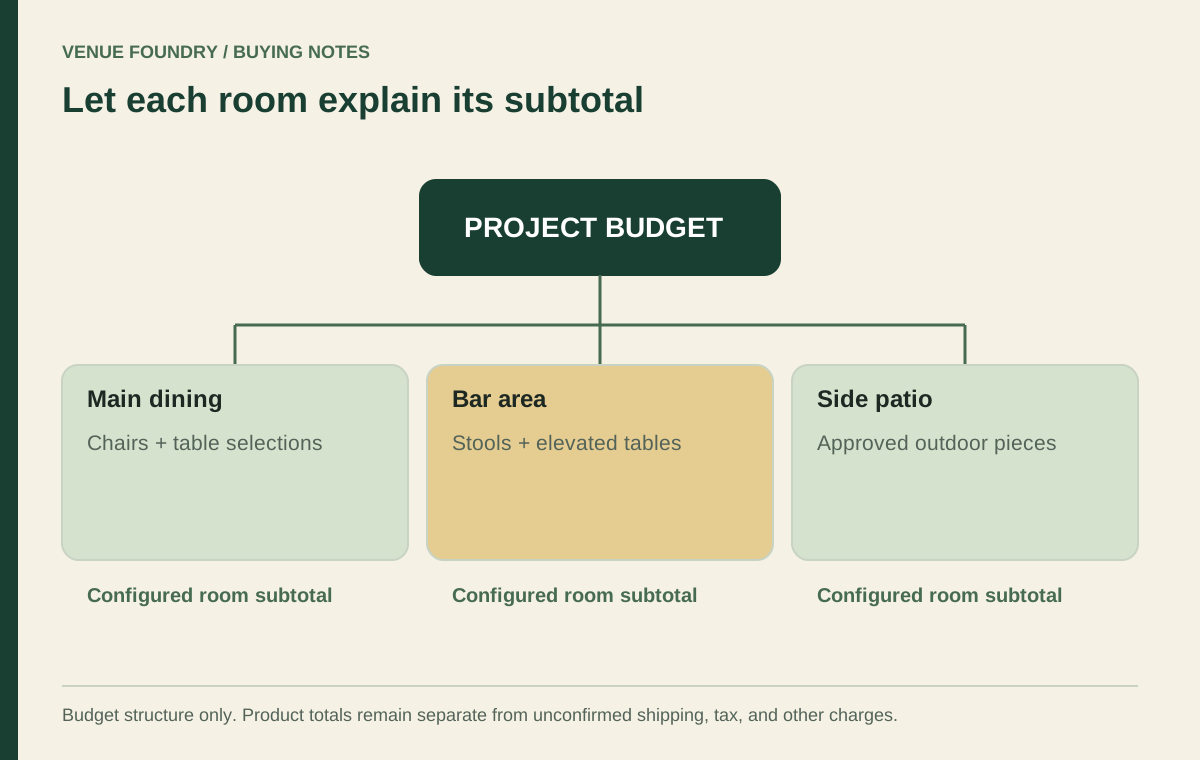
Keep the configured furniture lines in the budget planner and the broader project allowances in the supporting budget. The room-by-room budget guide helps distinguish the furniture subtotal from costs that remain outside the catalog selection.
Avoid assigning a financial saving to a schedule change without evidence. A later delivery is not automatically cheaper, and an earlier target does not establish an available expedited option. Record the actual proposal and compare its consequences for the project.
Review the furniture groups that depend on each other
For complete tables, identify whether the order arrives as the stated complete unit or requires a separate agreed process. For table tops and bases, keep the reviewed pairing and expected components connected in the schedule.
A booth selection may also depend on a confirmed room arrangement, orientation, or access review. Make those dependencies visible before the line is treated as ready to order. A finish approval alone does not settle every technical question attached to the unit.
Separate later phases from the current opening scope. A future patio selection can remain in the project without becoming part of today's order. The schedule should explain which furniture is needed for the current phase and which decisions can remain open for a later one.
Keep acceptance and receiving visible after submission
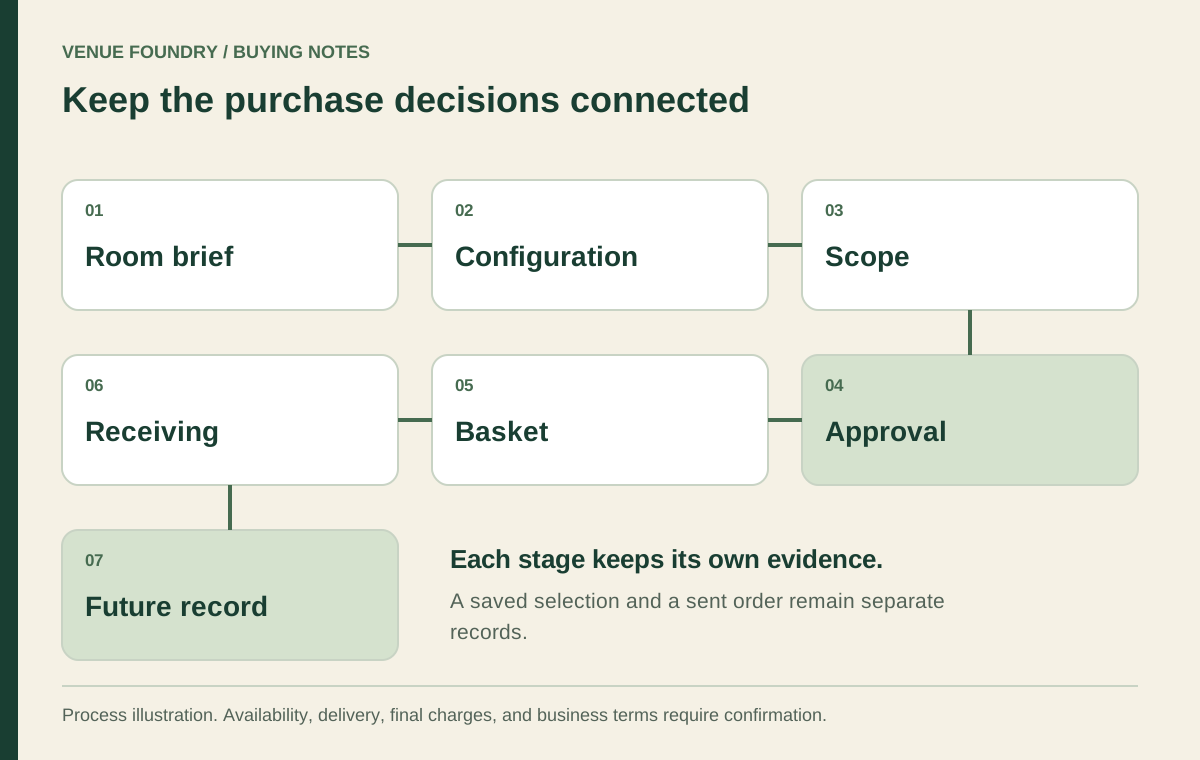
Follow how ordering works and retain the actual confirmation of the submitted scope. Sending a basket is part of the process, but it should not be relabeled as a confirmed shipment before the relevant response is received.
After acceptance, track changes through the appropriate communication rather than silently editing the saved plan. Give the receiving team the current accepted scope and applicable instructions. Their work should begin with a clear record of what is expected, not the earliest version of the selection.
Let the timeline show what must happen next
The useful ordering timeline is a sequence of identifiable decisions supported by current responses. It shows which dates are targets, which are confirmed, and which unresolved dependency is holding up the next step.
Keep that record beside the furniture budget as opening approaches. When a decision changes, the team can review its schedule and cost effects together instead of discovering them after the order has moved to another stage.