The project notebook
Outdoor restaurant tables: document the ground before choosing a base
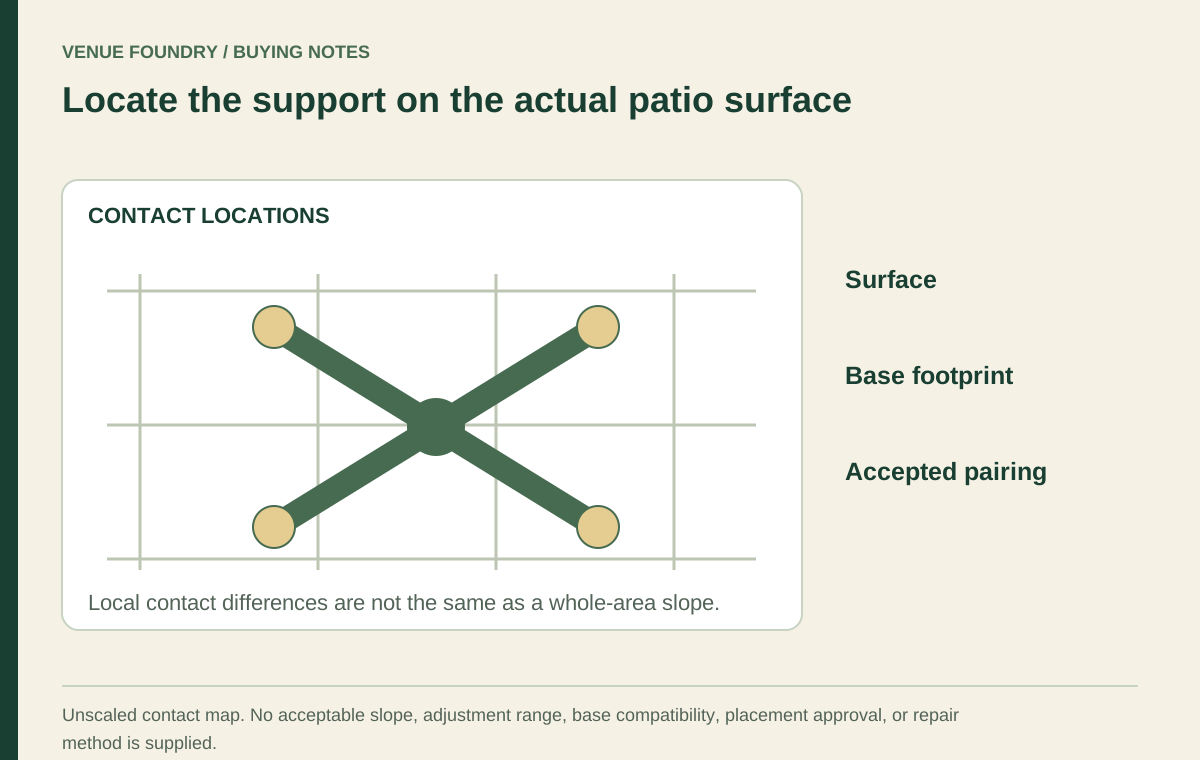
An outdoor table meets the patio through a small set of contact points. Those points may land on paving joints, a change in surface level, or a local irregularity. The table's behavior depends on that contact as well as on the top, base, and their connection.
Review the ground before choosing a support or replacement foot. A photograph of a table on a smooth showroom floor cannot establish how it will behave at a particular patio position. The useful buying question is which documented furniture arrangement suits the actual surface and use.
Open diagram at full size (new tab) ↗
Distinguish local unevenness from a sloping area
A local height difference beneath one contact point is not the same as a whole dining area that slopes. Both can affect the table, but they create different questions. A mechanism that adjusts contact with small irregularities should not be assumed to make every sloping location suitable for dining.
Consult the planning guide and show the surface conditions on the actual patio drawing. Identify joints, transitions, drains, and any areas where the proposed table positions differ. The relevant site reviewer should address broader suitability and access requirements. The furniture comparison should use that accepted context.
Avoid diagnosing a visible wobble from one photograph. Movement can come from the ground relationship, a glide, the base assembly, or the connection beneath the top. The table wobble discussion separates those locations before a response is chosen.
Draw the base footprint at the actual table position
An X-prong base has directional projections and gaps between them. A round base presents a continuous disc at the floor. The distinction affects where the support meets the surface and where diners place their feet, so the selected shape belongs on the plan.
In the October 17, 2026 snapshot, FRU-ALM01-SIF-30 was an aluminum base listed for Indoor, Patio use. Its choices included a base measuring 22 by 22 inches and a Two Prong Double Base option. Those are specific configuration alternatives, not a universal response to uneven ground.
The base footprint article explains the shape comparison. For the patio, also consider whether a foot would land directly on a joint or transition at the intended position. Rotating a base can change its contact locations, but any permitted arrangement must still suit the top and occupied dining positions.
Separate adjustable feet from a complete stabilizing system
Different products address floor contact in different ways. A manually adjustable foot, a replacement foot with a proprietary mechanism, and an integrated self-adjusting base are not the same product. Their compatibility and limits need to be read at the model level.
FLAT's manufacturer information distinguishes its integrated table-base technology from its replacement Equalizers feet. It also specifies that an appropriate outdoor version must be selected where required. These examples show why the term leveling foot is not a complete specification.
Do not assign FLAT's mechanism or claimed adjustment range to the catalog outdoor bases. A base that looks similar may use a different system. A replacement foot also needs the correct attachment and approved application rather than an assumed fit based on its photograph.
Keep the top within the selected base's approved scope
The size, shape, weight, and construction of the top remain part of the table selection. A support that suits one top should not automatically be used under a larger or differently shaped surface. Outdoor use does not remove the need for an accepted top-and-base pairing.
Compare complete patio tables where appropriate, or retain the separate component references when buying them independently. The selected option matters: a product family can contain several top sizes without establishing that every base choice applies to every one.
The replacement tabletop guide is relevant when an existing support will be retained. A new outdoor top can change the assembly's requirements even if the old base appears to fit beneath it. The purchase should be based on the accepted combination, not the available mounting holes alone.
Observe the actual assembly before choosing a response
Where an existing table is causing difficulty, identify what moves and when. Does the whole base rock between floor contacts, does the column move relative to the foot, or does the top move relative to its connection? These observations help direct the appropriate professional or supplier review.
They do not authorize a repair method. Avoid improvising with wedges, altered fasteners, or mixed replacement components as a substitute for the product instructions. The useful outcome is a specific description of the problem and an accepted response for the selected furniture.
If the location itself is unsuitable, buying a heavier base may not address the underlying issue. Weight, footprint, and contact mechanism are separate properties. A higher weight figure should not be treated as a general guarantee of stability on any surface.
Review movement between patio positions
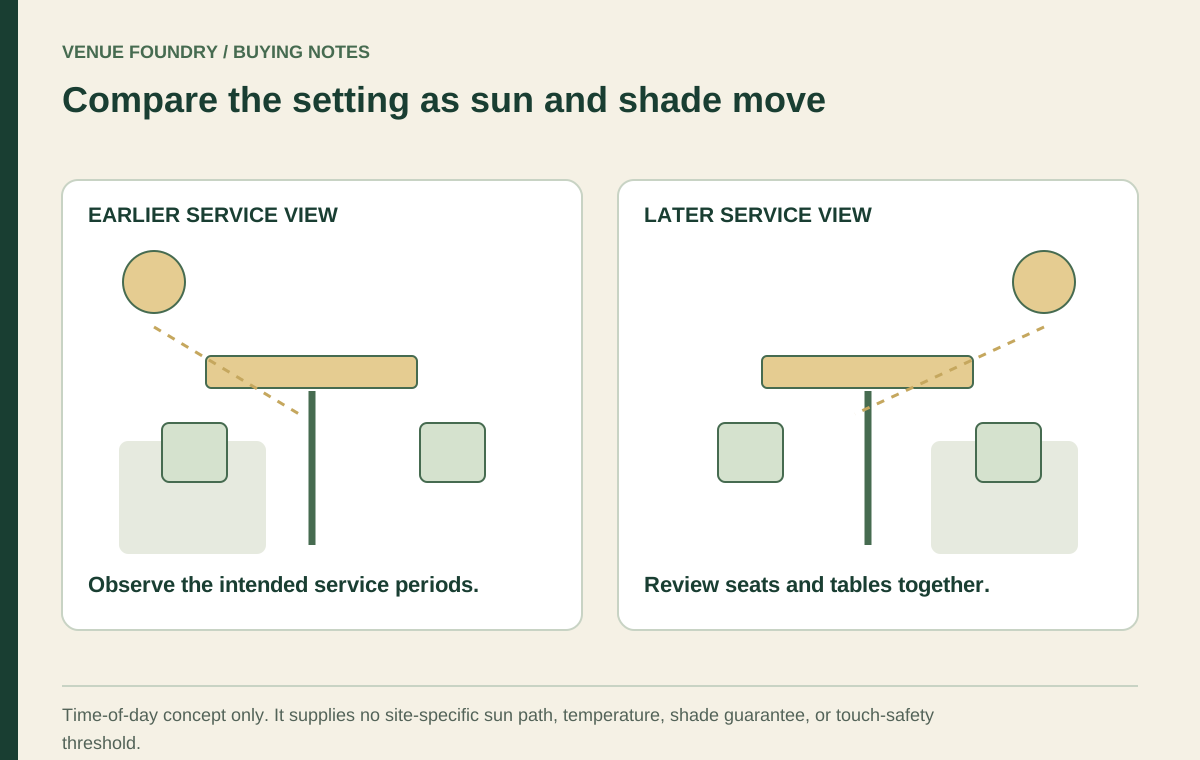
Some restaurants move tables as parties change or as shade shifts. A table that is satisfactory in one position may meet different ground conditions in another. Include the approved alternate positions in the operating plan instead of treating the original setup as the only relevant case.
The handling method matters too. Follow the furniture instructions for movement and any required checks afterward. A product's outdoor label does not authorize dragging it across paving or moving it with a particular number of people.
The patio storage article looks at the route beyond the dining position. Together, the two reviews describe where the table is used, where it moves, and where it is stored. Those locations may place different demands on the selected product.
Compare the cost of a documented arrangement
Use the budget planner to compare the selected complete table or approved components. Keep any surface work, installation, or separate replacement-foot proposal clearly identified. The cheapest visible support is not a complete comparison if its compatibility or placement remains unresolved.
The buying review should answer:
- Which surface conditions exist at the intended positions?
- Where do the selected base's contact points fall?
- What mechanism, if any, addresses those contacts?
- Is the top-and-base combination accepted for the use?
- What instructions apply when the table is moved?
Choose the table with its ground relationship understood
Outdoor table stability is a complete-assembly and site question. The surface, contact points, base, connection, and top all deserve attention. A material name or a heavy base alone cannot describe that relationship.
Use contact for missing compatibility or adjustment information, and review the selected product through how to order. Retain the accepted table positions with the project. That gives the purchase a defined relationship to the patio on which it will actually be used.