The project notebook
Restaurant patio furniture: compare opening spend with the whole seasonal routine
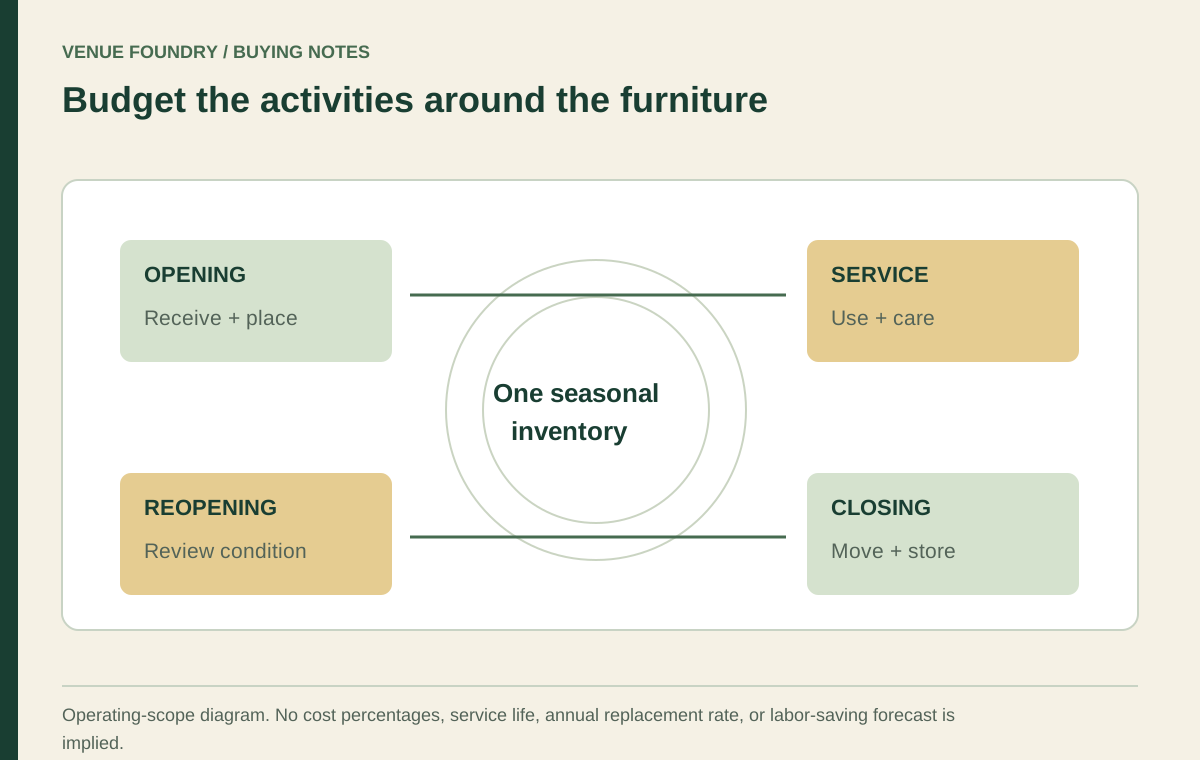
A seasonal patio has more than an opening purchase. The furniture must be received, placed into service, cared for, moved when required, stored or protected during nonuse, and reviewed before the next opening. These activities can differ between products even when the opening-day appearance is similar.
Compare the full routine without pretending to predict an exact service life. A useful budget separates known product amounts from the restaurant's own operating costs and unresolved future needs. That makes the decision more informative than dividing the initial subtotal by an invented number of seasons.
Open diagram at full size (new tab) ↗
Establish the furniture inventory for the reviewed patio
Begin with the actual outdoor layout, including tables, chairs, stools, and any shade equipment. The planning guide explains why furniture quantities should follow a reviewed arrangement. Quantities should come from that arrangement rather than from the area of the patio alone. A spare item is a separate inventory decision, not an assumed extra seat in the open layout.
The October 17, 2026 FRU-402-ECO record listed an exact amount of $88. A hypothetical purchase of 20 chairs at that dated amount would total $1,760 for those products. That example does not include delivery, tax, accessories, or a capacity claim for a particular patio.
If the selected product uses starting prices, finish the configuration before applying the quantity. The FRU-110-OD listing offered color choices and a starting amount in the same dated snapshot. A project comparison should use the current selected version rather than assume every option shares the first displayed amount.
Divide the year by activities, not arbitrary percentages
Opening preparation, ordinary service, periods of nonuse, seasonal closing, and reopening review are useful budget headings. Each describes something the restaurant will actually do. Assign amounts only where the task and its cost are known or clearly identified as a planning assumption.
For example, opening preparation may include receiving and placement. Ordinary service may include the product's required care. Seasonal closing may include movement to a storage area. Reopening may include a condition review and any accepted repairs. These are different tasks, even when the same staff members perform several of them.
The outdoor buying guide helps connect those activities to the selected products. Do not assume that a material described as easy care eliminates every closing or storage task. The actual instructions and the restaurant's exposure determine what belongs in the routine.
Compare handling through the real movement schedule
A patio closed and reopened every day presents a different handling brief from a terrace that stays arranged for a whole season. The weight, dimensions, permitted stacking or folding arrangement, and route matter in different ways for those two operations.
Use the storage planning article to establish the accepted groups and their destination. A lower single-piece weight may be relevant to the handling plan, but it does not establish a safe group-carry method or a guaranteed labor saving.
Record the actual movement tasks the restaurant expects. If the business has reliable time and labor information from its own operation, it can use that evidence in a comparison. If it does not, leave the amount as an explicit estimate and avoid presenting it as a furniture manufacturer's performance result.
Treat care as a product-specific activity
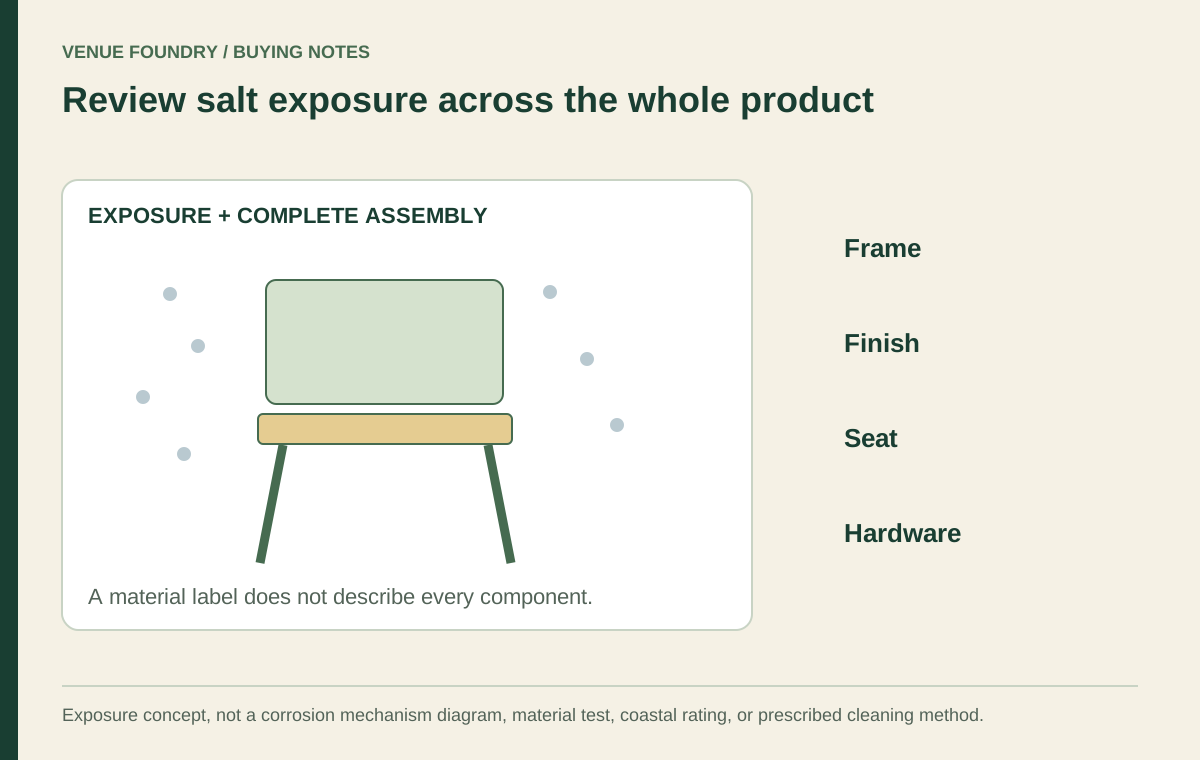
Different components may need different care. A metal frame, synthetic seat, upholstered cushion, and resin top are not one material system. The accepted routine should identify the instructions that apply to each finished component.
Grosfillex's cold-weather guidance, for example, addresses inspection, drying before storage, and separate attention to non-resin components in its furniture. That is useful context for the range it describes. It is not permission to apply the same cleaner or storage arrangement to every item in the patio catalog.
Use the materials guide to review the selection, and retain the relevant instructions with the actual product references. The budget should include tasks that the restaurant actually needs to perform, without inventing a standard monthly care charge for a material category. A specific routine is more useful than a vague allowance labeled maintenance.
Account for the space used outside the season
Storage has a physical footprint and an access requirement. The cost may involve rented space, an existing room that cannot be used for something else, or suitable equipment within a designated area. The restaurant's actual arrangement determines which of those considerations applies.
Tables deserve separate attention from chairs. A complete patio table may remain assembled, while another product may have an explicitly permitted folding arrangement. Do not assume that daily dismantling is acceptable simply because the top and base were originally supplied separately.
Include umbrellas, cushions, and other accessories in the seasonal inventory. Their storage instructions and dimensions may differ from the seating. A chair-only storage calculation can leave a substantial part of the patio without an accepted destination.
Keep replacement planning honest
A reserve can be useful when it reflects the operator's priorities, but it is not a prediction that a particular percentage of furniture will fail. Avoid assigning an unverified annual replacement rate to steel, aluminum, resin, or any other broad category.
Instead, use actual condition reviews and available component information. A damaged glide, a missing approved part, and a furniture item requiring replacement are different scopes. The chair replacement discussion describes how those distinctions can inform a purchasing allowance.
If the restaurant wants a spare matching item, consider its storage and intended use. A spare provides value only if it remains available and suitable when needed. Its purchase should be a deliberate inventory decision, with no promise that every future finish batch or component will remain identical.
Compare scenarios with transparent inputs
An invented example can show the method. Suppose one seasonal plan has a $4,000 furniture subtotal and $600 of identified storage and handling tasks, while another has a $4,400 furniture subtotal and $300 of those tasks. The compared totals are $4,600 and $4,700 for that defined scope. These are not market estimates or product forecasts.
The small difference would not justify declaring either plan universally cheaper. A changed operating schedule or storage arrangement could alter the result. The purpose of the calculation is to expose the inputs so the restaurant can replace them with its own evidence.
Use the budget planner for selected catalog amounts and keep external operating figures clearly labeled. Review the current delivery scope separately. A furniture subtotal and a seasonal operating estimate should remain distinguishable even when both inform the same purchase.
Choose the routine the restaurant can sustain
A good seasonal comparison connects the opening inventory with the tasks required to keep using it. It accounts for actual care, movement, storage, and condition review without inventing a lifespan or an automatic savings percentage. The selected furniture should fit that routine as well as the patio's appearance.
Use contact for unresolved product requirements and retain the accepted operating assumptions with the project. The resulting budget can be updated when the restaurant has better evidence from a real season. That makes it a practical purchasing tool instead of a confident forecast built on unknowns.